Key takeaways
- Pool coverage: Confirm that the robot is designed for your pool’s size and can handle the surfaces you actually need cleaned, including floors, walls, and the waterline.
- Traction and navigation: Wall-climbing ability matters only if the robot can maintain contact on your finish. Mapping, path planning, and obstacle detection reduce missed areas and repeated passes.
- Runtime and charging: Choose enough battery capacity for a complete cycle, then consider auto-docking, solar assistance, or dual charging to reduce lifting and intervention.
- Filtration and maintenance: Fine filtration helps with silt and pollen, while a generously sized, easy-release basket makes emptying less messy and less frequent.
- Handling and durability: Look for a balanced body, dependable waterproofing, accessible brushes, and a design that can be removed from the water without awkward twisting or excessive force.
What's inside
Best Inground Pool Vacuum Robot (2026) — Choosing a pool robot is less about chasing the highest suction figure and more about matching the machine to your pool’s surfaces, steps, waterline, and debris load. A cleaner that cannot maintain traction on a curved wall, navigate reliably, or dock without help quickly becomes another maintenance task.
This guide evaluates leading cordless models from an ergonomics-and-durability perspective: how much handling they require, how intelligently they cover the pool, how practical their filtration systems are, and whether their charging and storage routines suit regular household use.
As an Amazon Associate we earn from qualifying purchases.



🛒 Best Price Today on Amazon
Prime members get fast, free shipping on everything above, plus member-only deals. New members get a 30-day free trial — cancel anytime.
How to Choose an Inground Pool Vacuum Robot (2026)
- Pool coverage: Confirm that the robot is designed for your pool’s size and can handle the surfaces you actually need cleaned, including floors, walls, and the waterline.
- Traction and navigation: Wall-climbing ability matters only if the robot can maintain contact on your finish. Mapping, path planning, and obstacle detection reduce missed areas and repeated passes.
- Runtime and charging: Choose enough battery capacity for a complete cycle, then consider auto-docking, solar assistance, or dual charging to reduce lifting and intervention.
- Filtration and maintenance: Fine filtration helps with silt and pollen, while a generously sized, easy-release basket makes emptying less messy and less frequent.
- Handling and durability: Look for a balanced body, dependable waterproofing, accessible brushes, and a design that can be removed from the water without awkward twisting or excessive force.
The Best Inground Pool Vacuum Robot (2026)s Reviewed
DREAME Z1 PRO Robotic Pool Cleaner
The DREAME Z1 PRO stands out for demanding pools where consistent coverage is more important than a basic floor-only cycle. Its 8,000 GPH suction, smart mapping, and long 180–300-minute runtime are particularly useful for larger pools or owners who want fewer interruptions; the added wall and waterline cleaning reduces manual brushing.
Beatbot AquaSense 2 Ultra
The AquaSense 2 Ultra is the most feature-rich choice here, combining AI-camera mapping, five-in-one cleaning, app control, and smart surface parking. It is well suited to complex pool layouts, though its sophisticated feature set makes it a better fit for buyers who will use scheduling and app controls rather than simply press start and store it.
WYBOT S2 Solar Vision
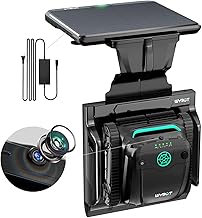
The WYBOT S2 Solar Vision takes an appealing low-intervention approach with solar and conventional charging, scheduled cleaning, auto-return charging, and an AI vision algorithm. Its 3D adsorption design is aimed at maintaining contact with pool surfaces, making it a practical option for owners who prioritize reduced handling between cycles.
Aiper Scuba S3
The Aiper Scuba S3 focuses on useful everyday features rather than excessive complexity: smart sensing, path planning, waterline scrubbing, auto-parking, app control, and dual ultra-fine filtration. Its lighter construction and balanced feature set should appeal to households that want easier lifting and storage while still addressing fine debris and wall-edge buildup.
U8 Cordless Robotic Pool Cleaner
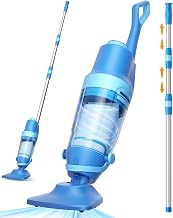
The U8 is a straightforward choice for inground pools up to 2,600 square feet, with automatic wall and waterline climbing, auto-docking, and a 150-minute runtime. It makes sense for buyers who want less hand-scrubbing and a simpler operating routine without moving into the more elaborate mapping systems of premium models.
Frequently Asked Questions
Do robotic pool cleaners work on inground pool walls?
Some do, but wall performance depends on traction, water flow, pool finish, and the slope where the floor meets the wall. Always verify that the model specifically supports wall and waterline cleaning rather than assuming a floor robot will climb.
How often should I run an inground pool vacuum robot?
For an average pool, one or two cleaning cycles per week is a reasonable starting point. Increase the frequency during heavy swimming periods, pollen season, or after storms, and empty the filter after each cycle if it contains substantial debris.
Can a cordless pool robot stay in the water?
It is best to remove and rinse the robot after cleaning unless the manufacturer explicitly supports extended in-water storage. Drying the unit, cleaning its filter, and storing it out of direct sun can help protect seals, plastics, and battery components.
Are expensive pool robots worth the cost?
They can be, particularly for large or complicated pools where better navigation, longer runtime, waterline scrubbing, and automatic parking save repeated manual work. For smaller, simpler pools, a capable floor-and-wall model may deliver better value than a premium system loaded with unused features.
Final Thoughts
The DREAME Z1 PRO is the strongest all-around pick for extensive coverage and long runtime, while the Beatbot AquaSense 2 Ultra is the more advanced option for complex pools. For lower-touch ownership, the solar-assisted WYBOT S2 Vision is also compelling; choose based on your pool’s geometry and the amount of handling you are genuinely trying to eliminate.