Key takeaways
- Cushion loft and foam density: Thickness is the headline number, but density does the work. A 10″ cushion built from low-density foam compresses faster than a well-specified 5″ one. Look for reticulated or quick-dry foam that drains rather than holding water against the fabric, and expect any cushion to lose roughly 10-15% of its initial height as it breaks in — that’s normal, not failure.
- Armrest width and height: An armrest under about 3″ wide gives your forearm nowhere to settle, so you end up bracing on the seat instead. Wide arms in the 4-5″ range let the shoulder drop and the elbow load properly, which is the difference between sitting and lounging. Height matters too: roughly 7-9″ above the seat cushion keeps the shoulder neutral.
- Frame material and joinery: Powder-coated aluminum resists corrosion and stays light enough to reconfigure; steel is stiffer but rusts wherever the coating chips; eucalyptus and other hardwoods look warmer and take oiling well but need annual attention. Whatever the material, check whether modular pieces connect with brackets or simply sit adjacent — unconnected pieces drift apart under use.
- Weave construction: PE (polyethylene) resin wicker over an aluminum or steel substrate handles sun far better than PVC, which grows brittle and cracks. Hand-woven strands wrapped fully around the frame outlast machine-stapled panels, and a tighter weave means fewer snag points and less trapped debris.
- Seat depth and back angle: Deep seats near 26″ suit lounging but strand shorter users with unsupported thighs and pressure behind the knee. A 20-23″ depth paired with a back reclined 100-110 degrees fits a wider range of bodies and makes standing up easier — worth prioritizing if anyone in the household has knee or hip limitations.
What's inside
Outdoor sectionals fail in predictable ways. The foam packs down to a pancake by the second summer, the armrests are too narrow to actually rest an arm on, and the frame develops a wobble because the modular pieces were never engineered to stay aligned once someone shifts their weight. Buyers rarely see any of this in a listing photo, which is why so many patio sets look great in June and feel like a bench by August. The variables that matter — cushion loft, seat depth, armrest width, frame alloy, weave substrate, hardware quality — sit buried in spec sheets or go unmentioned entirely.
This guide approaches the category the way a seating designer would: measuring the contact surfaces, questioning the foam, and asking whether a frame can survive freeze-thaw cycles and UV exposure without fasteners loosening. Below are six sectionals worth considering in 2026, followed by the specifications that separate a set you’ll still like in year five from one you’ll be dragging to the curb.
As an Amazon Associate we earn from qualifying purchases.


🛒 Best Price Today on Amazon
Prime members get fast, free shipping on everything above, plus member-only deals. New members get a 30-day free trial — cancel anytime.
How to Choose a/an Outdoor Furniture Sectional (2026)
- Cushion loft and foam density: Thickness is the headline number, but density does the work. A 10″ cushion built from low-density foam compresses faster than a well-specified 5″ one. Look for reticulated or quick-dry foam that drains rather than holding water against the fabric, and expect any cushion to lose roughly 10-15% of its initial height as it breaks in — that’s normal, not failure.
- Armrest width and height: An armrest under about 3″ wide gives your forearm nowhere to settle, so you end up bracing on the seat instead. Wide arms in the 4-5″ range let the shoulder drop and the elbow load properly, which is the difference between sitting and lounging. Height matters too: roughly 7-9″ above the seat cushion keeps the shoulder neutral.
- Frame material and joinery: Powder-coated aluminum resists corrosion and stays light enough to reconfigure; steel is stiffer but rusts wherever the coating chips; eucalyptus and other hardwoods look warmer and take oiling well but need annual attention. Whatever the material, check whether modular pieces connect with brackets or simply sit adjacent — unconnected pieces drift apart under use.
- Weave construction: PE (polyethylene) resin wicker over an aluminum or steel substrate handles sun far better than PVC, which grows brittle and cracks. Hand-woven strands wrapped fully around the frame outlast machine-stapled panels, and a tighter weave means fewer snag points and less trapped debris.
- Seat depth and back angle: Deep seats near 26″ suit lounging but strand shorter users with unsupported thighs and pressure behind the knee. A 20-23″ depth paired with a back reclined 100-110 degrees fits a wider range of bodies and makes standing up easier — worth prioritizing if anyone in the household has knee or hip limitations.
The Best Outdoor Furniture Sectional (2026)s Reviewed
9-Piece Patio Sectional with 10″ Cushions
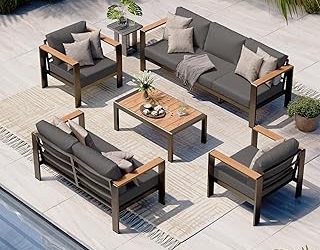
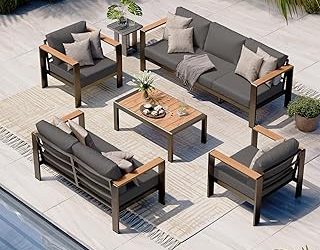
The 10″ cushions and low-profile frame create a genuinely lounge-oriented seat, and the wide arms give your forearms a real landing surface rather than a token ledge. Nine modular pieces mean you can reconfigure seasonally, though verify the connecting hardware stays snug — that’s the usual weak point in sets this size.
Oversized Aluminum Patio Sofa Set, Graphite
The 4.8″ armrest is the standout dimension here; it’s wide enough to support the full forearm and to double as a drink surface. Aluminum framing keeps corrosion off the table entirely and makes the oversized pieces manageable to shift, which is unusual in this size class.
Aoxun 8-Piece Wicker Sectional with Ottomans
Eight seats plus ottomans covers entertaining without forcing you into two separate furniture purchases, and the ottomans convert to extra seating or a footrest depending on the evening. Thick cushions handle long sitting well; plan on storing them indoors over winter to protect the foam.
Ashley Clare View 4-Piece L-Shape Sectional
The eucalyptus frame and solution-dyed Nuvella fabric are the most durable pairing on this list — Nuvella resists fading and cleans up with soap and water, while eucalyptus takes an annual oiling and keeps its structure for years. The all-weather foam drains properly, which prevents the mildew problem that ruins lesser cushions.
Devoko 5-Piece Wicker Sectional
Hand-woven rattan over a compact five-piece layout suits smaller patios and balconies where a full sectional would overwhelm the space. Cushion loft is modest compared to the larger sets here, so it reads more upright and social than deep-lounge.
Frequently Asked Questions
How long should outdoor cushions last?
Three to five seasons with reasonable care. Foam degradation, not fabric wear, usually ends a cushion’s life. Storing cushions indoors during off-season and letting them dry fully after rain roughly doubles their usable lifespan.
Is aluminum or steel the better frame?
Aluminum for coastal or humid climates and for anyone who plans to rearrange pieces, since it won’t rust and weighs less. Steel offers more rigidity for heavier loads but requires an intact powder coat — touch up chips promptly.
Do I really need a furniture cover?
Yes, if the set lives uncovered. Covers slow UV fade on cushions and keep water out of frame joints where it freezes and works fasteners loose. A breathable cover beats a fully waterproof one, which traps condensation.
How do I stop modular pieces from separating?
Use the included connecting clips or brackets if the set has them, and check them each spring. For sets without hardware, non-slip pads or aftermarket furniture connectors solve most drift.
Final Thoughts
For long-term durability, the Ashley Clare View earns the top spot on materials alone — Nuvella fabric and a eucalyptus frame outlast most of the category. If armrest comfort and corrosion resistance are your priorities, the Oversized Aluminum Set in Graphite is the stronger ergonomic choice, and the Aoxun 8-Piece remains the most practical pick for anyone who regularly hosts more than four people.