Key takeaways
- Air delivery: Compare CFM at 90 PSI when matching a compressor to pneumatic tools; maximum PSI alone does not indicate sustained performance.
- Portability: Consider weight, wheel design, handle comfort, cord storage, and whether you will carry the unit upstairs or move it around furniture.
- Noise: Quieter compressors are easier to tolerate in garages, workshops, and attached utility rooms, especially during extended projects.
- Maintenance: Oil-free pumps reduce routine servicing, while tank drainage, hose inspection, and clean air intake filters remain important for longevity.
- Duty cycle: A compressor designed for intermittent inflation is not the same as one built for repeated nailing or spraying; allow cooling time where specified.
What's inside
Choosing a household air compressor is less straightforward than comparing maximum PSI figures. A compact inflator may be ideal for topping up tires, while a tank-style machine is better suited to nail guns, brad nailers, blow-off work, and longer bursts of air. The wrong choice can mean excessive noise, awkward storage, short duty cycles, or a unit that cannot keep pace with the tool attached.
This guide evaluates the leading options from an ergonomics-and-durability perspective. We focus on handling, controls, noise, maintenance, storage footprint, usable airflow, and the kind of household work each compressor can realistically support, from occasional inflation to furniture assembly and renovation projects.
As an Amazon Associate we earn from qualifying purchases.




🛒 Best Price Today on Amazon
Prime members get fast, free shipping on everything above, plus member-only deals. New members get a 30-day free trial — cancel anytime.
How to Choose a Household Air Compressor (2026)
- Air delivery: Compare CFM at 90 PSI when matching a compressor to pneumatic tools; maximum PSI alone does not indicate sustained performance.
- Portability: Consider weight, wheel design, handle comfort, cord storage, and whether you will carry the unit upstairs or move it around furniture.
- Noise: Quieter compressors are easier to tolerate in garages, workshops, and attached utility rooms, especially during extended projects.
- Maintenance: Oil-free pumps reduce routine servicing, while tank drainage, hose inspection, and clean air intake filters remain important for longevity.
- Duty cycle: A compressor designed for intermittent inflation is not the same as one built for repeated nailing or spraying; allow cooling time where specified.
The Best Household Air Compressors (2026) Reviewed
AstroAI Dual-Power Tire Inflator
The AstroAI Tire Inflator is the most convenient choice for routine tire and inflatable maintenance, particularly because its 12V DC and 120V AC operation cover both roadside and household use. Its digital gauge and compact form reduce bending and guesswork, although this is an inflator rather than a substitute for a tank compressor powering workshop tools.
Metabo HPT 6-Gallon Pancake Compressor
The Metabo HPT EC914S offers a useful balance of portability and pneumatic-tool capability, with a 6-gallon tank and high stated pressure capacity. Its pancake configuration is easy to position near a work area, while the broad tool compatibility makes it a practical fit for trim work, furniture repair, and intermittent framing or roofing tasks.
ETENWOLF VORTEX S6 Cordless Inflator
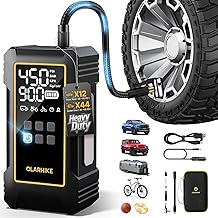
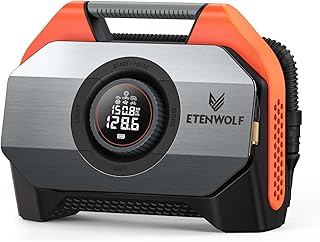
The ETENWOLF VORTEX S6 stands out when cord-free operation matters more than workshop versatility. Its large battery, dual-cylinder design, LED backlight, and stated 100% duty-cycle capability make it well suited to repeated inflation of vehicle tires and large inflatables, but it is still best viewed as a heavy-duty inflator rather than a general-purpose air-tool compressor.
Craftsman 26-Gallon Air Compressor
The Craftsman CMXECXA3332643 is the strongest capacity-oriented option here for users who want a reserve of compressed air for longer household projects. Its 26-gallon tank and oil-free induction motor favor fewer refill interruptions, though the larger footprint and heavier handling make it better suited to a permanent garage or workshop position.
California Air Tools 8010A
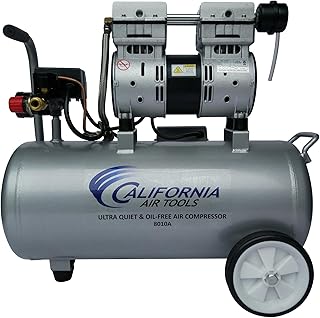
The California Air Tools 8010A is an appealing choice for indoor-adjacent work because its published 60 dBA noise level is notably considerate of shared spaces. The 8-gallon aluminum tank, wheels, and oil-free design support manageable maintenance and mobility, making it a strong option for furniture work, trim installation, and home workshops where noise fatigue is a genuine concern.
Frequently Asked Questions
What size air compressor is best for household use?
For occasional tire inflation, a portable inflator is usually sufficient. A 6-gallon pancake compressor is a more versatile household starting point for nail guns and brad nailers, while larger tanks are preferable when projects require repeated tool operation with fewer pauses.
Is higher PSI always better?
No. Maximum PSI describes the pressure the tank or pump can reach, but CFM at a stated pressure better predicts how well the compressor will run a pneumatic tool. Check the tool manufacturer’s airflow requirement and leave some performance margin.
Are oil-free compressors reliable?
Oil-free models can be very practical for home users because they avoid oil changes and simplify routine ownership. Reliability still depends on correct duty-cycle use, adequate ventilation, clean intake air, proper tank drainage, and avoiding unnecessary overwork.
How can I reduce compressor noise and vibration?
Place the compressor on a stable, level surface with clearance around its ventilation openings. Anti-vibration pads can limit floor-borne movement, while a longer certified air hose may let you position the machine farther from the immediate work area without restricting airflow.
Final Thoughts
The AstroAI is the sensible pick for straightforward tire and inflatable upkeep, while the Metabo HPT offers the best all-around balance for portable household pneumatic tools. For quieter, more substantial workshop use, the California Air Tools 8010A is especially compelling; choose the Craftsman when tank capacity and longer intervals between refills matter most.