
Key takeaways
- Power Source: Pedal-powered (non-electric)
- Recommended Uses For Product: Indoor
- Material: Metal
Most stationary bikes are designed around a rider who can swing a leg over a frame, hold a forward lean for twenty minutes, and read a small backlit screen. If you are shopping for a parent in their seventies, or for yourself after a knee replacement, none of those assumptions hold. The questions that actually decide whether a bike gets used daily are unglamorous: how high is the step-through, does the seat slide on a rail or bolt into fixed holes, can the resistance drop low enough that the first pedal stroke does not hurt, and is the display readable without reading glasses. A bike that scores badly on those four points ends up as a coat rack within a month.
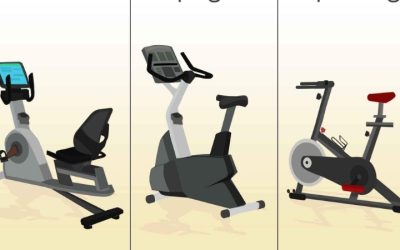
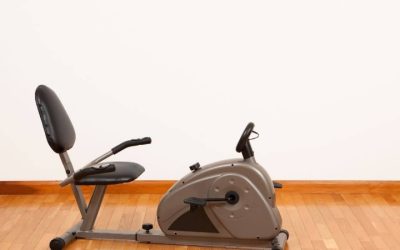
The six machines below cover three different form factors, and the right one depends less on fitness level than on the room and the body using it. A full recumbent with a chair-style backrest gives the most support but eats roughly 4 to 5 feet of floor length. A folding upright with a wide padded seat splits the difference and stows in a closet. A pedal exerciser is a footprint the size of a shoebox that slides under an existing armchair. Below you will find where each one earns its space, plus the specific compromises nobody puts on the box.
Our top picks
 Recumbent Exercise Bike for Home
- Power Source: Pedal-powered (non-electric)
- Recommended Uses For Product: Indoor
- Material: Metal
Supports riders up to 400 pounds on a steel frame
Ships 85 percent pre-assembled for a quicker setup
Pulse sensors and LCD track heart rate and stats
Pedal-powered design has no electric assist
16 resistance levels is fewer than some rival bikes


 Exercise Bike
- Power Source: Battery Powered
- Recommended Uses For Product: Indoor
- Material: Alloy Steel
Folds down for storage in closets or small corners
Supports riders up to 330 pounds on a steel frame
16-level magnetic resistance suits varied workout intensity
At over 50 pounds, moving it needs the transport wheels
Magnetic resistance tops out at 16 adjustable levels


As an Amazon Associate we earn from qualifying purchases at no extra cost to you.
Quick Comparison
| Product | Best For | Standout Feature | Watch Out For |
|---|---|---|---|
| Quiet Recumbent Bike for Seniors | Daily low-impact sessions with back support | Near-silent magnetic drive, wide contoured seat | Long frame needs a dedicated corner |
| MERACH Light Commercial Recumbent | Heavier riders and multi-person households | Reinforced frame built for repeated daily use | Heaviest to move once assembled |
| YOSUDA Recumbent Bike | Riders needing a 350 lb weight rating | Rail-adjust seat with a wide fit range | Console is basic, no app connection |
| pooboo Recumbent with Arm Exerciser | Combining upper and lower body work | Independent arm levers for shoulder mobility | Arm motion is light resistance only |
| 5-in-1 Foldable Stationary Bike | Small apartments and shared rooms | 16 magnetic levels, folds for closet storage | Backrest support is thinner than a true recumbent |
| Pedal Exerciser for Seniors | Very limited mobility or seated therapy | Works under a table for arms or legs | Slides on hard floors without a mat |
How to Choose
- Step-through height: Measure the tallest point the leg must clear. Recumbents typically sit under 12 inches; a folding upright can be closer to 18. If hip flexion is limited, this single number matters more than resistance range.
- Seat adjustment type: A sliding rail lets you fine-tune leg extension by fractions of an inch. Pin-and-hole systems jump in 2-inch steps, which can leave a shorter rider either overreaching or cramped at the top of the stroke.
- Lowest resistance level, not the highest: Sixteen levels sound generous, but what matters is whether level 1 is genuinely easy. A bike whose floor resistance still requires effort discourages someone rebuilding strength after surgery.
- Weight capacity with margin: Ratings of 330 to 350 pounds are common. Choose a frame rated well above actual body weight, because capacity limits also predict flywheel stability and how much the frame flexes under a hard push.
- Console legibility and reach: Large LCD digits, high contrast, and a screen angled toward a seated rider beat a feature-packed display that requires leaning forward and squinting to read a heart rate number.
Top Picks Reviewed
Best Overall Comfort: Quiet Recumbent Bike for Seniors
This is the archetype of what a senior-focused bike should be: a low step-over, a bucket-style seat with lumbar contact, and a magnetic resistance system that produces almost no audible drone. You can hold a phone conversation while pedaling, which sounds trivial until you realize it is the difference between exercising in the living room with family and being exiled to the garage.
The limitation is geometry. The wheelbase runs long, and once assembled it is not something you casually move between rooms every day. Plan a permanent parking spot near an outlet or window before ordering.
Best for Heavier Riders: MERACH Light Commercial Recumbent
The light commercial designation shows up in the tubing gauge and the crank bearing quality rather than in the feature list. It feels planted when a larger rider pushes hard out of the bottom of the stroke, where lighter frames rock slightly on their feet.
That build quality comes at a cost in mass. Assembly realistically needs two people, and repositioning it later means removing the seat first. It is a buy-once machine, not a flexible one.
Best Seat Range: YOSUDA Recumbent Bike
The rail-mounted seat covers a wide inseam range, so a 5-foot grandmother and a 6-foot son can share it without tools. With a 350-pound rating, the frame has plenty of headroom for most households.
The console is deliberately plain: time, distance, speed, calories, and a contact heart rate reading of modest accuracy. If someone in the house wants app-tracked workouts, this is not the model for them.
Best Dual-Purpose: pooboo Recumbent with Arm Exerciser
Adding push-pull arm levers turns a leg-only session into gentle full-body movement, which helps shoulder range of motion in people who otherwise spend the day seated.
Be realistic about the arm resistance. It is mobility work, not strength training, and the levers add width to the machine. Anyone hoping to build upper-body strength should pair the bike with light dumbbells instead.
Best for Small Spaces: 5-in-1 Foldable Stationary Bike
Sixteen magnetic levels, multiple riding positions, and a hinge that lets the frame collapse to roughly the depth of a folding chair. For a spare bedroom that doubles as a guest room, that flexibility wins.
The backrest is a supportive pad rather than a full recumbent seat. Riders with significant lower back pain will notice the difference after fifteen minutes.
Best Minimal Footprint: Pedal Exerciser for Seniors
For someone with limited standing tolerance, this sits in front of a favorite armchair and delivers genuine circulation work in ten-minute bouts. It also flips onto a table for arm cycling, which is useful during shoulder rehab.
The trade-off is stability. On tile or laminate it will creep forward under load unless you place it on a rubber mat or brace it against a wall.
Frequently Asked Questions
How much space should I actually reserve?
Allow the machine footprint plus about 18 inches behind and to one side for getting on and off safely. For a full recumbent that usually means a 6-by-3-foot zone, not the 4-by-2 listed dimensions.
Is magnetic resistance really quieter than friction?
Yes, meaningfully. Magnetic systems never contact the flywheel, so there is no pad noise and no wear part to replace. Expect a soft whir rather than the hiss and squeak of felt-pad friction brakes.
How long should a beginner ride?
Start at eight to ten minutes at the lowest resistance, once daily, and add two minutes a week. Consistency builds tolerance faster than long sessions that leave someone sore enough to skip two days.
Can these bikes be used after a hip or knee replacement?
Many surgeons encourage stationary cycling during recovery because it moves the joint without impact, but the specific timing and range limits belong to your surgeon or physical therapist. Bring the seat adjustment range to that conversation.
Final Thoughts
Match the machine to the room and the body, not to the spec sheet. If there is space for a full recumbent, the low step-through and supported seat give the highest odds of daily use. If the room is shared, a folding upright preserves the floor. And if mobility is the real constraint, a pedal exerciser under a favorite chair will accumulate more total minutes over a year than an impressive bike that nobody wants to climb onto.

Write Your Review
No reviews yet. Be the first to share your experience!