Key takeaways
- Cutting capacity: A 10-inch saw is generally easier to store and maneuver, while a 12-inch slider handles wider boards and deeper crosscuts. Choose capacity based on your largest recurring workpiece, not an occasional oversized project.
- Bevel configuration: Single-bevel saws are simpler and often lighter, but double-bevel models reduce the need to flip stock when making matching left- and right-hand cuts.
- Fence and table stability: Look for a broad, rigid support surface and a fence that stays square under pressure. In furniture work, repeatable alignment matters more than headline motor speed.
- Controls and ergonomics: Clearly marked detents, accessible bevel locks, a comfortable trigger handle, and manageable transport weight reduce fatigue and setup errors during long cutting sessions.
- Dust and serviceability: Dust ports, removable guards, accessible brushes, and straightforward blade changes make a saw easier to keep accurate. No dust system eliminates cleanup, so plan for a shop vacuum when possible.
What's inside
Choosing a compound miter saw is less about chasing the highest RPM and more about matching the tool to your furniture projects, workspace, and tolerance for maintenance. A saw that feels impressive on a showroom floor can become frustrating if its fence flexes, its bevel adjustment is awkward, or its dust collection sends fine particles across the shop.
This guide evaluates the leading options through an ergonomics-and-durability lens: control layout, handling, cutting capacity, adjustment quality, and long-term practicality. Whether you need a compact saw for trim and small furniture parts or a sliding model for wider panels, the goal is to help you buy a machine that remains predictable after repeated setups.
As an Amazon Associate we earn from qualifying purchases.



🛒 Best Price Today on Amazon
Prime members get fast, free shipping on everything above, plus member-only deals. New members get a 30-day free trial — cancel anytime.
How to Choose a Compound Miter Saw (2026)
- Cutting capacity: A 10-inch saw is generally easier to store and maneuver, while a 12-inch slider handles wider boards and deeper crosscuts. Choose capacity based on your largest recurring workpiece, not an occasional oversized project.
- Bevel configuration: Single-bevel saws are simpler and often lighter, but double-bevel models reduce the need to flip stock when making matching left- and right-hand cuts.
- Fence and table stability: Look for a broad, rigid support surface and a fence that stays square under pressure. In furniture work, repeatable alignment matters more than headline motor speed.
- Controls and ergonomics: Clearly marked detents, accessible bevel locks, a comfortable trigger handle, and manageable transport weight reduce fatigue and setup errors during long cutting sessions.
- Dust and serviceability: Dust ports, removable guards, accessible brushes, and straightforward blade changes make a saw easier to keep accurate. No dust system eliminates cleanup, so plan for a shop vacuum when possible.
The Best Compound Miter Saw (2026) Reviewed
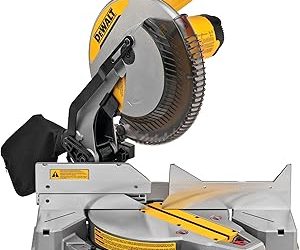
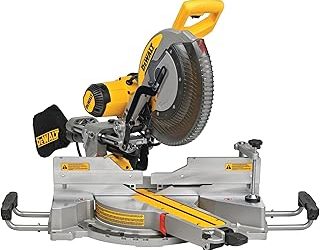
DEWALT DWS780 12-Inch Sliding Compound Miter Saw
The DWS780 is the most complete choice here for serious furniture building, combining double-bevel adjustment, sliding capacity, and the XPS LED shadow system for quick, readable cut alignment. Its size and weight demand a stable stand or permanent bench location, but that mass also helps the saw feel planted when working with wide stock.
DEWALT DWS779 12-Inch Sliding Compound Miter Saw
The DWS779 offers much of the heavy-duty capability expected from a 12-inch double-bevel slider, including broad crosscut capacity and a powerful 15-amp motor. It is especially appealing when you value structural capacity over integrated lighting, though its larger footprint is less convenient in a compact home shop.
DEWALT DWS715 12-Inch Single-Bevel Compound Saw
The DWS715 is a sensible middle ground for users who want a large blade without the added complexity of a sliding rail or double-bevel mechanism. Its single-bevel design keeps operation familiar, while the 12-inch format gives furniture makers useful reach for substantial boards and framing components.
DEWALT DWS713 10-Inch Single-Bevel Compound Saw
The DWS713 is a practical compact workhorse for trim, shelving, small tables, and other projects built from moderate-width stock. Its lighter, simpler format is easier to carry and store than a 12-inch slider, making it a strong fit for a shared garage or multipurpose workshop.
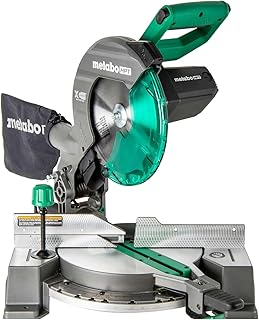
Metabo HPT C10FCG2 10-Inch Compound Saw
The C10FCG2 emphasizes approachable handling with a lightweight design, single-bevel adjustment, and an Xact Cut shadow line to make positioning more intuitive. It is well suited to homeowners and furniture hobbyists who prioritize portability and straightforward controls over maximum crosscut capacity.
Frequently Asked Questions
Is a 10-inch or 12-inch miter saw better for furniture?
A 10-inch model is usually easier to move, store, and control, and it handles many legs, rails, trim pieces, and narrow panels comfortably. A 12-inch saw becomes worthwhile when your designs regularly use wide boards or thicker stock that exceeds a 10-inch saw’s practical capacity.
Do I need a sliding compound miter saw?
Sliding rails are useful for wider boards because they extend the crosscut range. They also add weight, depth, and moving parts, so a non-sliding saw may be the more durable and ergonomic choice if most of your work involves narrow furniture components.
Is double bevel worth paying more for?
Double bevel capability is valuable when you frequently make mirrored cuts, angled frames, crown molding, or furniture parts that must match precisely. If you are comfortable flipping the workpiece, a single-bevel saw can deliver accurate results with a simpler control arrangement.
What should I use under a compound miter saw?
Use a rigid stand or level workbench with enough support on both sides of the blade. Long stock should remain flat as it enters and leaves the cut; unsupported material can shift, pinch the blade, or compromise accuracy even when the saw itself is well adjusted.
Final Thoughts
The DEWALT DWS780 is the strongest all-around pick for demanding furniture work, while the DWS779 provides substantial sliding capacity for buyers who do not need the XPS light. For a more compact and manageable shop setup, the DEWALT DWS713 or Metabo HPT C10FCG2 offers a practical balance of control, portability, and repeatable everyday performance.