Our Top Picks
 Paladin 12" Commercial Meat Slicer 350W Anodized Electric12" High-End Series25 x 20 x 21 inches68.34 poundsCheck on Amazon
 Zomagas 10-inch Commercial Meat Slicer 240W 0-13mm Semi-Auto10 inch18.5 x 16.5 x 15.3 Inches30.8 poundsCheck on Amazon
The best commercial meat slicer for a deli is usually a 12-inch automatic slicer with a large carriage, at least a ½-horsepower motor, removable product-contact parts, and enough counter depth to leave safe clearance around the machine; smaller manual 9–10-inch models suit low-volume shops, while 13–14-inch machines make sense for high-throughput operations slicing large roasts, prosciutto, or cheese.
Quick picks by deli situation
| Deli situation | Best slicer type | Useful target specification | Why it fits |
|---|---|---|---|
| Small neighborhood counter | Manual 10–12-inch slicer | ⅓–½ hp motor; 50–70 lb machine | Lower purchase price, simpler controls, smaller footprint |
| Busy sandwich and prepared-food deli | Automatic 12-inch slicer | ½–¾ hp motor; 12–14-inch carriage | Consistent portions and less repetitive operator work |
| High-volume supermarket deli | Automatic 13–14-inch slicer | ¾–1 hp motor; continuous-duty design | Handles long production runs and larger product loads |
| Cheese-heavy operation | 12–13-inch slicer rated for cheese | Powerful drive; low-speed control preferred | Reduces strain when cutting dense or sticky products |
| Limited counter space | Compact manual 9–10-inch slicer | Approximately 22–25 inches wide | Fits more easily, but sacrifices carriage and production capacity |
Best commercial slicer categories
Best all-around choice: automatic 12-inch slicer
A 12-inch automatic slicer is the most balanced choice for many delis. It can process common ham, turkey, roast beef, salami, and cheese sizes without taking up the counter space or budget of a large supermarket machine. Globe, Hobart, Univex, and Berkel all sell commercial slicers in this general class, although exact controls and configurations vary by model.
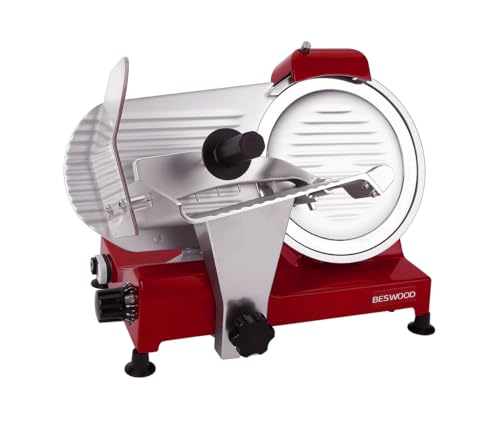
BESWOOD 10" Electric Deli Meat Slicer, Cheese Food Slicer with Premium Chromium-plated Steel Blade, for Home and Commercial use, 240W, Serving Plate included (Royal Red)
Chosen because it specifies Cheese Food Slicer with Premium Chromium-plated Steel Blade and for Home and Commercial use.
View on Amazon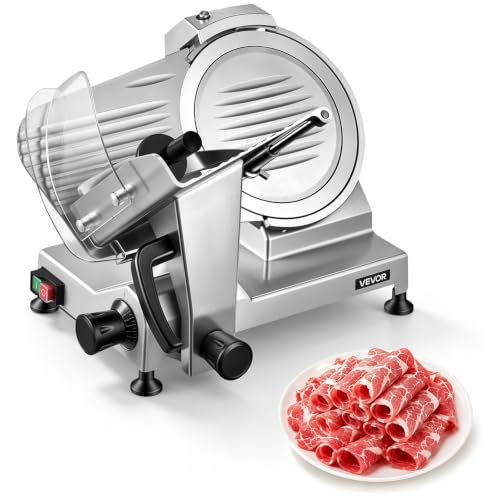
VEVOR Commercial Meat Slicer, 10 inch Electric Food Slicer, 240W Frozen Meat Deli Slicer, Premium Chromium-plated Steel Blade Semi-Auto Meat Slicer For Commercial and Home use
Chosen because it specifies 10 inch Electric Food Slicer and 240W Frozen Meat Deli Slicer.
View on AmazonPaladin 12" Commercial Meat Slicer 350W Anodized Electric Deli Food Slicer
Picked as a relevant option in this category.
View on AmazonZomagas 10-inch Commercial Meat Slicer 240W 0-13mm Semi-Auto Low Noise
Picked as a relevant option in this category.
View on AmazonLook for a carriage that accepts product at least 10–12 inches long and roughly 7–8 inches high. The blade diameter is only part of the usable capacity: the carriage opening, pusher shape, and thickness of the product determine what you can actually slice. An automatic carriage is valuable when staff produce repeated orders, but it does not eliminate the need for an operator to load, secure, monitor, and clean the machine.
Best for lower-volume service: manual 9- or 10-inch slicer
A manual slicer is often the better financial choice when the machine runs for short bursts rather than several hours per day. Nine- and 10-inch blades are suitable for smaller logs of deli meat and many cheese blocks. They usually cost less and weigh less than automatic models, commonly falling in the general market range of $700–$1,800 depending on construction and motor size.
The trade-off is labor. The operator must move the carriage for every slice, so a manual machine can become tiring during a lunch rush. A smaller blade also limits the height and diameter of the product. Do not choose a compact slicer solely because it fits the counter if staff will use it continuously.
Best for heavy production: automatic 13- or 14-inch slicer
Large automatic slicers from commercial brands such as Hobart, Globe, Berkel, Bizerba, and Univex are designed for operations that slice substantial quantities every day. A 13- or 14-inch blade gives more clearance for tall roasts and large cheese blocks, while the longer carriage reduces the need to reposition product.
These machines commonly occupy about 30–36 inches of counter width and 30–36 inches of depth before allowing working clearance. They can weigh approximately 100–180 pounds, so confirm that the counter, delivery route, and floor can support the machine. Larger automatic units frequently cost about $2,500–$6,000 or more, especially with advanced controls, built-in sharpening, or sanitary design features.
Blade size and carriage capacity
Blade diameter provides a useful starting point, but it is not a direct measurement of the maximum food size. A 12-inch blade does not necessarily slice a 12-inch-tall product. Manufacturers limit usable product height to keep the blade, pusher, and carriage safe and stable.
- 9–10 inches: Appropriate for small delis, cafés, and occasional slicing; generally easier to place and move.
- 12 inches: The most versatile size for routine meat and cheese service.
- 13–14 inches: Better for large roasts, long products, high volume, and fewer reloading interruptions.
Measure the products you actually sell. Include the height and length of your largest ham or roast, not just the average sandwich portion. Also check the carriage travel. A long carriage can improve productivity even when two machines use the same blade diameter.
Motor power and duty cycle
Motor horsepower matters most when slicing dense, cold, oversized, or sticky products. For ordinary deli meats, a ⅓- to ½-horsepower motor may be adequate. A ½- to ¾-horsepower motor offers more reserve for continuous lunch service, while ¾–1 horsepower is more appropriate for large automatic machines and demanding production schedules.
Do not treat horsepower as a complete measure of performance. Gear design, blade sharpness, product temperature, feed pressure, and the motor’s duty rating also affect results. A machine that is technically powerful can still struggle if staff force product through a dull blade.
For a deli slicing intermittently throughout the day, a commercial general-duty machine may be sufficient. If several employees will run the slicer repeatedly for hours, choose a model explicitly intended for heavy or continuous commercial use. Avoid using a light-duty restaurant slicer as a production machine simply because its price is attractive.
Cleaning access is a buying criterion, not a convenience
Choose a slicer with smooth, sealed surfaces and product-contact components that can be removed without complicated disassembly. The meat table, pusher, deflector, knife cover, and carriage should be accessible for cleaning and sanitizing according to your local food-safety requirements.
Pay special attention to the area behind the blade and beneath the carriage. These narrow spaces collect meat residue and cheese oils. A removable carriage is useful, but it must be reinstalled correctly and securely. Tool-free removal can shorten closing tasks, yet only if the parts are substantial enough to withstand repeated washing.
Never assume that a machine is dishwasher-safe because a component is removable. Follow the manufacturer’s cleaning instructions, and keep water away from electrical controls and motor housings. A built-in sharpener is convenient, but it should not obstruct cleaning or encourage staff to sharpen a dirty blade.
Counter footprint and safe working space
Measure the complete workstation rather than the slicer alone. A typical 12-inch commercial slicer may occupy approximately 25–30 inches of width and 25–32 inches of depth. Leave at least 6 inches of accessible space on the service side for handling product and cleaning tools, and keep the machine far enough from a wall that the carriage can travel fully without hitting shelving.
| Slicer class | Typical machine width | Typical depth | Approximate weight | Planning footprint with working clearance |
|---|---|---|---|---|
| 9–10-inch manual | 22–26 in. | 24–28 in. | 45–75 lb | About 30 × 34 in. |
| 12-inch manual | 25–30 in. | 26–32 in. | 65–100 lb | About 36 × 38 in. |
| 12-inch automatic | 28–34 in. | 28–36 in. | 90–140 lb | About 40 × 42 in. |
| 13–14-inch automatic | 30–36 in. | 30–38 in. | 100–180 lb | About 42 × 46 in. |
These are planning ranges, not specifications for every model. Confirm the manufacturer’s dimensions, carriage travel, electrical requirements, and clearance instructions before ordering. A slicer may fit on a 30-inch counter but still be unusable if the carriage cannot open fully or employees cannot safely reach the controls.
What wears first and what affects ownership cost
The blade eventually needs sharpening or replacement, but operators often notice other wear first: carriage bearings, product pusher hardware, rubber feet, belt or drive components, and plastic guards. Frequent wet cleaning can accelerate deterioration of poorly protected controls and fasteners.
Choose a brand with accessible replacement parts and a service network in your area. A lower-priced machine is not a bargain if a worn carriage component stops production for weeks. For a busy deli, the ability to obtain a blade, sharpening stone, guard, and carriage hardware may matter more than a small difference in initial horsepower.
Moving also deserves planning. Machines over about 100 pounds may require two people or a lift, and their boxes may not fit through a narrow back-room doorway once mounted on a cart. Measure doors, turns, elevators, and counter openings before delivery. Secure the carriage and follow the manufacturer’s instructions when relocating the slicer.
Final buying recommendation
For most deli counters, start with a commercial 12-inch automatic slicer in the ½- to ¾-horsepower range, provided its carriage accommodates your largest products and its removable parts are practical to clean. Choose a manual 9- or 10-inch model for occasional, lower-volume slicing and limited counters. Move to a 13- or 14-inch automatic machine when long production runs, large roasts, cheese, and reduced operator fatigue justify the added footprint, weight, and cost.