Our Top Picks
The best cleaner for a ceramic cooktop is usually a purpose-made, non-abrasive glass-cooktop cream used with a microfiber cloth and a cooktop scraper for burned-on residue; choose a stronger powdered or acidic formula only for the specific stain it is designed to remove.
Best ceramic cooktop cleaners by situation
| Cooktop problem | Best cleaner type | Useful tool | What to avoid |
|---|---|---|---|
| Daily grease, fingerprints, and cooking film | Neutral or mildly alkaline cream made for glass cooktops | Microfiber cloth | Rough sponge, steel wool, powdered scouring cleanser |
| White mineral haze or hard-water marks | Cooktop cream first; carefully spot-treat with diluted white vinegar if the manufacturer permits it | Soft cloth and plastic scraper | Leaving acid on the surface or using gritty bathroom cleanser |
| Burned sugar, plastic, or melted food | Cooktop cream after the residue is removed | Angled razor cooktop scraper | Scrubbing while the residue is cold and hardened |
| Thick, baked-on grease | Concentrated cooktop cream or a non-abrasive degreasing cream | Microfiber cloth followed by a clean damp cloth | Oven cleaner, lye-based degreaser, abrasive paste |
What to buy: the main formulas compared
1. Purpose-made ceramic cooktop cream
For most households, this is the safest first purchase. Products such as Weiman Cooktop & Stove Top Cleaner and Cerama Bryte Cooktop Cleaner are formulated for smooth glass-ceramic cooking surfaces. They typically combine mild cleaning agents with very fine polishing particles or suspended abrasives that loosen cooking film without requiring aggressive scrubbing.

Weiman Glass & Ceramic Cooktop, Stove Top & Oven Cleaner Kit
Chosen because it specifies Stove Top & Oven Cleaner Kit.
View on Amazon
Cerama Bryte Combo Kit Pads & Removes Tough Stains Cooktop and Stove Top Cleaner for Glass - Ceramic Surfaces, 10 Ounces
Chosen because it specifies Ceramic Surfaces and 10 Ounces.
View on Amazon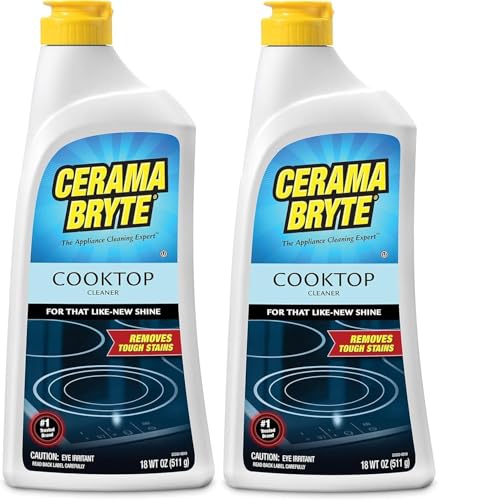
Cerama Bryte Cooktop Cleaner for Glass-Ceramic Surfaces, 18 oz, 2 Pack
Chosen because it specifies 18 oz and 2 Pack.
View on Amazon
Bar Keepers Friend Cooktop Cleaner (2 x13 oz) + Scraper - Multipurpose Liquid Stovetop Cleanser, Safe for Use on Glass & Ceramic Cooking Surfaces, Copper, Brass, Chrome, Stainless Steel & Porcelain
Chosen because it specifies Multipurpose Liquid Stovetop Cleanser and Safe for Use on Glass & Ceramic Cooking Surfaces.
View on AmazonThe main advantage is control: the cream stays where it is applied, gives you lubrication while wiping, and is less likely than a dry powder to leave deep scratches. It is suitable for routine cleaning, grease, light carbon marks, and dull-looking residue. A small bottle commonly costs about $6–$15, depending on size and whether it includes a cleaning pad or scraper.
The trade-off is that cream does not magically dissolve thick carbon. It works best when you spread a small amount over a cool surface, allow it to sit briefly, and wipe several times with a soft cloth. Excess product can leave a cloudy film, so a second wipe with a clean, damp microfiber cloth is important.
2. Liquid spray or ceramic-surface spray
Sprays are convenient for fingerprints, light grease, and quick daily cleanup. They spread thinly and are easy to dose, which makes them a good choice for a cooktop that is wiped after every meal. However, they usually contain less polishing material than a cream and may struggle with baked-on spots.
Choose a spray labeled specifically for glass or glass-ceramic cooktops, not a general window cleaner by default. Some glass cleaners contain ammonia or additives that can leave streaks, discolor surrounding trim, or perform poorly against cooking grease. Spray onto the cloth rather than flooding the controls or seams around the cooktop.
3. Non-abrasive soft cleanser
A soft liquid cleanser such as Bar Keepers Friend Soft Cleanser can be useful for certain stubborn mineral or metal-transfer marks, but it should not automatically be your everyday product. Check the cooktop manufacturer’s instructions first, use the smallest amount possible, and avoid the stronger powdered version unless the appliance instructions expressly allow it.
Soft cleansers can remove marks that a standard cooktop cream leaves behind, but their formulation and abrasiveness vary. They also require thorough rinsing. If any cleaner dries on the surface, its residue can make the cooktop appear hazier than the original stain.
4. Homemade vinegar solution
White vinegar diluted with water can help with a thin mineral film after ordinary cleaning, especially in hard-water areas. It is not the best choice for burned food, grease, or melted plastic. Vinegar is also not a substitute for a scraper when material is bonded to the surface.
Use it as a short contact treatment, not a soaking method: apply a little to a cloth, wipe the cool surface, then remove the moisture with clean water and dry the glass. Never mix vinegar with bleach or other cleaning chemicals.
Head-to-head buying guide
| Cleaner type | Residue after wiping | Stain-removal strength | Scratch risk when used correctly | Best tool pairing |
|---|---|---|---|---|
| Purpose-made cream | Low to moderate; may haze if overapplied | Good for grease and light baked-on residue | Low | Microfiber cloth or approved cooktop pad |
| Cooktop spray | Low if wiped dry | Fair for daily soil; weak on carbon | Very low | Microfiber cloth |
| Soft non-abrasive cleanser | Moderate unless rinsed carefully | Good for selected mineral and metal marks | Low to moderate, depending on pressure and formula | Soft cloth only |
| Powdered abrasive cleanser | Moderate to high | Strong, but often unsuitable | High | Generally not recommended |
How to clean without scratching the glass
- Turn off the burners and let the surface cool. A hot cooktop can damage a cloth, spread grease, or cause cleaner to dry too quickly. Follow the appliance manual if it specifies a particular temperature for scraper use.
- Remove loose grit first. Crumbs and salt can act like sandpaper under a sponge. Lift them with a dry microfiber cloth or a soft paper towel rather than rubbing them across the glass.
- Use a small amount of cleaner. A puddle is harder to remove and increases residue. Apply a teaspoon-sized amount to a typical four-burner cooktop, adding more only where needed.
- Let the cream loosen the film. Give it several minutes according to the label. Do not let it dry into a crust.
- Use a cooktop scraper for bonded residue. Hold a purpose-made razor scraper at roughly a 30-degree angle and push in short strokes. Keep the blade flat against the glass; never jab downward or use a damaged blade.
- Wipe, rinse, and dry. Use one cloth to remove the cleaner, another lightly damp cloth to pick up residue, and a dry microfiber cloth to polish away streaks.
Tools matter as much as the cleaner
A ceramic cooktop cleaner cannot prevent scratches caused by contaminated tools. Keep a dedicated microfiber cloth for the cooktop rather than reusing one that has collected sand, food particles, or metal filings. A soft, non-scratch cooktop pad may be suitable, but ordinary green scouring pads, melamine foam, abrasive sponges, and steel wool are poor choices.
Use only a scraper designed for glass cooktops. Replace the blade when it becomes nicked or rusty. Do not drag cast-iron cookware, rough-bottomed pans, or ceramic dishes across the surface; these can scratch the glass even when no cleaner is involved. Lift cookware instead of sliding it, and check pan bottoms for trapped grains of salt or sugar.
Decision matrix: choose by household and cleaning habits
| Your situation | Recommended setup | Why it fits |
|---|---|---|
| Small apartment with limited storage | One 6–12 oz cooktop cream, one microfiber cloth, one scraper | Covers daily film and occasional burned spots without storing several specialty bottles |
| Children or pets in the home | Low-fragrance or fragrance-free cooktop cream; store it in a closed cabinet | Reduces airborne scent and keeps a dedicated product away from curious hands and paws |
| Renters worried about appliance damage | Manufacturer-approved cream and a plastic-handled cooktop scraper | Lower-risk than experimenting with powdered abrasives or heavy-duty oven chemicals |
| Frequent frying or high-heat cooking | Concentrated cream plus a scraper, with cleaning after the surface cools | Better for repeated grease film and carbonized splashes |
| Hard-water area | Routine cooktop cream, occasional permitted vinegar spot treatment, thorough drying | Targets mineral haze without relying on abrasive scrubbing |
What not to use on a ceramic cooktop
Avoid oven cleaner, drain cleaner, chlorine bleach, metal scouring pads, pumice stones, and unapproved abrasive powders. These products may etch the glass, damage printed markings, attack seals or trim, or leave a residue that becomes difficult to remove when heated. Do not combine cleaners, and do not use a scraper on a cracked cooktop. A damaged glass surface should be inspected and repaired or replaced according to the appliance manufacturer’s guidance.
Bottom line
For the best balance of cleaning power, low residue, and surface protection, buy a purpose-made ceramic cooktop cream and pair it with a dedicated microfiber cloth and an angled cooktop scraper. Select a spray if your main need is daily fingerprints and light grease; reserve a soft non-abrasive cleanser or diluted vinegar for specific marks after checking the appliance manual. The safest routine is gentle product, minimal pressure, clean tools, and prompt removal of spills before they bake onto the glass.