Key takeaways
- Pressure range matters more than peak numbers: Car paint is far more delicate than concrete. Look for models that operate in the 1,800–2,500 PSI sweet spot at the nozzle. Anything above 3,000 PSI, while impressive on driveways, can strip wax layers and etch clear coat if you’re not careful. Units with variable nozzle sets let you dial down precisely for body panels and ramp up for wheels and wheel wells.
- Weight, balance, and carry points: An ergonomic unit should feel stable when set down on uneven pavement and easy to reposition mid-wash. Look for a low center of gravity, integrated carry handles, and an anti-tip design. A poorly balanced machine that topples over repeatedly will crack its casing eventually — a durability issue hiding in plain sight.
- Motor type and thermal endurance: Brushless motors run cooler and last significantly longer than brushed alternatives. If you plan to detail two or more vehicles in a single session, motor endurance becomes a real factor. Units that overheat after 15 minutes of continuous use are fine for quick rinses but frustrating for thorough detailing work.
- Hose quality and length: A stiff, kink-prone hose is the number-one frustration we hear from home detailers. At least 20 feet of flexible, braided hose gives you room to circle the vehicle without constantly repositioning the machine. Also check the hose-to-gun connection — brass fittings outlast plastic threads every time.
- Accessory ecosystem and soap integration: An onboard soap tank eliminates the need to carry a separate bottle, and a foam cannon attachment is almost essential for safe contactless washing. Verify that nozzle tips use standard quick-connect fittings so you can swap in third-party accessories down the road.
What's inside
If you’ve ever spent an afternoon battling swirl marks, water spots, or embedded brake dust on your car’s paintwork, you already know that a garden hose with a nozzle attachment won’t cut it. The real barrier most detailers hit isn’t technique — it’s equipment. A weak stream forces you to press the nozzle closer to the surface, which raises the risk of micro-scratches, and lugging around a heavy, underpowered unit turns a relaxing weekend project into a chore you dread repeating.
That’s exactly why we put this guide together. Drawing on years of hands-on experience with pressure-washing hardware, we evaluated each unit below for motor longevity, weight distribution, hose flexibility, nozzle build quality, and how the trigger grip feels during a full-hour session. The goal: match you with a car detailing pressure washer that delivers the right pressure range without sacrificing comfort or durability — and that you’ll actually enjoy using month after month.
As an Amazon Associate we earn from qualifying purchases.


🛒 Best Price Today on Amazon
Prime members get fast, free shipping on everything above, plus member-only deals. New members get a 30-day free trial — cancel anytime.
How to Choose a Car Detailing Pressure Washer (2026)
- Pressure range matters more than peak numbers: Car paint is far more delicate than concrete. Look for models that operate in the 1,800–2,500 PSI sweet spot at the nozzle. Anything above 3,000 PSI, while impressive on driveways, can strip wax layers and etch clear coat if you’re not careful. Units with variable nozzle sets let you dial down precisely for body panels and ramp up for wheels and wheel wells.
- Weight, balance, and carry points: An ergonomic unit should feel stable when set down on uneven pavement and easy to reposition mid-wash. Look for a low center of gravity, integrated carry handles, and an anti-tip design. A poorly balanced machine that topples over repeatedly will crack its casing eventually — a durability issue hiding in plain sight.
- Motor type and thermal endurance: Brushless motors run cooler and last significantly longer than brushed alternatives. If you plan to detail two or more vehicles in a single session, motor endurance becomes a real factor. Units that overheat after 15 minutes of continuous use are fine for quick rinses but frustrating for thorough detailing work.
- Hose quality and length: A stiff, kink-prone hose is the number-one frustration we hear from home detailers. At least 20 feet of flexible, braided hose gives you room to circle the vehicle without constantly repositioning the machine. Also check the hose-to-gun connection — brass fittings outlast plastic threads every time.
- Accessory ecosystem and soap integration: An onboard soap tank eliminates the need to carry a separate bottle, and a foam cannon attachment is almost essential for safe contactless washing. Verify that nozzle tips use standard quick-connect fittings so you can swap in third-party accessories down the road.
The Best Car Detailing Pressure Washers (2026) Reviewed
Hiclean Electric Pressure Washer 2100 PSI
Compact without feeling flimsy, this green-bodied unit distributes its weight well through a low-mounted motor housing. The included foam cannon produces a thick, clinging lather that covers a full sedan in one pass, and the turbo and fan nozzle options let you switch between aggressive wheel cleaning and gentle panel rinsing without fumbling. For smaller garages where storage space is at a premium, its footprint is hard to beat.
Sun Joe SPX3000 2500 Max PSI
The SPX3000 remains a benchmark for mid-range electric washers, and for good reason — its dual detergent tank system lets you run two different soap solutions during the same session without stopping to flush the lines. At roughly 30 pounds, it sits at the upper end of portability, but the wheeled cart design compensates nicely. Build quality on the spray gun trigger shows improvement over previous generations, with a smoother pull that reduces hand fatigue.
Westinghouse ePX3100v 2100 Max PSI
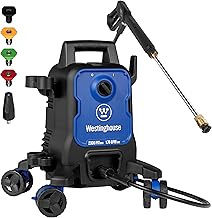
This is the unit we’d hand to someone washing their car for the very first time. The built-in carry handle makes one-handed transport effortless, and the three-nozzle system is clearly labeled with color coding — no guesswork. The pro-style steel wand resists the flexing that cheaper aluminum wands suffer after a few months, so you maintain consistent spray distance across every pass. A genuinely approachable entry point.
Westinghouse WPX3400e 3400 Max PSI
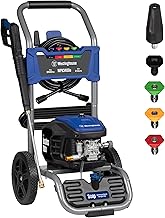
The most powerful unit in this roundup, featuring a brushless motor that stays cool through extended sessions. Its five-nozzle set and onboard soap tank make it genuinely versatile — dial it back to 1,500 PSI for a delicate ceramic-coated hood, then crank it up for caked-on mud under the chassis. The extra weight is noticeable, but the performance ceiling justifies it for anyone who also tackles fences, decks, and driveways regularly.
Westinghouse ePX3100 2300 Max PSI
The anti-tip technology is the headline feature here, and it genuinely works — the base geometry keeps this unit planted even on sloped driveways. With five included nozzle tips and a steel wand, it offers more out-of-the-box versatility than most competitors at this price tier. The onboard soap tank and sturdy hose connections round out a well-thought-out package for weekly car maintenance.
Frequently Asked Questions
Can I use a pressure washer on ceramic-coated paint?
Yes, absolutely — ceramic coatings actually make pressure washing safer because the hydrophobic layer sheds water and contaminants quickly. Keep the nozzle at least 12 inches from the surface, use a wider fan tip, and stay within the 1,500–2,000 PSI range. The foam cannon method is ideal here: cover the panel in soap, let it dwell briefly, then rinse with a wide fan at low pressure.
How long do electric pressure washer motors typically last?
A quality brushed motor will give you 500 to 1,000 hours of use with proper rest between sessions — typically two to three years of regular weekend detailing. Brushless motors, like the one in the WPX3400e, can exceed 2,000 hours because they generate less heat and have no carbon brushes to wear down. Avoid running any electric washer continuously for more than 20 to 30 minutes without a cooling break.
Is 2,000 PSI enough for car detailing?
For most car detailing tasks, 2,000 PSI is not just enough — it’s ideal. Professional detailers often prefer units in the 1,800 to 2,200 PSI range because they provide ample cleaning force for dirt, road film, and bug residue without the risk of paint damage. Higher PSI ratings are beneficial for concrete and masonry but offer no advantage on automotive surfaces and actually increase the danger of accidental etching.
What nozzle should I use to wash my car?
Always start with the widest-angle nozzle — typically the green 25-degree or white 40-degree tip — and keep the stream at least 12 inches from the paint. The 0-degree red nozzle should never touch your car’s body; reserve it for wheel wells or lug nut recesses only. The turbo nozzle is excellent for tires and undercarriage areas where you need concentrated, rotating force on a smaller contact patch.
Final Thoughts
For a well-rounded pick that balances ergonomics, durability, and value, the Westinghouse ePX3100 stands out thanks to its anti-tip design and generous five-nozzle kit. Buyers who want top-tier power for multi-surface work should look at the Westinghouse WPX3400e with its brushless motor, while first-time buyers will appreciate the simplicity and compact footprint of the Hiclean 2100. Any of these three will make your weekend car detailing noticeably easier and more effective.