Key takeaways
- Airflow at 90 PSI, not horsepower: SCFM at 90 PSI is the only number that predicts whether your tool keeps running. A brad nailer sips under 1 SCFM; an HVLP gun or DA sander can want 4 to 8. Buy at least 30 percent above your hungriest tool’s rating so the pump isn’t cycling constantly.
- Noise measured at your ear, not the spec sheet: Ratings in the 60 to 70 dB range come from slow-turning induction motors, and the difference is real — roughly conversation volume instead of shouting. In a shop attached to living space, this single spec determines when you’re allowed to work.
- Move-it-or-park-it ergonomics: Decide before you buy. Vertical 20-gallon tanks belong in a corner with wheels for occasional repositioning; check wheel diameter and handle height, because small casters stall on cords and thresholds. Under 40 pounds with a balanced top handle is the threshold for genuine one-hand carry.
- Duty cycle and thermal headroom: A 50 percent duty cycle means half the hour resting. Units rated 75 percent tolerate long sanding or spraying sessions without heat-soaking the pump — the fastest route to worn piston rings and cracked valve plates.
- Serviceability you’ll actually keep up with: Front-facing or automatic drain valves get used; awkward bottom petcocks get ignored, and ignored tanks rust from the inside. Look for accessible intake filters and regulators you can read while standing.
What's inside
Air compressors get bought on peak horsepower and returned because of everything else: a handle that bites into your palm, a drain valve buried under the tank where you can’t reach it, a motor that shakes itself loose across a shop floor, and noise that makes a finish-spray session in an attached garage a genuinely bad idea. For furniture work in particular, the mismatch is common — you need steady, clean air for brad nailers, pin nailers, blow-off, and HVLP touch-ups, not a jackhammer-grade unit that trips a breaker and rattles dust off every shelf in the room.
This guide evaluates 110V (standard household outlet) compressors through an ergonomics-and-durability lens: how they feel to move and service over years, how much real airflow they deliver at working pressure, and which components tend to fail first. Below are the units worth your money in 2026, followed by a buying framework and answers to the questions that actually determine whether a compressor becomes shop furniture or shop frustration.
As an Amazon Associate we earn from qualifying purchases.



🛒 Best Price Today on Amazon
Prime members get fast, free shipping on everything above, plus member-only deals. New members get a 30-day free trial — cancel anytime.
How to Choose a 110 Volt Air Compressor (2026)
- Airflow at 90 PSI, not horsepower: SCFM at 90 PSI is the only number that predicts whether your tool keeps running. A brad nailer sips under 1 SCFM; an HVLP gun or DA sander can want 4 to 8. Buy at least 30 percent above your hungriest tool’s rating so the pump isn’t cycling constantly.
- Noise measured at your ear, not the spec sheet: Ratings in the 60 to 70 dB range come from slow-turning induction motors, and the difference is real — roughly conversation volume instead of shouting. In a shop attached to living space, this single spec determines when you’re allowed to work.
- Move-it-or-park-it ergonomics: Decide before you buy. Vertical 20-gallon tanks belong in a corner with wheels for occasional repositioning; check wheel diameter and handle height, because small casters stall on cords and thresholds. Under 40 pounds with a balanced top handle is the threshold for genuine one-hand carry.
- Duty cycle and thermal headroom: A 50 percent duty cycle means half the hour resting. Units rated 75 percent tolerate long sanding or spraying sessions without heat-soaking the pump — the fastest route to worn piston rings and cracked valve plates.
- Serviceability you’ll actually keep up with: Front-facing or automatic drain valves get used; awkward bottom petcocks get ignored, and ignored tanks rust from the inside. Look for accessible intake filters and regulators you can read while standing.
The Best 110 Volt Air Compressors Reviewed (2026)
California Air Tools 20020AD (2.0 HP, 20 Gallon)
The benchmark for shop-permanent 110V air: a 70 dB dual-piston pump, oil-free head, and an automatic drain valve that removes the one maintenance step most owners skip. The 20-gallon vertical footprint plus wheels makes it the sanest choice if furniture finishing and occasional sanding share the same space.
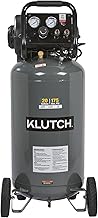
Klutch 20-Gallon (2 HP, 175 PSI)
Its 75 percent duty cycle and 175 PSI ceiling give it more sustained working headroom than most household-voltage units, and the large wheels and easy-access tank drain reflect real thought about long-term ownership. Louder than the ultra-quiet crowd, so treat it as a detached-garage or dedicated-shop machine.
9.5-Gallon Ultra Quiet (2 HP, 8.75 CFM)
The sweet spot for many woodworkers: 8.75 CFM feeds a spray gun without the mass of a 20-gallon tank, and 70 dB keeps it civil indoors. Wheels and a mid-size tank make it the most genuinely repositionable unit here at this output level.
MZB 2.4 Gallon (1.0 HP, 65 dB)
At 65 dB it’s the quietest option on this list, which matters enormously for finish work in shared spaces. The small steel tank means short duty bursts rather than continuous spraying — ideal for nailing, clamping blow-off, and touch-ups.
Ultra Quiet 2.4 Gallon (1.5 HP, 60 dB)
A step up in pump output over the 1.0 HP models while staying near 60 dB, making it the pick if you want portability without giving up the ability to run a small detail gun. Watch tank recovery time on longer passes.
Frequently Asked Questions
Can a 110V compressor run a spray gun?
Yes, with matching. Detail and touch-up guns are comfortable in the 4 to 7 CFM range, which the 9.5- and 20-gallon units here handle. Full-panel spraying on furniture is where larger tanks and higher duty cycles pay off.
Do I need a dedicated circuit?
The 2 HP units draw enough on startup to trip a shared 15-amp breaker, especially with lights and dust collection on the same run. A dedicated 20-amp circuit is the reliable answer, and it also protects the motor from voltage sag that shortens its life.
Is oil-free actually less durable?
Oil-free pumps have shorter service lives than oil-lubricated ones under heavy industrial use, but for intermittent shop work they’ll run for years with zero maintenance and no oil to check, spill, or contaminate finish work. For a furniture shop, that trade is usually correct.
How do I keep the tank from rusting out?
Drain condensate after every session — daily in humid climates. Automatic drain valves handle this for you; on manual units, keep the valve reachable so the habit sticks. Interior rust is what ends most tanks, not the pump.
Final Thoughts
For a shop that stays put, the California Air Tools 20020AD is the durability-first choice thanks to its quiet dual-piston pump and automatic drain. If you run tools hard for long stretches, the Klutch 20-Gallon’s 75 percent duty cycle and larger wheels are worth the extra noise. And for anyone finishing furniture in a space shared with the rest of the house, the 9.5-Gallon Ultra Quiet delivers spray-capable airflow at a volume you can live with.