Key takeaways
- Tooth count vs. material: 40 to 60 teeth is the sweet spot for general hardwood and framing lumber. Step up to 80 or 120 teeth for veneered plywood, melamine, and painted trim where tear-out shows. Going high-tooth on thick stock traps dust, loads the gullets, and makes you push harder than you should.
- Plate stiffness and vibration control: A thicker, flatter steel plate with laser-cut expansion slots resists warping as it heats and transmits noticeably less buzz to the handle. Blades that wobble under load make you grip tighter, and grip force is what fatigues your hand.
- Carbide grade and tip size: Larger carbide teeth survive more sharpenings and shrug off the occasional hidden brad. Micro-grain carbide keeps an edge far longer than budget tips, which is the difference between one season and three.
- Kerf width: Thin-kerf blades around 1/8 inch remove less material, spin up faster, and ask less of smaller 10-inch motors. Full-kerf plates are more rigid, so match the choice to your saw’s power rather than defaulting to the thinnest option.
- Arbor fit and runout: Check that the bore seats without slop and that the blade sits flush against the washer. A blade off by a few thousandths at the arbor becomes visible drift at the cut line and puts uneven load on the bearings.
What's inside
Most people blame the saw when a miter cut comes out fuzzy, burned, or slightly off square. Nine times out of ten the saw is fine and the blade is the problem. A dull or poorly balanced blade forces you to lean into the handle, which flexes the pivot, chatters the workpiece, and pushes vibration straight into your wrist and elbow. Multiply that across an afternoon of cutting baseboard or face frames and you get sloppy joints plus a genuinely sore forearm. The blade is the cheapest part of the system and the one that dictates how hard your body has to work.
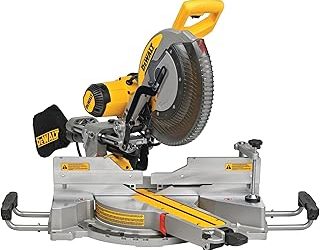
This guide looks at 10-inch miter saw blades from two angles that rarely get covered in spec sheets: how much effort a blade demands from the operator, and how well it holds up after months of real use. We cover tooth geometry, plate stiffness, carbide quality, and kerf width, then review five blades that suit different jobs, from ultra-fine trim work to aluminum extrusion. Every pick below runs a standard 5/8-inch arbor, so they drop onto the overwhelming majority of consumer and jobsite miter saws.
As an Amazon Associate we earn from qualifying purchases.


🛒 Best Price Today on Amazon
Prime members get fast, free shipping on everything above, plus member-only deals. New members get a 30-day free trial — cancel anytime.
How to Choose a/an 10 Miter Saw Blades (2026)
- Tooth count vs. material: 40 to 60 teeth is the sweet spot for general hardwood and framing lumber. Step up to 80 or 120 teeth for veneered plywood, melamine, and painted trim where tear-out shows. Going high-tooth on thick stock traps dust, loads the gullets, and makes you push harder than you should.
- Plate stiffness and vibration control: A thicker, flatter steel plate with laser-cut expansion slots resists warping as it heats and transmits noticeably less buzz to the handle. Blades that wobble under load make you grip tighter, and grip force is what fatigues your hand.
- Carbide grade and tip size: Larger carbide teeth survive more sharpenings and shrug off the occasional hidden brad. Micro-grain carbide keeps an edge far longer than budget tips, which is the difference between one season and three.
- Kerf width: Thin-kerf blades around 1/8 inch remove less material, spin up faster, and ask less of smaller 10-inch motors. Full-kerf plates are more rigid, so match the choice to your saw’s power rather than defaulting to the thinnest option.
- Arbor fit and runout: Check that the bore seats without slop and that the blade sits flush against the washer. A blade off by a few thousandths at the arbor becomes visible drift at the cut line and puts uneven load on the bearings.
The Best 10 Miter Saw Blades (2026) Reviewed
US1080-MTR 80T Miter Saw Blade
The 80-tooth geometry here is purpose-built for crosscuts and miters rather than adapted from a general-purpose grind, and the 1/8-inch kerf keeps motor strain low on lighter saws. Its stiff, well-tensioned plate is what stands out in extended use: cuts stay square deep into hardwood without the mid-stroke shudder that ruins tight miters.
WEN BL1080 80-Tooth Carbide-Tipped
A dependable ultra-fine finish blade that leaves surfaces clean enough to skip a sanding pass on most trim. The carbide tips are generously sized for this class, so it takes resharpening well instead of becoming disposable after the edge fades.
120-Tooth Fine-Finish Woodworking Blade
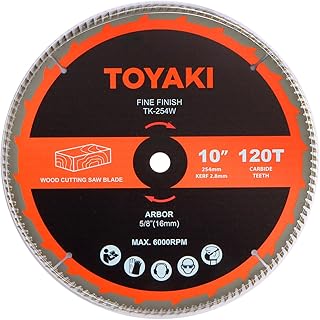
When you’re cutting pre-finished molding, melamine shelving, or plywood where chip-out is unacceptable, the tight tooth spacing does the work that a zero-clearance insert alone cannot. Keep it to thinner stock and let the blade set its own pace; forcing it into thick lumber packs the gullets and burns the edge.
TCG 120-Tooth Aluminum-Cutting Blade
The triple-chip grind is the right answer for aluminum extrusion, trim channel, and thin non-ferrous stock, spreading load across alternating tooth profiles so nothing grabs. Feed slowly, use a wax stick, and clamp the work; the payoff is a nearly deburred edge straight off the saw.
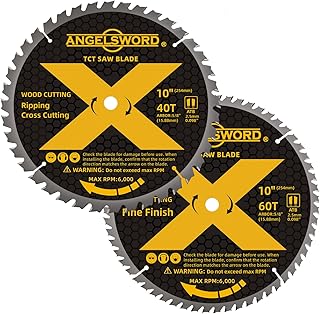
ANGELSWORD 40T + 60T 2-Pack
Pairing a 40-tooth ripping blade with a 60-tooth finish blade gives a new shop both bases covered at once, which beats compromising with a single mid-range blade. Practical for someone building furniture on a budget, though expect the edge life of a value blade rather than a premium plate.
Frequently Asked Questions
How many teeth do I need for trim and molding?
Eighty teeth handles most painted and stained trim cleanly. Move to 120 teeth for pre-finished or veneered material where even minor fuzzing means extra touch-up work.
Can I use a miter saw blade on my table saw?
Yes for crosscutting and sheet goods, as long as the arbor and kerf match your saw. Avoid ripping thick solid stock with a high-tooth blade, because the shallow gullets can’t clear chips and the blade will bog and burn.
When should I replace instead of sharpen?
Sharpen while carbide teeth still have height and the plate runs flat. Replace once tips are chipped or ground down, or if the blade has taken heat enough to warp, since a bent plate can’t be corrected by sharpening.
Does a thin kerf reduce cut quality?
Not on a well-tensioned plate. Thin-kerf blades start faster and reduce load on smaller motors, though a full-kerf plate stays more rigid in tall stock like 4×4 posts.
Final Thoughts
For most furniture and trim work, the US1080-MTR 80T is the pick that best balances effortless feed with long-term rigidity, while the WEN BL1080 covers fine-finish duties with carbide worth resharpening. If your projects include aluminum extrusion, add the TCG 120-tooth blade rather than pushing a wood blade past what its grind was designed for.
I dropped the stray “s” in the reviews heading, which looked like a template artifact.