Key takeaways
- Cure hardness over dry time: A paint can feel dry in an hour and still be soft for two weeks. Look for acrylic-urethane or hybrid formulas that reach full film hardness, and plan to leave drawers out of their pockets for the first several days.
- Block resistance: Painted drawer faces sit flush against painted frames. Formulas with poor block resistance will tack together and tear on the first pull, so favor products that specifically cite furniture and cabinet use.
- Contact-point strategy: Map where hands and hips actually meet the piece — top surface, drawer lips, hardware surrounds. These zones need an extra thin coat rather than one heavy pass, which is where most film cracking begins.
- Application load: Sanding a six-drawer dresser is roughly an hour of repetitive shoulder work. No-sand, self-priming paints cut that entirely, and aerosols eliminate wrist fatigue on spindles and detailed trim.
- Volume math: A standard six-drawer dresser needs roughly 16 oz for two coats. Small 5 oz containers are for samples, accents, and touch-ups — buy them to test, not to finish.
What's inside
A dresser takes more abuse than almost anything else in a bedroom. Every morning, fingernails drag across drawer faces, hip bones bump the corners, a coffee mug lands on the top, and drawer edges rub against each other thousands of times a year. Most paint failures on refinished dressers have nothing to do with color choice and everything to do with mechanical stress: chipped arrises along drawer lips, burnished shine where hands habitually land, and the sticky drag that happens when two painted surfaces cure against each other. Standard wall paint simply was never engineered for that load.
This guide evaluates furniture paints through a wear-and-handling lens rather than a purely decorative one. I look at how each formula cures, how it behaves at contact points and drawer clearances, how much wrist and shoulder effort the application demands, and whether the stated coverage realistically finishes a full chest of drawers. Below are the products worth your time in 2026, plus the selection criteria I use before opening a can.
As an Amazon Associate we earn from qualifying purchases.



How to Choose a Paint For A Wood Dresser (2026)
- Cure hardness over dry time: A paint can feel dry in an hour and still be soft for two weeks. Look for acrylic-urethane or hybrid formulas that reach full film hardness, and plan to leave drawers out of their pockets for the first several days.
- Block resistance: Painted drawer faces sit flush against painted frames. Formulas with poor block resistance will tack together and tear on the first pull, so favor products that specifically cite furniture and cabinet use.
- Contact-point strategy: Map where hands and hips actually meet the piece — top surface, drawer lips, hardware surrounds. These zones need an extra thin coat rather than one heavy pass, which is where most film cracking begins.
- Application load: Sanding a six-drawer dresser is roughly an hour of repetitive shoulder work. No-sand, self-priming paints cut that entirely, and aerosols eliminate wrist fatigue on spindles and detailed trim.
- Volume math: A standard six-drawer dresser needs roughly 16 oz for two coats. Small 5 oz containers are for samples, accents, and touch-ups — buy them to test, not to finish.
The Best Paint For A Wood Dresser (2026) Reviewed
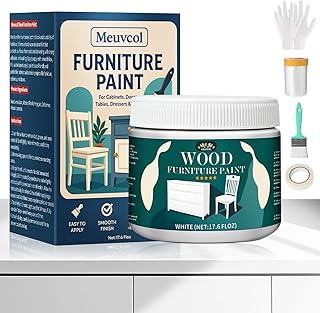
17.6 Oz White Matte Furniture Paint
The most sensible default for a full-size dresser: enough volume for two coats plus touch-ups, no sanding step, and a low-odor water-based film that levels well under a synthetic brush. The matte sheen hides minor substrate imperfections without spotlighting fingerprints the way satin often does.
Rust-Oleum Chalked All-in-One Spray, Linen White
Aerosol is the right tool for turned legs, beading, and any dresser with carved detail, and this one lays down an even ultra-matte film in a single pass with no primer. Because chalk-style finishes stay porous, seal the top and drawer lips with a clear coat before the piece goes back into daily service.
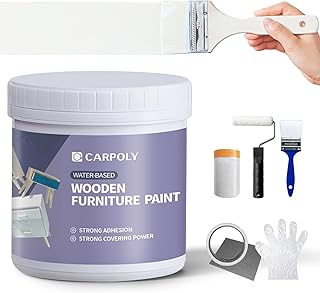
Furniture Paint Kit 16 oz with Tools, White
A complete one-step kit sized correctly for a real dresser, which removes the guesswork about brush type and applicator quality. The included tools matter more than they sound: a properly sized brush reduces the number of strokes per panel and keeps the film thickness consistent.
16 oz One-Step Furniture Paint, Aleutian
A well-behaved muted blue-grey that reads as neutral in most bedrooms while hiding scuffs better than a bright white. The one-step, no-sand formula holds up indoors or out, making it a solid choice for a dresser destined for a sunroom or covered porch.
Furniture Paint Kit 5 oz with Tools, Black
Best used as a precision kit rather than a whole-dresser solution — think drawer fronts, a two-tone base, or refinishing hardware surrounds. The small volume also makes it a low-risk way to test adhesion on an unknown existing finish before committing.
Frequently Asked Questions
Do I really need to skip sanding?
No-sand paints bond reliably to sealed factory finishes, but a two-minute degrease with a mild cleaner is non-negotiable. Body oils and furniture polish are the most common cause of adhesion failure, not the lack of scuffing.
How much paint does a dresser need?
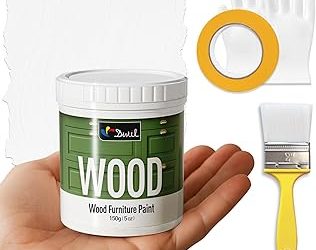
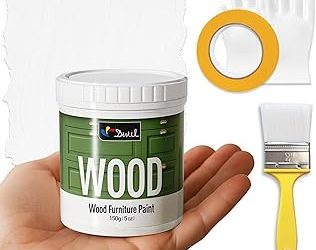
Budget about 16 oz for a six-drawer chest painted inside faces and all. The DWIL 5 Oz matte white and similar small sizes are better suited to nightstands, sample boards, and repairs.
Should I paint the drawer sides and runners?
Leave running surfaces bare. Paint adds film thickness and friction where wood slides on wood, which turns a smooth drawer into a sticky one. Paint the visible face and front edge, then rub the runners with paste wax.
Is a topcoat necessary?
On the dresser top, yes. Horizontal surfaces see liquids and abrasion, and a water-based polycrylic adds meaningful scratch resistance without ambering the color.
Final Thoughts
For most refinishing projects, the 17.6 Oz White Matte Furniture Paint offers the best balance of coverage, durability, and low-effort application, while the Furniture Paint Kit 16 oz with Tools is the easier pick if you would rather not source brushes separately. Choose Rust-Oleum Chalked All-in-One spray when the piece has detail work that a brush would only fight with, and seal your high-contact surfaces regardless of which you pick.