Key takeaways
- Film hardness over dry time: A paint can feel dry in 30 minutes and still be soft for two weeks. Check the manufacturer’s full cure window and keep drawers open during it, otherwise the faces will stick to the frame and tear on first pull.
- Contact-point sheen: Ultra-matte and chalk finishes hide surface flaws beautifully but burnish where skin oils and fingertips land. For a dresser used daily, either seal matte areas or choose a semi-gloss on drawer fronts and the top.
- Application effort and body position: Brushing a six-drawer chest means 45 minutes of sustained grip. Self-leveling water-based paints and spray formulas cut wrist fatigue significantly; if you have hand or shoulder issues, prioritize these.
- Prep tolerance: No-sand formulas save real labor on spindles, moldings, and carved fronts, but they still need degreasing. Adhesion failures on old dressers are almost always contamination, not missing scuff marks.
- Coverage math: A standard five-drawer dresser needs roughly 20 to 30 oz for two coats. Buying a quart is nearly always more economical and more consistent than stitching together small containers with slight batch variation.
What's inside
A dresser is one of the hardest-working pieces of furniture in a home, and its paint job fails in predictable places: the top edge where you lean, the drawer fronts your fingertips drag across a dozen times a day, and the inside lip of each drawer where wood meets wood under load. Most disappointing refinishes aren’t the result of bad color choices. They happen because a decorative coating was asked to do a mechanical job, and it couldn’t handle the friction, the pressure, or the humidity swings that a bedroom dresser lives through.
This guide looks at dresser paint through a durability and handling lens: how a film cures, how it resists blocking (that tacky grab when two painted surfaces meet), how it feels under the hand after a week, and how much physical effort the application actually demands. Below are the finishes worth your weekend, plus a framework for matching product to project.
As an Amazon Associate we earn from qualifying purchases.



🛒 Best Price Today on Amazon
Prime members get fast, free shipping on everything above, plus member-only deals. New members get a 30-day free trial — cancel anytime.
How to Choose a Paint For Wooden Dresser (2026)
- Film hardness over dry time: A paint can feel dry in 30 minutes and still be soft for two weeks. Check the manufacturer’s full cure window and keep drawers open during it, otherwise the faces will stick to the frame and tear on first pull.
- Contact-point sheen: Ultra-matte and chalk finishes hide surface flaws beautifully but burnish where skin oils and fingertips land. For a dresser used daily, either seal matte areas or choose a semi-gloss on drawer fronts and the top.
- Application effort and body position: Brushing a six-drawer chest means 45 minutes of sustained grip. Self-leveling water-based paints and spray formulas cut wrist fatigue significantly; if you have hand or shoulder issues, prioritize these.
- Prep tolerance: No-sand formulas save real labor on spindles, moldings, and carved fronts, but they still need degreasing. Adhesion failures on old dressers are almost always contamination, not missing scuff marks.
- Coverage math: A standard five-drawer dresser needs roughly 20 to 30 oz for two coats. Buying a quart is nearly always more economical and more consistent than stitching together small containers with slight batch variation.
The Best Paint For Wooden Dresser (2026)s Reviewed
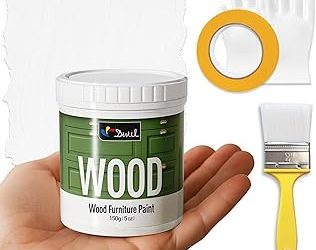
DWIL Matte Wood Paint, 32 Oz (Ivory White)
This is the practical default for a full dresser: a quart covers two coats with margin, and the included tools mean you’re not improvising with a stiff hardware-store brush. The matte film levels well and cures to a genuinely firm surface, though I’d still allow a full week before loading heavy drawers.
Rust-Oleum Chalked All-in-One Ultra Matte Spray
The strongest choice for detailed casework — turned legs, applied molding, latticework — where a brush leaves ridges and your forearm pays the price. One-coat coverage is realistic on lighter substrates, and the aerosol delivery eliminates the repetitive grip strain that makes hand-painting a chest genuinely tiring.
DWIL Acrylic Semi-Gloss Wood Paint (Grey Blue)
My pick when the dresser sees hard daily use. The semi-gloss film sheds fingerprints and cleans without burnishing, which is exactly what drawer fronts need, and the grey-blue reads as a considered design decision rather than a rescue project.
Chalk Paint for Furniture, 25.36 fl.Oz. with Brush
A proper chalk finish with the correct bristle stiffness included, which matters more than most people expect for laying down even coverage on a wide top. Beautiful velvet texture, but treat wax or topcoat as mandatory on horizontal surfaces rather than optional.
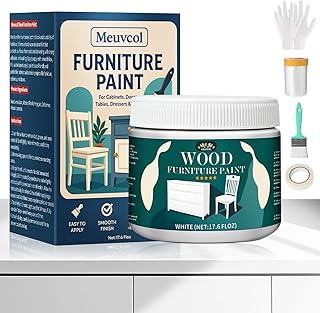
Furniture Paint for Wood & Cabinets, 17.6 Oz White Matte
A sensible mid-size option for a small three-drawer nightstand-height chest or for refreshing only the fronts of a larger piece. Low odor and no-sand application make it viable for indoor work in an occupied bedroom.
Frequently Asked Questions
Do I really need to sand an old dresser?
With modern no-sand formulas, usually not for adhesion — but you do need to clean thoroughly with a degreaser and knock down any glossy varnish with a quick scuff pad pass. Skipping the cleaning step is the most common cause of peeling.
Why do my drawers stick after painting?
Two causes: paint applied to the sliding surfaces, which adds thickness a wood runner can’t accommodate, and blocking from insufficient cure time. Leave runners and drawer sides bare, and rub a candle stub or paste wax on the wood-to-wood contact points.
How many coats should I plan on?
Two thin coats outperform one heavy coat every time, both in appearance and in film toughness. A third coat is worth it only on drawer fronts and the top, where wear concentrates.
Should I use a topcoat?
Yes on any matte or chalk finish, and on the dresser top regardless of sheen. A water-based polycrylic in satin adds meaningful abrasion resistance without the ambering you get from oil-based products over white.
Final Thoughts
For most wooden dressers, the DWIL 32 Oz Matte in Ivory White gives you the right quantity, a workable open time, and a finish that holds up with a topcoat. If your piece has ornate detail or your hands protest long brushing sessions, the Rust-Oleum Chalked spray is the efficient answer, and for a dresser facing genuinely heavy daily use, the DWIL Semi-Gloss Acrylic in Grey Blue is the most wear-tolerant of the group.