Key takeaways
- Measure seated clearance first: The published toilet clearance figure (33″ to 34″ on most quality units) is measured from the floor to the underside of the lowest fixed shelf. Compare it against your tank height plus at least four inches of knuckle room for the flush lever and lid removal. Anything tighter and you will be working around the cabinet every time the tank needs attention.
- Check the reach zone, not just the shelf count: Comfortable two-handed reach ends around 68″ for most adults. Shelves above that line are storage for spares and backstock, not for anything you need daily. Extra-tall units are excellent value, provided you plan the top tier for towels rather than contact lens solution.
- Respect the door swing: Hinged doors need 12″ to 14″ of unobstructed arc, which is a genuine problem in narrow rooms where the vanity or shower door competes for the same air. Barn-style sliding doors and open shelving sidestep this entirely.
- Read the panel spec, not the finish: FSC-certified MDF with fully sealed edges holds up well in a ventilated bathroom; bare or chipped edge banding wicks moisture and swells. Look for adjustable shelves supported on pins in a metal sleeve rather than raw drilled holes, and a rear crossbar or backer panel to stop the frame racking under load.
- Treat the anti-tip bracket as mandatory: These cabinets are tall, shallow, and top-loaded, which is the exact geometry that tips. Every unit here ships with a wall fitting. Fasten it into a stud or a proper drywall anchor before you load a single shelf.
What's inside
A bathroom rarely runs out of floor space before it runs out of usable wall. The strip above the tank is the most under-worked real estate in the house, and it is also the trickiest to furnish well: reach it wrong and you are ducking under a shelf every morning; build it wrong and six months of shower steam turns a tidy cabinet into a swollen, sagging one. Most shoppers only discover these problems after assembly, when the unit is already anchored and the packaging is in the recycling.
This guide looks at over-toilet storage the way a fitter would: seated head clearance, door swing paths, shelf depth versus shoulder reach, load paths through the side panels, and how the materials behave in a humid room over years rather than weeks. Below you will find the units worth your time in 2026, a checklist for matching one to your specific bathroom, and answers to the questions that come up mid-assembly.
As an Amazon Associate we earn from qualifying purchases.


How to Choose an Over The Toilet Storage Cabinet (2026)
- Measure seated clearance first: The published toilet clearance figure (33″ to 34″ on most quality units) is measured from the floor to the underside of the lowest fixed shelf. Compare it against your tank height plus at least four inches of knuckle room for the flush lever and lid removal. Anything tighter and you will be working around the cabinet every time the tank needs attention.
- Check the reach zone, not just the shelf count: Comfortable two-handed reach ends around 68″ for most adults. Shelves above that line are storage for spares and backstock, not for anything you need daily. Extra-tall units are excellent value, provided you plan the top tier for towels rather than contact lens solution.
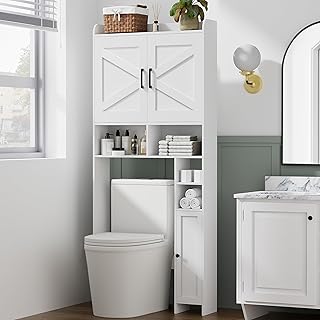
- Respect the door swing: Hinged doors need 12″ to 14″ of unobstructed arc, which is a genuine problem in narrow rooms where the vanity or shower door competes for the same air. Barn-style sliding doors and open shelving sidestep this entirely.
- Read the panel spec, not the finish: FSC-certified MDF with fully sealed edges holds up well in a ventilated bathroom; bare or chipped edge banding wicks moisture and swells. Look for adjustable shelves supported on pins in a metal sleeve rather than raw drilled holes, and a rear crossbar or backer panel to stop the frame racking under load.
- Treat the anti-tip bracket as mandatory: These cabinets are tall, shallow, and top-loaded, which is the exact geometry that tips. Every unit here ships with a wall fitting. Fasten it into a stud or a proper drywall anchor before you load a single shelf.
The Best Over The Toilet Storage Cabinets (2026) Reviewed
Spirich Over The Toilet Storage Cabinet with Doors
The 33.3″ clearance and adjustable rear crossbar make this the most adaptable unit for older bathrooms with tall or oddly shaped tanks, and the beadboard doors hide the clutter you would rather not display. FSC-certified MDF panels with a genuine anti-tip fitting put it ahead of most similarly priced cabinets on structural confidence.
UTEX Over The Toilet Storage Cabinet
A slightly taller 34″ clearance and a sensible split between closed cabinet space and an open lower shelf, so towels stay grabbable while medications and refills stay behind doors. Shelves adjust cleanly, which matters more than raw capacity when you are storing bottles of wildly different heights.
Extra Tall Bathroom Organizer with 4 Open Shelves and 2 Barn Doors
The best answer for narrow rooms: sliding barn doors need zero swing clearance, and four open shelves put daily items in the reach zone without any door-opening step at all. The height is generous, so reserve the topmost shelf for lightweight backstock and keep the load low in the frame.
IFGET Arched Cabinet with Acrylic Doors
Natural oak tones with fluted acrylic doors give you visual softening in a room full of hard right angles, and the arch profile reads as furniture rather than storage. It is the more design-forward option here, with an adjustable interior shelf that keeps it practical.
Homhedy Wooden Cabinet with Barn Door
Farmhouse styling with a genuinely useful detail: an integrated toilet paper holder that stops rolls from living on the floor or the tank lid. The single sliding door keeps the footprint honest in tight bathrooms.
Frequently Asked Questions
Do I really need to anchor it to the wall?
Yes. A tall, shallow cabinet loaded at the top will tip if bumped, leaned on, or climbed by a curious child. Use the supplied bracket into a stud where possible, or a rated drywall anchor where studs do not line up.
Will MDF survive a bathroom?
In a room with working ventilation, sealed and finished MDF performs reliably for years. Run the extractor fan or crack a window during showers, wipe spills promptly, and avoid mounting the unit where it catches direct spray from the shower.
Are the arched cabinets less practical?
Only marginally. Arched designs like the Spurgehom and IFGET units lose a small amount of usable corner volume at the top, which affects tall bottles more than folded towels. In exchange you get a softer, less utilitarian look.
Can I fit one over a wall-hung or tankless toilet?
Usually with room to spare, since these toilets remove the tank that normally eats the clearance. Measure from the floor to the top of the bowl or concealed cistern housing and confirm the base legs straddle your fixture footprint.
Final Thoughts
For most bathrooms, the Spirich cabinet is the safest bet thanks to its adjustable crossbar and forgiving clearance, while the UTEX unit edges ahead if you want a taller gap above the tank and a mix of hidden and open storage. If your door swing is genuinely blocked, the extra-tall barn door organizer solves the problem outright. Whichever you choose, anchor it properly and load the heavy items low.