Key takeaways
- Reach zone placement: Anything used more than five times per session belongs between hip and shoulder height. Reserve the bottom 12 inches for paper reams and gesso jugs you lift with both hands, and the top tier for annual-use items only.
- Verified shelf capacity, not shelf count: Six adjustable shelves mean little if each holds 20 pounds. Look for stated per-shelf ratings and reinforced steel returns along the front edge, which is where deflection begins.
- Surface chemistry: Powder-coated steel shrugs off mineral spirits, alcohol inks, and acetone spills. Melamine and laminate swell permanently once liquid finds a seam, so keep wood surfaces above your wet zone.
- Drawer glide quality and pull force: Ball-bearing or channel glides should open a loaded drawer with light fingertip pressure. Friction-fit plastic bins that require a two-handed yank will aggravate wrists over time.
- Mobility with a locking answer: Casters let you bring supplies to the easel rather than walking back and forth, but at least two must lock. Unbraked carts drift under lateral load and turn into a tipping hazard around children.
What's inside
Art supplies punish storage in ways ordinary household clutter never does. Solvent bottles weep, gouache tubes ooze, graphite dust migrates into everything, and a single flat of acrylic heavy bodies can push 40 pounds onto a shelf rated for far less. Meanwhile the studio owner is the one absorbing the design flaws: bending to floor-level bins for the brushes used hourly, wrestling drawers that bind halfway out, or stacking canvases on top of a cabinet whose particleboard top has already started to bow. Poor storage does not just look messy. It quietly costs you shoulder rotations, wrist torque, and materials.
This guide evaluates storage cabinets for art supplies through two lenses I use professionally: ergonomics (where things sit relative to your body, and how much effort retrieval demands) and durability (whether the structure survives ten years of solvent exposure, uneven loading, and repeated drawer cycles). Below are six units spanning tall steel cupboards, lockable rolling drawer carts, and heavy-gauge cabinets built for tools that happen to suit oil painters remarkably well.
As an Amazon Associate we earn from qualifying purchases.


How to Choose a Storage Cabinet For Art Supplies (2026)
- Reach zone placement: Anything used more than five times per session belongs between hip and shoulder height. Reserve the bottom 12 inches for paper reams and gesso jugs you lift with both hands, and the top tier for annual-use items only.
- Verified shelf capacity, not shelf count: Six adjustable shelves mean little if each holds 20 pounds. Look for stated per-shelf ratings and reinforced steel returns along the front edge, which is where deflection begins.
- Surface chemistry: Powder-coated steel shrugs off mineral spirits, alcohol inks, and acetone spills. Melamine and laminate swell permanently once liquid finds a seam, so keep wood surfaces above your wet zone.
- Drawer glide quality and pull force: Ball-bearing or channel glides should open a loaded drawer with light fingertip pressure. Friction-fit plastic bins that require a two-handed yank will aggravate wrists over time.
- Mobility with a locking answer: Casters let you bring supplies to the easel rather than walking back and forth, but at least two must lock. Unbraked carts drift under lateral load and turn into a tipping hazard around children.
The Best Storage Cabinet For Art Supplies (2026)s Reviewed
GAIOUS 75.2″ Tall Metal Storage Cabinet
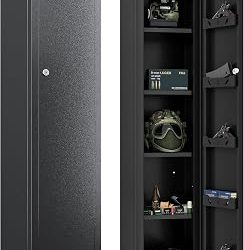
Five adjustable shelves across 75 inches of steel give you genuine control over reach zones, letting you park daily paints at eye level and archive finished work up high. The full-height doors also block UV and dust, which meaningfully extends pigment and paper life in a bright studio.
10 Drawer Rolling Storage Cart with Wood Top
Shallow drawers are the correct format for art supplies because they keep everything in one visible layer instead of a stratified pile, and the wood top doubles as a mixing or cutting surface at standing height. Built for classroom abuse, it handles constant repositioning without racking at the frame joints.
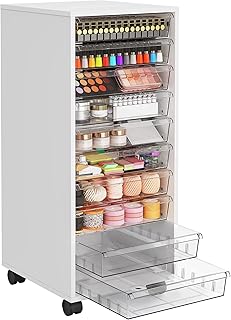
Storage Drawer Cart with 10 Clear Drawers
Clear fronts eliminate the open-and-guess routine that quietly adds dozens of unnecessary movements to a work session. It is the lighter-duty option here, so keep dense items like clay and medium bottles in the lower drawers and reserve the top tiers for brushes, pens, and pastels.
Metal Storage Cabinet with 2 Doors and Adjustable Shelf (White)
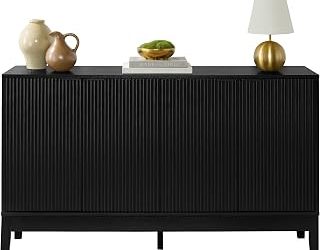
At sideboard height, this one shines as a secondary station beside a desk or easel: the top becomes a staging surface at natural elbow level while the interior swallows bulk stock. Steel construction and a single adjustable shelf make it easy to reconfigure for tall bottles or stacked flats.
Metal Garage Storage Cabinet with Drawer (4-Door)
Borrowed from the tool world, its heavier gauge steel and lockable doors make it the most solvent-tolerant and secure choice for oils, varnishes, and anything you need kept away from curious hands. The integrated drawer is ideal for palette knives and small hardware that otherwise vanishes.
Frequently Asked Questions
What height should my main supply cabinet be?
Aim for your most-used shelf to land between 30 and 55 inches from the floor. Tall units are efficient overall, but treat everything above 60 inches as archival storage to avoid overhead lifting.
Are metal cabinets better than wood for art supplies?
For anything involving liquids, yes. Powder-coated steel resists solvents, wipes clean, and does not swell, while wood and laminate remain preferable only as work surfaces.
Do I need locks?
If you store solvents, fixatives, oil-based mediums, or utility blades and share your space with children or pets, locks are a safety requirement rather than a convenience feature.
How do I stop drawers from sagging?
Distribute weight low and evenly, avoid loading a single drawer past roughly two-thirds of its rated capacity, and periodically check that casters sit on level flooring, since a twisted frame is the usual cause of binding glides.
Final Thoughts
For most studios, the GAIOUS 75.2″ tall metal cabinet is the strongest foundation, offering adjustable reach zones and enclosed protection in a durable steel shell. Pair it with the 10 Drawer Rolling Cart with Wood Top for active, at-the-easel access, and add the 4-door metal garage cabinet if solvents and sharp tools need to be locked away.