Key takeaways
- Match height to your reach zone: Comfortable, repeatable access tops out around shoulder height. If a 55″ cabinet puts the uppermost drawer above your shoulder line, reserve that drawer for lightweight, infrequently used items and keep daily clothing between hip and chest height.
- Prioritize glide hardware over drawer count: Full-extension ball-bearing or roller slides let you access the rear third of the drawer without leaning forward, which is where most low-back strain originates. Wood-on-wood runners feel charming and bind within a season under real loads.
- Read the per-drawer load rating, not the total: A dresser rated for 110 lb overall may permit only 15 lb per drawer. Folded sweaters and jeans hit that ceiling fast, and overloading is the leading cause of bowed drawer bottoms and slide derailment.
- Check case construction and back panel: Look for a solid or thick engineered back rather than a stapled hardboard sheet, plus a center support rail on wider drawers. Rigidity in the carcass is what stops the sway you feel when a heavy drawer is fully open.
- Anchor it, without exception: Narrow, top-heavy cabinets are the highest tip-over risk in any bedroom. Confirm the model ships with a wall strap, and mount into a stud or a proper drywall anchor before loading a single garment.
What's inside
A tall dresser occupies an awkward middle ground in furniture design: it has to hold a serious amount of clothing in a narrow footprint, yet it also has to stay upright, glide smoothly, and remain comfortable to use thousands of times a year. Most shoppers discover the problem after delivery. The top drawer sits at chin height and requires a shoulder lift to reach the back. The bottom drawer sags under folded denim. The whole cabinet rocks slightly when a loaded drawer is pulled out, because the case is held together with cam locks and hope rather than proper joinery and a braced back panel.
This guide evaluates tall dressers the way a durability tester would: reach envelope and pull height, drawer glide type and travel, load capacity per drawer, case rigidity, and anti-tip provisions. Below are six models worth considering in 2026, followed by the specifications that actually predict whether a dresser survives a decade of daily use.
As an Amazon Associate we earn from qualifying purchases.


How to Choose a/an Tall Dresser (2026)
- Match height to your reach zone: Comfortable, repeatable access tops out around shoulder height. If a 55″ cabinet puts the uppermost drawer above your shoulder line, reserve that drawer for lightweight, infrequently used items and keep daily clothing between hip and chest height.
- Prioritize glide hardware over drawer count: Full-extension ball-bearing or roller slides let you access the rear third of the drawer without leaning forward, which is where most low-back strain originates. Wood-on-wood runners feel charming and bind within a season under real loads.
- Read the per-drawer load rating, not the total: A dresser rated for 110 lb overall may permit only 15 lb per drawer. Folded sweaters and jeans hit that ceiling fast, and overloading is the leading cause of bowed drawer bottoms and slide derailment.
- Check case construction and back panel: Look for a solid or thick engineered back rather than a stapled hardboard sheet, plus a center support rail on wider drawers. Rigidity in the carcass is what stops the sway you feel when a heavy drawer is fully open.
- Anchor it, without exception: Narrow, top-heavy cabinets are the highest tip-over risk in any bedroom. Confirm the model ships with a wall strap, and mount into a stud or a proper drywall anchor before loading a single garment.
The Best Tall Dresser (2026)s Reviewed
Aitjunz Modern 7-Drawer Dresser, 55″ Tall
At 55 inches with seven drawers, this is the storage-density champion of the group, and the softened curved profile is a genuine ergonomic asset in tight bedrooms where you brush past furniture in the dark. Treat the top two drawers as a lightweight zone, anchor it firmly, and it delivers closet-scale capacity in a slim vertical footprint.
Furniway Walnut 5-Drawer Dresser, 47.2″ Tall
The smooth-slide hardware is the headline here, and it matters: consistent glide resistance is what keeps a dresser pleasant to use rather than something you brace against. At 47 inches with a 15.7-inch depth, the drawer openings sit within easy reach for most adults, and the golden pulls offer a full hand grip instead of a fingertip pinch.
Decofy Fluted 5-Drawer Dresser, 48″ Tall
Rounded edges and metal handles make this the safest choice for a hallway or high-traffic corner, where sharp corners and shins eventually meet. The fluted front adds visual mass without adding depth, though as with any fluted panel, expect to run a dusting brush along the grooves rather than a flat cloth.
Garvee 5-Drawer Dresser, 43.3″ Tall
At 43 inches, this is the most ergonomically forgiving option in the roundup: every drawer, including the top one, falls comfortably below shoulder height for the majority of users. That makes it the natural pick for shared bedrooms, kids’ rooms, or anyone who would rather not reach overhead while holding an armful of laundry.
Sweetcrispy 8-Drawer Black Fabric Dresser
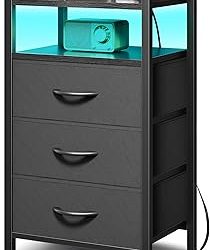
A steel frame with fabric bins and a wood top solves a different problem: light, breathable storage that carries no risk of sagging plywood or seized slides. Fabric drawers won’t take heavy or sharp items, but for socks, tees, and seasonal layers in a closet or rental, the weight-to-capacity ratio is hard to beat.
Fluted 6-Drawer Dresser, 46″ Tall
Doubling as a TV stand, this 46-inch cabinet asks its top surface to carry a static load, so verify the panel rating before mounting anything substantial. The six-drawer layout gives you finer sorting than a five-drawer case at nearly the same height, which reduces the digging that wears out slides prematurely.
Frequently Asked Questions
How tall is too tall for a bedroom dresser?
Once the top drawer clears your shoulder, you lose visibility into the drawer and start lifting items overhead. For most adults that threshold falls between 48 and 54 inches. Taller cabinets remain practical if you assign the upper drawers to light, low-frequency storage.
Do I really need to anchor a tall dresser?
Yes. A narrow cabinet with loaded upper drawers has a high center of gravity, and an open drawer shifts that mass forward past the base. Anchoring is the single most effective safety step, and it takes about ten minutes.
Which drawer slides last the longest?
Steel ball-bearing slides with full extension outlast roller slides, which in turn outlast wood runners. Ball-bearing hardware distributes load across the slide length, so drawers stay square and continue to close cleanly as the cabinet ages.
Are fabric-drawer dressers durable?
They hold up well within their design limits. The steel frame carries the load rather than the bins, so failures usually come from overstuffing or from dragging sharp objects across the fabric. Keep contents soft and light and they last for years.
Final Thoughts
For maximum capacity in minimal floor space, the Aitjunz 55″ seven-drawer cabinet is the clear pick, provided you anchor it and load it thoughtfully. If comfortable, strain-free access matters more than sheer volume, the Garvee 43.3″ keeps every drawer inside an easy reach envelope, while the Furniway walnut model splits the difference with the smoothest glide hardware of the group.