Key takeaways
- Reach height over floor footprint: Your hands work most comfortably between roughly knee and shoulder height, so a tall narrow tower like the 47-inch models keeps daily pairs in that band while a low bench pushes everything into a deep squat. In a hallway under 40 inches wide, vertical is almost always the ergonomic answer.
- Flip drawers versus swing doors: Flip-down drawers need only an inch or two of front clearance and swing away from your shins, which suits tight halls. Swing doors give you full-width access and adjustable shelf height, better if you store boots, heels, and kids’ sneakers in the same cabinet.
- Panel thickness and joinery: Look for engineered panels of at least 15mm with cam-lock and dowel construction rather than staples alone. Thin backing boards are the usual failure point, so a full or half back panel matters more than the veneer finish.
- Hinge and pivot quality: An entryway cabinet gets opened two to six times a day, every day. Metal pivot hardware and a proper stop mechanism outlast plastic clips considerably, and cabinets with soft-close or damped travel take shock loading off the frame.
- Ventilation and moisture handling: Sealed compartments trap humidity from damp shoes, which swells particleboard from the inside and breeds odor. Perforated backs, ventilation holes, or raised legs keep air moving and lift the base above mop water.
What's inside
An entryway fails quietly. It starts with one pair kicked off by the door, then four, and within a month the first six feet of your home has become a tripping hazard you step around without noticing. Most people respond by buying the cheapest cabinet with the biggest capacity number on the box, and that is exactly where the trouble begins: a cabinet sized for volume alone forces you to crouch, twist, and root through stacked shelves every time you leave the house. Add wet boots, particleboard, and a hinge rated for a few hundred cycles, and the whole thing sags within two winters.
I evaluate storage furniture the way I would evaluate a workstation: how far you reach, how deep you bend, how many times a moving part gets used before it loosens, and how much weight the structure carries at its weakest joint. This guide applies that lens to six freestanding entryway shoe cabinets available in 2026, covering flip-drawer and swing-door designs, then breaks down the specifications that actually predict whether a unit still closes cleanly three years from now.
As an Amazon Associate we earn from qualifying purchases.


How to Choose a Shoe Cabinet For Entryway (2026)
- Reach height over floor footprint: Your hands work most comfortably between roughly knee and shoulder height, so a tall narrow tower like the 47-inch models keeps daily pairs in that band while a low bench pushes everything into a deep squat. In a hallway under 40 inches wide, vertical is almost always the ergonomic answer.
- Flip drawers versus swing doors: Flip-down drawers need only an inch or two of front clearance and swing away from your shins, which suits tight halls. Swing doors give you full-width access and adjustable shelf height, better if you store boots, heels, and kids’ sneakers in the same cabinet.
- Panel thickness and joinery: Look for engineered panels of at least 15mm with cam-lock and dowel construction rather than staples alone. Thin backing boards are the usual failure point, so a full or half back panel matters more than the veneer finish.
- Hinge and pivot quality: An entryway cabinet gets opened two to six times a day, every day. Metal pivot hardware and a proper stop mechanism outlast plastic clips considerably, and cabinets with soft-close or damped travel take shock loading off the frame.
- Ventilation and moisture handling: Sealed compartments trap humidity from damp shoes, which swells particleboard from the inside and breeds odor. Perforated backs, ventilation holes, or raised legs keep air moving and lift the base above mop water.
The Best Shoe Cabinet For Entryway (2026)s Reviewed
BORNOON Shoe Cabinet with 3 Flip Drawers
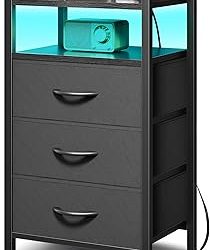
At 9.45 inches deep, this is the unit I would specify for a genuinely narrow hallway, and the three flip drawers open without invading walking space. The concealed-front design keeps clutter out of sight, though the shallow depth means larger men’s sneakers sit angled rather than flat.
Large Shoe Cabinet with 3 Doors & Adjustable Shelves
The 47-inch-wide footprint and adjustable shelving make this the most versatile option here for a family entry, with realistic capacity in the 30-pair range once you account for bulkier footwear. Built-in ventilation holes are a meaningful durability feature, not a marketing line, since they slow the moisture damage that kills cheaper cabinets.
Vlsrka 3-Door Shoe Storage Cabinet
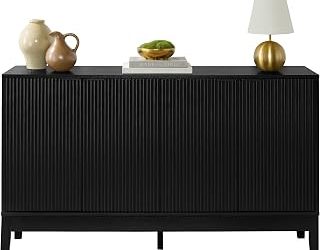
A well-proportioned four-tier cabinet that hits the sweet spot for couples or small households at around 20 pairs. The matte black farmhouse finish hides scuffs better than white laminate, which counts for something at ankle height where bags and boots make contact.
Decofy 47.2″ Shoe Cabinet with 4 Flip-Down Drawers
Four flip drawers across a 47-inch vertical frame give you the highest pair-per-square-foot ratio in this roundup, and three adjustable levels let you reassign a compartment to taller footwear. The walnut finish reads warmer than most laminates, and the narrow profile keeps traffic flowing.
Homleke Farmhouse Shoe Cabinet with 2 Barn Doors
Raised wood legs are the standout detail here, lifting the carcass clear of floor moisture and making the baseboard area easy to clean. The sliding-style barn doors need no swing arc, a practical advantage when the cabinet sits opposite a door or wall.
Frequently Asked Questions
How deep does an entryway shoe cabinet need to be?
Around 12 inches lets most adult shoes sit flat and forward-facing. Slimmer cabinets near 9 inches work well but store shoes tilted, which suits sneakers and flats better than boots.
Are flip drawers or doors more durable?
Doors generally are, because their hinges carry a lighter and better-supported load. Flip drawers rely on pivot hardware under constant leverage, so check for metal rather than plastic mechanisms if you expect heavy daily use.
Should I anchor a tall shoe cabinet to the wall?
Yes. Any unit approaching 47 inches with a narrow base should be secured with the supplied anti-tip hardware, particularly in homes with children or pets.
How do I stop odor building up inside?
Choose a ventilated or open-backed design, let wet shoes dry before storing them, and keep a cedar block or activated charcoal sachet on the lowest shelf.
Final Thoughts
For most entryways, the Large 3-Door Shoe Cabinet with adjustable shelves offers the best balance of capacity, ventilation, and long-term structural sense, while the Decofy 47.2″ flip-drawer tower is the smarter pick where floor space is scarce. If your hallway is genuinely tight, the slim BORNOON at under 10 inches deep remains the one that will not have you sidestepping your own furniture.