Key takeaways
- Construction: Check whether the frame, drawer fronts, legs, and runners are solid wood, veneer, or engineered wood. A well-built mixed-material dresser can be durable, but construction quality matters more than the label alone.
- Stability: Prefer broad bases, substantial legs, and a supplied anti-tip kit. Tall dressers should be anchored to the wall, particularly in homes with children, pets, or uneven flooring.
- Drawer usability: Look for full-extension or smoothly gliding runners, consistent gaps, and drawer dimensions that match your clothing. Deep drawers are useful, but shallow upper drawers often improve organization and access.
- Ergonomics: Handles and recessed pulls should be easy to grasp without sharp edges. Keep frequently used items between waist and shoulder height, and avoid placing heavy contents in the highest drawers.
- Room fit: Measure doorways, stair turns, baseboards, and walking clearance—not just the available wall. Leave enough space to open drawers fully without striking a bed or nearby furniture.
What's inside
A wood dresser has to do more than look attractive in a bedroom photograph. It must carry daily loads without racking, open smoothly when drawers are full, and fit its footprint without creating awkward reaches or blocked walkways. Many buyers discover too late that “wood” can mean anything from solid timber to a thin veneer over engineered board, while drawer depth, handle placement, and leg clearance vary considerably.
This guide evaluates six popular styles through an ergonomics-and-durability lens, focusing on storage access, structural stability, material expectations, and long-term practicality. The recommendations cover compact tall chests, wide bedroom dressers, and versatile pieces that can also function as media consoles or entryway storage.
As an Amazon Associate we earn from qualifying purchases.




How to Choose a Wood Dresser (2026)
- Construction: Check whether the frame, drawer fronts, legs, and runners are solid wood, veneer, or engineered wood. A well-built mixed-material dresser can be durable, but construction quality matters more than the label alone.
- Stability: Prefer broad bases, substantial legs, and a supplied anti-tip kit. Tall dressers should be anchored to the wall, particularly in homes with children, pets, or uneven flooring.
- Drawer usability: Look for full-extension or smoothly gliding runners, consistent gaps, and drawer dimensions that match your clothing. Deep drawers are useful, but shallow upper drawers often improve organization and access.
- Ergonomics: Handles and recessed pulls should be easy to grasp without sharp edges. Keep frequently used items between waist and shoulder height, and avoid placing heavy contents in the highest drawers.
- Room fit: Measure doorways, stair turns, baseboards, and walking clearance—not just the available wall. Leave enough space to open drawers fully without striking a bed or nearby furniture.
The Best Wood Dressers (2026) Reviewed
Walnut 5-Drawer Mid-Century Dresser
This tall walnut dresser is a sensible choice for rooms that need vertical storage without sacrificing floor space. Its wood legs create useful clearance for cleaning underneath, while the five-drawer layout keeps folded clothing within a relatively compact footprint. Before buying, verify drawer-extension details and anchor it securely because its taller profile places more emphasis on tip resistance.
Tradare 55-Inch Walnut 6-Drawer Dresser
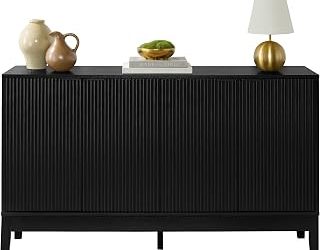
The Tradare walnut dresser takes a wider, lower approach that is generally easier to access for shorter users and more naturally stable than a narrow chest. Six drawers provide balanced storage for clothing or household items, and the broad surface can serve as a media stand or entryway cabinet. Its versatility is strongest when the room can accommodate the 55-inch width without reducing circulation space.
Farmhouse 48-Inch Tall 5-Drawer Dresser
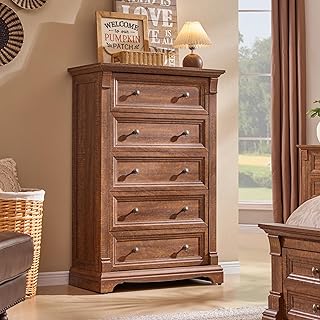
With reclaimed-barnwood styling, this farmhouse dresser suits interiors where visual warmth matters as much as storage. The tall five-drawer arrangement uses wall height efficiently, but buyers should pay close attention to finish texture and drawer operation: rustic surfaces may include more visible variation, and rough hardware or uneven runners can become irritating during frequent use.
Natural Solid-Wood 6-Drawer Dresser
This mid-century-inspired six-drawer dresser is the strongest fit for shoppers prioritizing a natural solid-wood presentation and a conventional clothing-storage layout. Its approximately 45-inch height keeps most drawers in a comfortable reach zone, reducing the need for repeated bending or overhead access. Solid wood can expand and contract with seasonal humidity, so allow ventilation and avoid positioning it directly against a damp exterior wall.
Aitjunz Modern 8-Drawer Dresser
The Aitjunz dresser offers eight drawers across a 55-inch-wide frame, making it useful for couples, shared bedrooms, or anyone who prefers sorting garments by category. Its curved profile softens the visual bulk of a wide piece, while the larger footprint can improve perceived stability. Measure carefully around bedside furniture, and confirm that the curved front does not reduce usable drawer clearance in a tight room.
Frequently Asked Questions
Is solid wood always better than engineered wood?
Not automatically. Solid wood can be repaired and has strong long-term appeal, but quality engineered panels may resist warping and provide a stable substrate. Examine joinery, drawer runners, back-panel construction, and the weight capacity rather than relying on the material description alone.
How do I stop a tall dresser from tipping?
Install the included anti-tip hardware into a wall stud whenever possible, or use an appropriate wall anchor for your wall type. Keep heavy items in the lower drawers, close one drawer at a time, and avoid allowing children to climb or pull on open drawers.
What dresser height is easiest to use?
A mid-height dresser usually offers the best compromise for everyday clothing because the middle drawers sit near the natural reach zone. Tall dressers save floor area, while wide low dressers are often easier to access and can provide a more stable surface.
How much clearance should I leave in front of drawers?
Plan for the drawer depth plus standing room. In practice, around 36 inches of clear space is a comfortable target for opening drawers and sorting clothes, though a smaller clearance may work if the dresser is used occasionally and the drawers are shallow.
Final Thoughts
The Tradare 55-Inch Walnut Dresser is a strong all-around choice when accessible, wide storage is the priority, while the Natural Solid-Wood 6-Drawer Dresser better suits buyers focused on material character and a comfortable mid-height layout. For maximum organization, the Aitjunz Modern 8-Drawer Dresser provides the most compartmentalized storage, provided its generous width fits your room and walking paths.