Key takeaways
- Frame strength: Look for substantial metal tubing, secure joints, and a design that resists racking when garments are moved from side to side.
- Load distribution: Coats, denim, and folded clothing can quickly exceed expectations, so prioritize multiple rods, supported shelves, and clearly stated capacity information.
- Adjustability: Expandable widths and repositionable shelves make it easier to fit alcoves, changing wardrobes, or rooms with uneven storage needs.
- Ergonomics: Hanging rods should be reachable without excessive stretching, while shelves and drawers should remain accessible when the unit is fully loaded.
- Room compatibility: Measure width, depth, ceiling clearance, and walking space before buying; also consider whether an open rack or covered wardrobe suits the room’s dust and visual demands.
What's inside
Wardrobe storage often fails in predictable ways: thin tubing flexes under real clothing loads, shelves sag when packed, and freestanding units become awkward to use when doors, drawers, or hanging space are poorly positioned. The right solution depends less on appearance alone than on frame stability, usable depth, adjustability, and how well the system fits your room and daily routine.
This guide compares practical wardrobe solutions for bedrooms, dressing areas, guest rooms, and temporary living spaces. The focus is ergonomics and durability: comfortable access, sensible load distribution, adaptable dimensions, and construction details that help a storage system remain useful after the initial setup.
As an Amazon Associate we earn from qualifying purchases.


How to Choose a/an Wardrobe Solutions (2026)
- Frame strength: Look for substantial metal tubing, secure joints, and a design that resists racking when garments are moved from side to side.
- Load distribution: Coats, denim, and folded clothing can quickly exceed expectations, so prioritize multiple rods, supported shelves, and clearly stated capacity information.
- Adjustability: Expandable widths and repositionable shelves make it easier to fit alcoves, changing wardrobes, or rooms with uneven storage needs.
- Ergonomics: Hanging rods should be reachable without excessive stretching, while shelves and drawers should remain accessible when the unit is fully loaded.
- Room compatibility: Measure width, depth, ceiling clearance, and walking space before buying; also consider whether an open rack or covered wardrobe suits the room’s dust and visual demands.
The Best Wardrobe Solutions (2026)s Reviewed
HOMIDEC Portable Wardrobe Closet
The HOMIDEC Wardrobe Closet combines a hanging rod with four tiers of shelving, giving it a useful balance for garments, shoes, folded items, and accessories. Its freestanding format suits rooms without built-in storage, although careful leveling and even loading are important for keeping an open rack steady during daily use.
E10 Expandable Clothes Rack
The E10 Clothes Rack is the strongest fit for buyers who need substantial hanging capacity and a flexible footprint. Its stretchable rod system expands from a compact width to a much larger span, making it practical for shared rooms or changing storage demands; measure carefully so the expanded frame does not encroach on circulation space.
Modular Closet System with Six Drawers
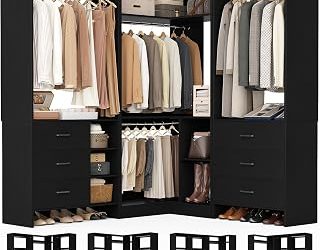
This modular wood closet system is designed for a more permanent, built-in-style arrangement, with six drawers, adjustable shelves, and multiple expandable hanging rods. It is particularly well suited to walk-in closets because separated towers can improve organization and reduce the need to lift heavy folded clothing onto high shelves.
E1 Heavy Duty Closet Garment Rack
The E1 Heavy Duty Closet Garment Rack offers six adjustable tiers and four hanger rods, giving users several ways to divide long garments, short garments, and folded storage. Its metal construction is a sensible choice for heavier wardrobes, while the expandable layout helps accommodate changing room dimensions without committing to fixed cabinetry.
LOKEME Portable Wardrobe Closet
LOKEME’s portable closet uses three hanging rods, six storage shelves, and side pockets to create a high-capacity arrangement in a relatively approachable format. The 19 mm steel pipe frame provides a sturdier foundation than lightweight fabric-only organizers, and the side pockets are ergonomically useful for small items that otherwise disappear on shelves.
Frequently Asked Questions
Are portable wardrobes sturdy enough for everyday use?
Yes, provided the frame is assembled correctly and the load is distributed across its rods and shelves. Avoid concentrating heavy coats or boxes at one end, and use any supplied wall-stabilizing hardware when the manufacturer recommends it.
Should I choose an open clothing rack or a covered wardrobe?
Open racks offer faster visibility and easier access, which is helpful when dressing frequently. Covered models provide better protection from dust and visual clutter, making them preferable for guest rooms, seasonal storage, or bedrooms where a cleaner appearance matters.
How much depth does a wardrobe need?
Most adult hangers require roughly 18 to 24 inches of usable depth, depending on garment thickness and hanger orientation. Always compare the product’s external depth with the clearance needed for doors, drawers, and a comfortable walking path.
Can an expandable wardrobe replace built-in storage?
For many renters and flexible rooms, it can provide comparable organization without permanent installation. Built-in cabinetry generally offers better long-term finish and anchoring, but an expandable system is easier to relocate, reconfigure, or replace as storage needs change.
Final Thoughts
For flexible everyday storage, the HOMIDEC Portable Wardrobe Closet is a balanced starting point, while the E10 Expandable Clothes Rack is better for broad hanging capacity and changing room layouts. Buyers seeking a more structured, long-term arrangement should consider the Modular Closet System with Six Drawers for its combination of drawers, shelves, and multiple hanging zones.