Our Top Picks
The best kids dresser is the one that is stable, anchored to the wall, and sized for the child as well as the room: a low four-drawer dresser suits most nurseries and toddlers, a tall chest suits school-age children who need more hanging space and shorter room footprints, and a dresser with a changing-table topper suits families who want one piece to cover the baby years and beyond. Safety features come first, and style and storage second.
Kids Dressers at a Glance
| Dresser type | Best for | Typical stated features | Limits |
|---|---|---|---|
| Low double dresser (6 drawers) | Nursery, toddlers, changing-table topper | Wide, low profile; many makers list a stable top surface | Needs wall width; a changing topper must be rated for the purpose |
| Four or five drawer chest | Small rooms, school-age children | Narrow footprint, taller height | Taller pieces carry higher tip-over risk; anchoring is essential |
| Dresser with hutch or mirror | Older children and teens | Added shelf or mirror; more display space | Higher center of gravity; follow anchoring instructions |
| Convertible dresser/changing table | Families wanting longevity | Removable changing tray or topper | Check the maker’s weight guidance for the changing surface |
| Storage dresser with fabric bins | Playrooms, light clothing storage | Lightweight frame with soft drawers | Lower durability; not suited to heavy items |
| Solid wood dresser | Long-term use, hand-me-downs | Hardwood or similar construction, sturdy drawers | Heavy and higher in cost |
Safety Comes First: Stability and Anchoring
Furniture tip-over is a recognized hazard for young children, and the United States Consumer Product Safety Commission has published guidance urging families to anchor dressers and other heavy furniture to the wall. A federal rule, the STURDY Act standard, sets stability requirements for clothing storage units sold in the United States; look for makers that state compliance with the current standard on the product page.
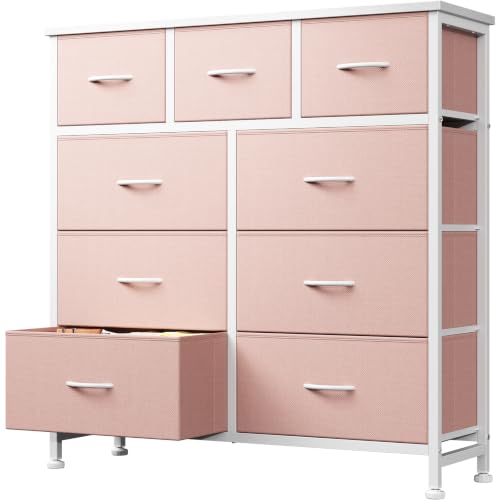
DUMOS 9 Drawer Dresser for Bedroom, Storage Organizer Chest of Drawers | Fabric Bins Storage Tower with Sturdy Metal Frame, Wood Tabletop for Closet, Soft Pink
Chosen because it specifies Storage Organizer Chest of Drawers and Fabric Bins Storage Tower with Sturdy Metal Frame.
View on Amazon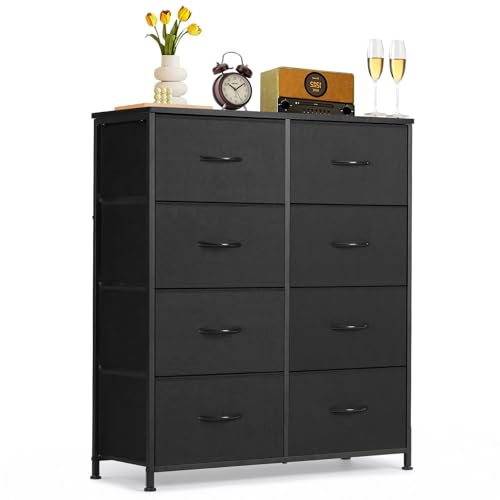
8-Drawer Dresser for Bedroom, Anti-Tip Tall Storage Organizer | Chest of Drawers with Wooden Top and Metal Frame Fabric Bins for Closet, Living Room, Hallway, Entryway, Black
Chosen because it specifies Anti-Tip Tall Storage Organizer and Living Room.
View on Amazon
OLIXIS Black Dresser for Bedroom with 7 Fabric Drawers Storage Organizer | Wardrobe Closet for Clothes Storage, Steel Frame & Wooden Top, Cabinet Vertical Dresser for Living Room, Entryway Hallway
Chosen because it specifies Wardrobe Closet for Clothes Storage and Steel Frame & Wooden Top.
View on Amazon
WLIVE Dresser TV Stand with LED Lights & Outlets, 9 Fabric Drawers, White | Wide Dresser for 55 Inches TV, Dresser for Bedroom with Steel Frame, Chest of Drawers with Wood Top, Easy to Assemble
Chosen because it specifies 9 Fabric Drawers and White.
View on AmazonWhatever you buy, follow the maker’s anchoring instructions and use the supplied hardware, or hardware suited to your wall type. Anchor into studs where possible; drywall anchors alone differ widely in capacity, so read their rated loads. If you are unsure about your wall construction, ask a qualified installer.
- Keep televisions and heavy objects off the top of a dresser unless the maker specifically rates it for that use and it is anchored.
- Do not let children climb or hang on drawers. Open drawers act as steps.
- Look for drawer stops and, where the maker offers them, interlock systems that limit how many drawers open at once.
- Place heavier items in lower drawers to keep weight low.
Sizing and Room Fit
Measure the wall and any baseboard, radiator or window that affects placement. Leave room to open drawers fully and to stand in front of them. For a nursery, a 6-drawer double dresser often fits well under a window or along a long wall; for a small bedroom, a narrow tall chest uses vertical space.
Think about reach. A drawer that is too high for a toddler to reach can be an advantage in the early years; older children benefit from lower drawers they can use independently. Children grow quickly, so a piece that works at ages three to twelve typically saves you a second purchase.
Materials and Finish
Solid wood
Makers of solid wood dressers list woods such as pine, rubberwood or birch. These pieces tend to survive years of use and can be repainted. They are heavier and costlier but often hold anchor screws better than thin panels.
Engineered wood
MDF and particleboard dressers are common in the budget and mid-range tiers. They are lighter and often cheaper, but joints can loosen over time. Check for low-emission labeling if you are concerned about indoor air quality; many makers state formaldehyde compliance with recognized standards, which you can compare across products.
Finishes
For children’s furniture, look for finishes described as non-toxic and lead-free by the maker, and for products that mention compliance with applicable children’s product safety rules. Water-based finishes are common. Allow new furniture to air in a well-ventilated space before the room is used.
Drawer and Hardware Features Worth Checking
- Soft-close or finger-safe drawers: Reduce slammed fingers; useful for toddlers.
- Rounded edges and corners: Lower the risk of bumps.
- Full-extension slides: Make it easier to reach the back of the drawer.
- Handles: Smooth pulls or cut-outs prevent snagging on clothes; avoid small decorative knobs for infants and toddlers because of choking hazard when they come loose.
- Drawer stops: Prevent a drawer from being pulled completely out.
Budget Tiers and Trade-offs
| Tier | What you usually get | Trade-off |
|---|---|---|
| Budget | Engineered wood, simple glides, basic hardware | Lighter build; check anchoring options and expect hardware to loosen |
| Mid-range | Better finishes, metal slides, wider design range, often soft-close | Mixed solid wood and engineered panels |
| Premium | Solid wood, dovetail joints, convertible designs, refined finishes | Heavy, higher cost, longer delivery time |
Pick X If…
| Pick this | If you… |
|---|---|
| Low 6-drawer dresser | Are setting up a nursery and want a stable surface at changing height |
| Narrow 4-5 drawer chest | Have a small room and can anchor into a stud |
| Convertible dresser with changing topper | Want one piece from baby to child years |
| Solid wood dresser | Want a piece that lasts through siblings |
| Fabric bin storage unit | Need light, temporary storage for small clothing or toys |
Using a Dresser as a Changing Station
If you add a changing topper, use only a topper the dresser maker approves, keep it secured to the dresser, and always keep a hand on the baby. Use the safety strap if provided. Never leave an infant unattended on any raised surface. Check the maker’s weight guidance and the top surface depth before purchase.
Care and Cleaning
Wipe surfaces with a damp cloth and mild soap, then dry. Avoid harsh solvents that can damage finishes. Tighten screws and anchors every few months, since children’s furniture is moved and handled often. Retire a dresser if frames crack, a drawer front loosens, or the anchor no longer holds, and check the maker’s recall page and the Consumer Product Safety Commission recall list for your model.
Alternatives
- Wall-mounted shelving and open cubbies: Good for toys and books. Mount to studs and follow load ratings.
- Under-bed drawers: Add storage without extra floor space; suits off-season clothing.
- Closet organizers: A hanging or built-in unit may replace a dresser in a room with a deep closet.
Planning for Growth and Daily Routines
A dresser that works for a baby often needs a second life as the child grows. Early on, drawers hold diapers, wipes, sleepers and blankets, so shallow upper drawers and deeper lower ones are practical. By the school years, children need space for folded jeans, sweatshirts and sports clothing, and deeper drawers matter more. Labeling drawers with pictures or words helps young children dress themselves and keeps the room tidy.
Think about the room layout before you choose. Keep the dresser away from windows with cords, radiators and heating vents, and do not block doors or closet access. If two children share a room, two smaller dressers can be easier to anchor and to divide fairly than one large unit. When a piece will move between rooms, check that it can be taken apart and that the anchor holes can be patched or reused.
Finally, compare the maker’s listed weight capacity per drawer and for the top surface. Reviewers often point out that bargain dressers lose their shape when drawers are overfilled with denim or books, so place heavy items low and rotate seasonal clothes into under-bed bins to keep the dresser light and stable.
Frequently Asked Questions
Do I really need to anchor a kids dresser?
Yes. Safety authorities recommend anchoring dressers and similar heavy furniture to the wall, even when the piece seems stable. Use the hardware supplied by the maker and follow the manual, ideally anchoring into wall studs.
What height is best for a child’s dresser?
A low dresser around waist height for an adult suits nurseries, while taller chests suit older children. Lower dressers are generally more stable, but taller ones use space more efficiently, so anchoring is crucial either way.
Is a dresser with a changing table topper safe?
It can be if the dresser is made for it, the topper is secured, and you follow the maker’s weight limits. Never leave a baby unattended, and use the safety strap. If in doubt, choose a purpose-built changing table.
Which materials are best for kids furniture?
Solid wood lasts longest, while engineered wood is lighter and more affordable. Whichever you choose, look for makers that state low-emission and children’s product compliance and air the piece before use.
How many drawers should I buy?
Four to six drawers cover most children’s clothing needs. Larger families or older children may want a taller chest or a second smaller unit.
When should I replace a kids dresser?
Replace it when children outgrow its size or when structural parts such as drawers, slides or anchors fail. Check recall lists periodically for your model.
More from Amazon
Programs that pair well with the guide above. Offers and eligibility are set by Amazon and may change.
Collect the home and kitchen items you want in one registry that guests can shop from.
Create a wedding registrySet up recurring deliveries of everyday items on eligible products. Terms and savings are set by Amazon.
Explore Subscribe & SaveFree shipping on eligible items, Prime Video and more. Eligible new members can start with a free trial.
Start a Prime free trialAudiobooks and podcasts to listen to on the go. Eligible new members can start with a free trial.
Try Audible freeAs an Amazon Associate we earn from qualifying purchases.