Our Top Picks
For most kitchens, a three-quarter to one horsepower continuous-feed disposal from a established maker such as InSinkErator, Waste King or Moen suits households that cook daily, a smaller half-horsepower unit is enough for light use, and the “worst” disposals are generally the ones that are under-powered for the household, noisy without sound insulation, or poorly matched to the sink and plumbing. Choosing well comes down to motor power, grinding stage design, jam resistance, noise insulation and fit.
Garbage Disposals at a Glance
| Model family | Best for | Key stated traits | Limits |
|---|---|---|---|
| InSinkErator Badger and Evolution series | Reliability-minded households | The maker lists horsepower ratings from about one-third to one horsepower and sound insulation on Evolution models | Higher-power Evolution models sit in a higher cost tier |
| Waste King Legend series | Value-oriented buyers wanting strong motors | The maker lists models from about one-half to one horsepower with permanent-magnet motors | Less insulation on basic models, so more noise |
| Moen GX series | Buyers who want a quiet, mid-range unit | The maker lists several horsepower levels and sound insulation on selected models | Check mounting compatibility with older sinks |
| Batch-feed models (for example, InSinkErator Evolution Compact or batch versions) | Homes with young children or safety concerns | The maker lists a stopper that must be in place to run the grinder | Slower to use because food is loaded in batches |
| Compact half-horsepower disposals | Small kitchens, light cooking | Smaller footprint under the sink | More prone to slow grinding and jams with heavier use |
What Separates Good from Bad
Motor power and type
Horsepower is a rough guide to how easily a unit handles denser scraps. A one-third horsepower model suits occasional use, three-quarter and one horsepower models handle more demanding households. Permanent-magnet motors are generally favored over induction motors in many reviews for speed and torque at the same size, although makers describe their own designs differently. Do not assume a higher number always means better; build quality and grinding stage design matter too.

INSINKERATOR BADGER 5 Garbage Disposal with Cord, 1/2 HP Continuous Feed | BADGER Series, LIFT AND LATCH Technology, Power Cord Included, Septic Safe, 5-Year Limited Warranty, Compact Disposer
Chosen because it specifies 1/2 HP Continuous Feed and BADGER Series.
View on Amazon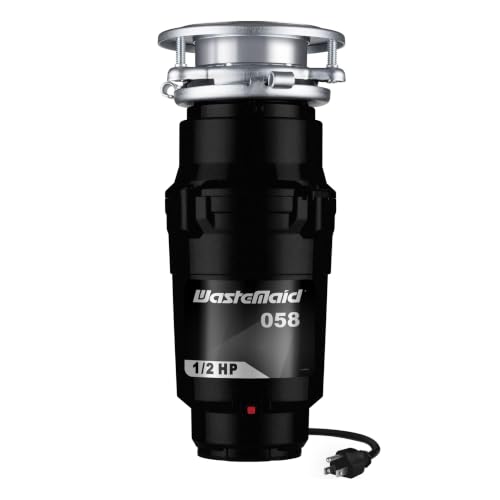
Waste Maid Garbage Disposal, Anti-Jam, Continuous Feed, 1/2 HP Economy | Quiet Stainless Steel Food Waste Grinding System with Power Cord, Fast Swap 3-Bolt Mount, 8-Yr Warranty 10-US-WM-058-3B
Chosen because it specifies Anti-Jam and Continuous Feed.
View on Amazon
INSINKERATOR BADGER 1 Garbage Disposal, 1/3 HP Continuous Feed, BGR 1 | BADGER Series, LIFT AND LATCH Technology, Septic Safe, Compact Food Waste Disposer
Chosen because it specifies 1/3 HP Continuous Feed and BGR 1.
View on AmazonGrinding stages and jam resistance
Makers describe multi-stage grinding, with the number of stages varying between models. Some disposals include anti-jam features such as a reversing action or a manual wrench port at the bottom, which lets you free a jammed flywheel from underneath after the power is switched off. Models without these features are harder to clear.
Noise insulation
Entry-level units often lack insulation and can be loud. Mid-range and premium units typically add sound insulation around the grinding chamber. Reviewers note that mounting style and cabinet space also change how loud the unit sounds in the kitchen.
Continuous feed versus batch feed
Continuous-feed disposals run while you add scraps and are controlled by a wall switch or an air switch. Batch-feed units only run when a stopper or cover is in place, which some households prefer for safety. Neither design makes it safe to put hands into the drain, and the power should be off at the switch or breaker before any manual clearing.
Mounting and fit
Disposals attach to the sink flange with a mounting assembly. Many are designed to fit standard sink drain openings, but replacements may require different mounts. Check the depth under the sink, the position of the dishwasher inlet and the drain pipe alignment. If you are unsure, a plumber can confirm compatibility.
Septic systems
Some makers sell septic-oriented models with a dosing cartridge, and many manuals advise checking whether a disposal is suitable for a septic system at all. If you have a septic tank, check local guidance and the manual before installing any disposal.
Common Reasons Disposals Get Called “The Worst”
- Under-powered for the household: A small motor in a busy kitchen jams more often and wears out sooner.
- Misuse: Grease, fibrous vegetables, large bones, stones, coffee grounds in bulk and starchy foods can clog drains or jam grinders. Makers list what not to put down the unit.
- Poor installation: Loose mounting, leaking gaskets or misaligned drain pipes cause leaks and vibration. Professional installation is advisable if you are not comfortable with plumbing.
- Not running enough water: Running cold water during and after grinding helps flush waste along. Follow the manual’s guidance.
- Ignoring warning signs: Persistent odors, humming without grinding or leaks mean it is time to turn off the power and consult the manual or a plumber.
Safety and Care Notes
Never place hands or tools into a disposal while it is connected to power. Turn off the wall switch, and when in doubt, switch off the circuit breaker before clearing a jam. Use a wrench in the bottom port or tongs from above as the manual describes. Electrical connections under a sink should be made by a qualified electrician or licensed installer, and a disposal’s wiring and receptacle must meet local code. If a unit trips a breaker repeatedly, stop using it and have it checked.
For cleaning, many makers suggest running cold water and grinding small ice cubes or using disposal-safe cleaners, avoiding harsh chemicals that may damage seals or plumbing. Do not pour drain cleaners into a disposal unless the maker says it is safe. Check the manual and warranty for details.
Pick X If You Want…
| If you want… | Pick | Why | Trade-off |
|---|---|---|---|
| A dependable all-rounder for family cooking | Three-quarter to one horsepower InSinkErator Badger or Evolution | Established brand with a range of power levels | Higher-power models cost more |
| Strong motor at a mid-range tier | Waste King Legend | Powerful motors for the cost tier | Basic models can be louder |
| Quieter operation | Moen GX or insulated InSinkErator Evolution | Sound insulation listed by the maker | May use more under-sink space |
| Added safety around children | Batch-feed model | Needs the stopper in place to run | Slower use |
| Light use in a small kitchen | Compact half-horsepower unit | Smaller and more affordable | Struggles with heavy scraps |
Budget Tiers
Budget tier: One-third to one-half horsepower units suit single people, couples and occasional use. Expect more noise and a higher chance of jams under heavy loads.
Mid-range tier: Three-quarter horsepower models with some sound insulation and anti-jam features. For most families, this tier gives the best balance.
Premium tier: One horsepower models with strong insulation, corrosion-resistant grinding components and longer warranties. They make sense for heavy use or kitchens where noise is a concern.
Alternatives Worth Considering
- Kitchen compost bin or countertop food recycler: Keeps scraps out of the drain entirely, which some households prefer.
- Municipal food scrap collection: Where offered, it removes the need for a disposal.
- Strainer-only sink with regular trash handling: Lowest cost and no motor, though less convenient.
Installation and Ownership Considerations
Before buying, look under the sink and note the available depth, the drain pipe position and whether a dishwasher connects to the disposal inlet. Some disposals have a knockout plug that must be removed when connecting a dishwasher, a step the manual explains. Makers also describe different mounting systems, such as quick-lock assemblies that simplify swapping a unit later. Plan for a power source as well: many disposals are hard-wired or plug into an outlet under the sink, and the arrangement must comply with local code.
Warranty length is another sign of confidence. Makers commonly offer longer in-home warranties on higher tiers, and reviewers often treat that as a rough proxy for build quality. Read what the warranty covers, including labor, since replacing a unit under a sink can be time-consuming. A slightly more powerful, better-insulated unit usually lasts longer and runs more quietly than a minimum-spec one, which is why many reviewers suggest stepping up one tier if the budget allows.
Everyday habits matter as much as the model. Cut large scraps into smaller pieces, feed them gradually with cold water running, and let the unit finish grinding before switching it off. These small habits reduce jams and extend the life of any disposal, from budget to premium.
Frequently Asked Questions
How much horsepower do I need in a garbage disposal?
One-third to one-half horsepower can work for light use, while three-quarter to one horsepower suits most family kitchens. Higher power generally grinds more tough scraps with less jamming. Build quality and anti-jam features matter alongside the number.
What should never go down a garbage disposal?
Makers commonly list grease and oils, large bones, fruit pits, fibrous items such as celery or corn husks, and non-food items. Large amounts of starchy foods such as pasta or rice can also cause clogs. Check your manual for the exact list.
How do I clear a jammed disposal safely?
Turn off the wall switch, and consider switching off the circuit breaker. Use the hex wrench port at the bottom of the unit, if there is one, to turn the flywheel back and forth, or remove obstructions with tongs. Never put your hand in the unit. If the jam persists, contact a plumber.
Are batch-feed disposals safer?
Batch-feed models only run with a stopper in place, which reduces the chance of running with an open drain. They are not a substitute for turning off power before any manual clearing. Some households find them slower to use.
Can I install a garbage disposal myself?
Some people do, but it involves plumbing and electrical connections. If you are not comfortable with wiring and drain connections, hire a licensed plumber or electrician, and follow local code. Incorrect installation can cause leaks and electrical hazards.
Are garbage disposals safe for septic systems?
Many septic system guidelines caution against or limit disposal use because of the added solids. Check the disposal maker’s manual, your septic service provider and local rules before installing one.
More from Amazon
Programs that pair well with the guide above. Offers and eligibility are set by Amazon and may change.
Collect the home and kitchen items you want in one registry that guests can shop from.
Create a wedding registrySet up recurring deliveries of everyday items on eligible products. Terms and savings are set by Amazon.
Explore Subscribe & SaveFree shipping on eligible items, Prime Video and more. Eligible new members can start with a free trial.
Start a Prime free trialAudiobooks and podcasts to listen to on the go. Eligible new members can start with a free trial.
Try Audible freeAs an Amazon Associate we earn from qualifying purchases.