Our Top Picks
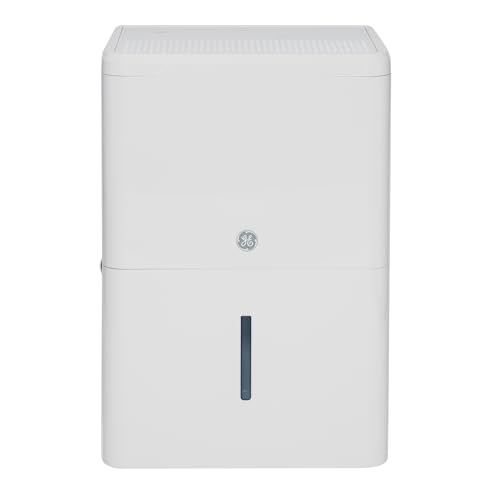
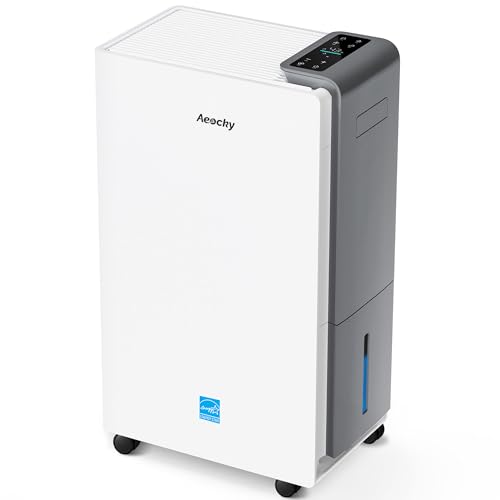 AEOCKY 5500 Sq.Ft Energy Star Most Efficient 202580 Pints - 5500 Sq.Ft14.45 x 8.66 x 24.09 inchesCheck on Amazon
 KNKA Energy Star 5500 Sq.Ft Dehumidifier for BasementMAX 80 Pints11.14 x 14.17 x 20.87 inches5.5 poundsCheck on Amazon
A cellar is not simply a basement with a different name. It is usually older, cooler, partly below grade on every side, and often has a stone wall, a bare earth floor or a slab that was poured long after the walls. Those conditions beat most household dehumidifiers on the shelf. After comparing eight models by what their titles say, our pick for a cellar is the DREO 75-pint smart model for a wet, larger space, the KNKA 80-pint unit if you want a similar capacity for a little less, and the ozeeco 34-pint for a small cellar where continuous drain is the priority.
This guide starts with the cellar, not the product. You will find a 15-minute triage checklist, a compressor versus desiccant breakdown for cold air, a worked sizing example, and a drain planning section before the model-by-model write-ups. If you only need a household unit for a normal finished room, skip to our 50-pint dehumidifier roundup.
Why a cellar is harder to dry than a basement

SEMKAP 2500 Sq.Ft Max 32 Pints Dehumidifier for Basement with Drain Hose | Dehumidifiers for Home, Large Room, Bathroom, Bedroom, Quiet With Smart Compressor, Intelligent Humidity Control, 24HR Timer
One of the moisture-control product options compared in this guide.
View on Amazon
Dehumidifiers for Home, 1000 Sq Ft Dehumidifier with 95oz Tank Auto Shutoff | Quiet for Bedroom, Bathroom and Basement with Sleep Mode 7-Color LED Light, Grey
One of the moisture-control product options compared in this guide.
View on Amazon
BEDRED Dehumidifier, 95Oz Dehumidifier for Home 1000 Sq.Ft | Quiet, Auto Shutoff, Sleep Mode, 7 Color Ambient Light for Bedroom, Bathroom, Basement (Black)
One of the moisture-control product options compared in this guide.
View on Amazon
DREO 4500 Sq Ft Smart Dehumidifier, 1.85 Gal Water Tank, Energy Star 2025 | Max 75 Pint Dehumidifier for Basement, Home & Large Room, Quiet 41dB, Drain Hose, Auto Humidity Control, 3 Fan Speeds,Timer
One of the moisture-control product options compared in this guide.
View on AmazonAEOCKY 5500 Sq.Ft Energy Star Most Efficient 2025 Dehumidifier Max 80Pint/D | Dehumidifier with Drain Hose for Basement, Home, Bedroom, Bathroom, Intelligent Humidistat
One of the moisture-control product options compared in this guide.
View on AmazonKNKA Energy Star 5500 Sq.Ft Dehumidifier for Basement, Max 80 Pint/Day | Dehumidifier with Drain Hose, Dehumidifiers for Home, Bedroom, Bathroom, Large Room, Smart Humidity Control, Sleep Mode
One of the moisture-control product options compared in this guide.
View on Amazon
KNKA 2500 Ft² Max 34 Pints Dehumidifier for Basement with Drain Hose, White | Dehumidifiers for Home, Bedroom, Bathroom, Large Room, Three Modes, Intelligent Humidity Control, Dry Clothes, 24HR Timer
One of the moisture-control product options compared in this guide.
View on Amazon
34 Pint/Day Dehumidifier for Basement with Drain Hose, 2500 Sq.Ft, 35dB | Dehumidifiers for Home, 30-80% Humidity Control, 3 Modes, 24H Timer, Child Lock, Auto Defrost, Continuous Drain, 0.45Gal Tank
One of the moisture-control product options compared in this guide.
View on AmazonThe floor keeps making water. A concrete basement slab with a vapor barrier underneath lets very little moisture through. A cellar with a dirt, gravel or old brick floor can release moisture every hour of every day. A dehumidifier then works as a pump with no off switch, which is why undersizing is the most common cellar failure.
The air is cold. Refrigerant dehumidifiers cool air across a coil and collect the condensation. Cold air holds less water to begin with, and the coil gets colder still, so frost can form. Capacity at 50 degrees Fahrenheit is far lower than the nameplate figure, which is usually quoted at warmer conditions. As an editorial rule of thumb, expect a compressor unit at cellar temperatures to deliver roughly 40 to 60 percent of its nameplate pints. That is an estimate, not a measurement.
The humidity is partly from the walls. Stone and brick absorb groundwater and release it to the room. Some of that moisture comes in as liquid water, which a dehumidifier cannot fix. If you see white salt crusts on the stone or pooling after rain, drainage and grading outside come first.
Nobody is there to empty the bucket. Cellars are visited weekly at best. A tank-only dehumidifier will fill, shut off and sit idle for days while mold gets going. This is why drain hardware gets as much weight as pints in the rankings below.
A 15-minute triage before you spend anything
- Put a thermometer and hygrometer on a shelf at chest height, away from the wall. Leave them for a few hours and write down both readings. Temperature decides which technology works; humidity tells you how far you must go.
- Do the plastic sheet check. Tape a 2-foot square of plastic to the floor on all four edges and leave it for a day. Condensation under the plastic means moisture is rising through the floor. Condensation on top means the air is simply humid.
- Look for liquid water. Dark streaks, standing water after rain, or salt deposits mean leakage. A dehumidifier will help with the air but not with the source.
- Find your drain point. A floor drain, sump pit or utility sink within reach decides whether you need a pump.
- Measure the space. Length times width for square footage, then multiply by ceiling height for cubic feet. Cellars often have low ceilings, and a unit rated by square footage may over-promise there.
If the plastic sheet shows moisture rising through the floor, laying a taped 6-mil plastic cover over the soil before you size the dehumidifier can cut the load enough to drop a capacity class. That is a cheap step that changes which product makes sense.
Compressor vs desiccant vs small tank units in cold air
Dehumidifiers fall into three families, and the temperature of your cellar chooses between them. The table is a general guide, not a statement about any specific listing.
| Type | How it removes water | Cold-cellar behavior | Typical trade-off |
|---|---|---|---|
| Compressor (refrigerant) | Chills a coil, water condenses and drains | Good above about 55 F; output falls and frost risk rises toward 45 F; auto defrost helps | Efficient per pint in warm air, noisier |
| Desiccant | Absorbs moisture into a wheel, then heats and releases it | Holds capacity in cold air, can work near or below freezing | Uses more power and adds some heat |
| Small thermoelectric or compact tank unit | Cooling plate and a small tank | Weak in cold air; best for closets and small damp rooms | Quiet and cheap, small capacity |
The SEMKAP title says “Smart Compressor.” The ozeeco title says “Auto Defrost,” which usually points to a refrigerant design. Several others, including the DREO, AEOCKY and KNKA models, give pint ratings and drain hoses but not the technology, so open the listing and look for the operating temperature range. The NineSky and BEDRED titles give a 95 ounce tank and 1,000 sq ft coverage; the listing, not the title, should tell you which technology sits inside.
If your cellar is regularly under 50 degrees, a desiccant model is worth a separate search. None of the eight below is described as desiccant in its title. For a cellar between about 50 and 65 degrees, which covers most cellars in the heating season, a compressor unit with defrost is reasonable provided you size up for the lost output.
Worked example: a 24 by 30 foot stone cellar at 55 degrees
Take a cellar 24 feet by 30 feet, with a 7-foot ceiling, stone walls and a half-covered earthen floor. That is 720 sq ft and 5,040 cubic feet. A reading of 72 percent humidity and 55 degrees Fahrenheit puts it firmly in the very damp range.
Step 1: a household guideline for a very damp space this size at standard conditions is somewhere around 35 to 40 pints per day. Step 2: apply a cold-air derate, because a unit delivering 50 to 60 percent of nameplate at 55 degrees would need a nameplate of about 60 to 80 pints to produce that. Step 3: round to what exists, which is the 75 to 80 pint class (the DREO, AEOCKY and the larger KNKA).
The 34 pint models on the list would be marginal here. They would run continuously without catching up when the floor is bare, and they might help only after you cover the soil. This arithmetic is an editorial estimate, not a performance claim, and the right answer for your cellar depends on its leakage.
Running cost, with stated assumptions: suppose a 75 to 80 pint unit draws 700 W (the titles do not state wattage) and runs 10 hours a day at 17 cents per kWh. That is 7 kWh and about 1.19 dollars a day, or roughly 36 dollars a month. A 34 pint unit assumed at 350 W costs about half. Check the actual wattage on the listing and replace the numbers.
Drainage: hose, pump or bucket
Gravity hose. Six titles mention a drain hose, and the ozeeco says continuous drain. A hose drains by gravity, so the outlet must be lower than the unit’s drain port and the run must slope all the way. In a cellar that often means a floor drain or a sump pit, or standing the unit on blocks so a hose can reach a low corner.
Pump. If water has to climb to a window well, a utility sink or an outside wall, you need a condensate pump. None of the eight titles mentions a built-in pump, so factor in an external one and check the unit’s drain outlet size. Measure the vertical lift, and add the horizontal distance, then compare it with the pump’s published limits.
Bucket only. The NineSky and BEDRED titles list a 95 ounce tank with auto shutoff and no hose. That is fine if you visit daily. In a cellar visited weekly, the tank fills in hours, shutoff triggers, and the humidity returns. If you choose one, plan a daily routine or leave it for a small enclosed space.
Hose management. Whatever you choose, keep the drain line free of kinks and low loops. A sagging hose holds water and can overflow the pan. Secure it at both ends and check it after the first week. Also think about where the discharge goes: dumping into a floor drain connected to a sewer is normally fine, while dumping onto the ground against the foundation just moves the problem.
Top picks at a glance
| Model | Key specs from the title | Price tier | Best for |
|---|---|---|---|
| DREO 4500 Sq Ft Smart Dehumidifier | Max 75 pint, 1.85 gal tank, drain hose, 41dB, smart control | Mid-range | Large, wet cellar |
| KNKA Energy Star 5500 Sq.Ft | Max 80 pint/day, drain hose, smart humidity control | Mid-range | Large cellar on a tighter budget |
| AEOCKY 5500 Sq.Ft Energy Star Most Efficient | Max 80 pint/day, drain hose, intelligent humidistat | Premium | Large cellar, efficiency-minded |
| ozeeco 34 Pint/Day | 2,500 sq ft, 35dB, 30-80% control, auto defrost, continuous drain | Mid-range | Small cellar needing hands-off drain |
| KNKA 2500 Ft2 34 Pints | Drain hose, three modes, dry clothes, 24HR timer | Mid-range | Small cellar that doubles as laundry space |
| SEMKAP 2500 Sq.Ft 32 Pints | Smart compressor, drain hose, 24HR timer, quiet | Mid-range | Moderate cellar, compressor named |
| NineSky 1000 Sq Ft 95oz Tank | Auto shutoff, sleep mode, LED light | Budget | Tiny damp room, not a true cellar |
| BEDRED 95Oz 1000 Sq.Ft | Auto shutoff, sleep mode, ambient light | Budget | Tiny damp room, not a true cellar |
Price tiers are relative to this group of eight. Pint and coverage figures are the sellers’ claims taken from the titles, and “max” ratings may be quoted at warmer air than your cellar has.
The eight models, ranked for cellar duty
DREO 4500 Sq Ft Smart Dehumidifier, 75 Pint
The DREO title packs in the most cellar-relevant details: up to 75 pints, 4,500 sq ft, a 1.85 gallon tank, a drain hose, 41 dB noise, three fan speeds, a timer, automatic humidity control and a smart function. It also carries an Energy Star statement. For a large, wet cellar, those specs put it at the head of the group.
The 1.85 gallon tank is the largest stated tank in the group, but in a cellar you should use the hose anyway. At the cellar-derated estimate in the worked example, a 75-pint nameplate becomes roughly 35 to 45 pints of real output, which is still the right ballpark for 700 to 1,000 sq ft of damp stone. That figure is an editorial estimate.
The title does not state its technology or minimum operating temperature. Check the listing for that, especially if your cellar drops under 55 degrees in winter. Also check whether the smart features require an app and how they behave when Wi-Fi is weak, since most cellars have poor signal.
Placement matters for a unit this size. Keep it a foot or two from stone walls so air can circulate, and stand it on a pallet or block if the floor ever floods. If the cellar has two rooms, put the unit in the larger one and leave the connecting door open, or air will not carry moisture to the coil. A second, smaller unit in the far room is often a better answer than one oversized machine fighting a closed door.
Pros
- High 75-pint rating and 4,500 sq ft claim suit a large, damp cellar.
- Drain hose and a large tank give you both continuous and backup options.
- 41 dB claim is quiet enough if the cellar sits under living space.
Cons
- Title does not name the technology or minimum operating temperature.
- Smart features need a Wi-Fi signal that may not reach a cellar.
- Takes up more floor space than the 34-pint class, which matters in a tight stone room.
Who it’s for: owners of a 600 to 1,000 sq ft cellar with real moisture who have a floor drain or sump to hose into.
KNKA Energy Star 5500 Sq.Ft Dehumidifier, 80 Pint/Day
The KNKA 5500 pairs an 80 pint per day claim with an Energy Star statement, a drain hose, smart humidity control and a sleep mode, and covers up to 5,500 sq ft according to the title. It sits in the mid-range tier, below the AEOCKY which makes near-identical claims.
For a cellar, the 80-pint class is the right neighborhood. Take the worked example: a 720 sq ft stone cellar with a half-bare floor needed a nameplate of roughly 60 to 80 pints after the cold derate. This unit lands at the top of that range for less than the AEOCKY. Treat the 5,500 sq ft figure with caution; for a cellar with damp walls, what matters is how many pints the unit pulls in cold air, not the coverage claim.
Do the basics before buying. Confirm on the listing whether the drain hose is included, how long it is, and what the minimum operating temperature is. Sleep mode is useful if the cellar sits under a bedroom; it generally reduces fan speed and noise, so it may also reduce output.
One more thing to look at is the humidity range the controls allow. A cellar target near 50 percent is realistic, but if the lowest setting is 40 or 45 percent, the unit may run non-stop trying to reach a number the walls will not allow. Set it a few points above what you can hold for the first week, watch an independent hygrometer, and lower the target only once the room has dried out.
Pros
- 80 pint per day claim with a drain hose in the title.
- Energy Star statement appears in the title.
- Mid-range tier, lower than the AEOCKY despite similar headline claims.
Cons
- Title does not state technology or low-temperature limits.
- Sleep mode and quiet settings likely cut output when you need it most.
- A big unit for a small cellar is a waste of floor space and money.
Who it’s for: owners of a large, damp cellar who want the 80-pint class without the top price tier.
AEOCKY 5500 Sq.Ft Energy Star Most Efficient Dehumidifier, 80 Pint/D
The AEOCKY title claims Energy Star Most Efficient, a maximum of 80 pints per day, coverage up to 5,500 sq ft, a drain hose and an intelligent humidistat. It is the only item in the set to use the Most Efficient wording and sits in the premium tier of this group.
Efficiency matters in a cellar more than in a living room, because a cellar unit may run most of the day. If the claim is accurate, it should use less energy per pint than a standard unit. Check the listing for the Energy Star details instead of relying on the title alone, and look up the efficiency figure in liters per kWh if it is given. Using the cost assumptions in the worked example, a modest efficiency gain could pay back some of the price difference over a damp season, but we would not count on full payback.
The humidistat is also a point to check. A cellar needs a setting around 50 percent; a unit that cannot hold a stable target, or that reads high because of a sensor near the exhaust, will short-cycle. Put an independent hygrometer on the opposite side of the room to verify.
If you buy it, treat the first fortnight as the real evaluation. Record the humidity morning and evening, note how often the unit cycles, and check the drain flow. A unit that never shuts off after two weeks is either undersized or fighting a moisture source you have not found. A unit that cycles every few minutes is probably set too low or reading from a poorly placed sensor.
Pros
- Energy Star Most Efficient claim suits long run times.
- 80 pint per day class with drain hose named.
- Intelligent humidistat stated in the title.
Cons
- Premium price tier within the group, above the near-identical KNKA 80-pint.
- Title says nothing about low-temperature operation.
- No pump named, so lifting water out needs extra hardware.
Who it’s for: buyers who expect the unit to run for months at a stretch and care about efficiency more than the purchase price.
ozeeco 34 Pint/Day Dehumidifier with Drain Hose
This is the most cellar-aware title in the lower-capacity group. It mentions a drain hose, continuous drain, auto defrost, 2,500 sq ft, 35 dB, 30 to 80 percent humidity control, three modes, a 24-hour timer, child lock and a 0.45 gallon tank. Auto defrost is the key phrase, since cold coils are the main hazard in a cellar.
A 34-pint nameplate becomes roughly 15 to 20 pints of real output at 55 degrees by our estimate, which is enough for a small, mostly dry cellar of 300 to 450 sq ft with a covered floor. It is not enough for a big stone cellar with a bare floor. Think of it as the right tool for maintenance rather than rescue.
The 0.45 gallon tank is small, so the drain hose should be a requirement, not an option. Confirm the hose length and the outlet fitting on the listing, and plan a gravity route. Because the unit is compact, it is also easy to stand on a block or shelf to give the hose more fall.
Its quiet 35 dB claim is worth having if your cellar sits under a kitchen or living room, because compressor hum travels up through floors. The child lock is an odd extra for a cellar, but it can help if the room is accessible to kids and pets. Beyond that, treat the humidity range of 30 to 80 percent as a stated control span, not a promise that the unit can reach 30 percent in cold, wet air.
Pros
- Auto defrost and continuous drain both appear in the title.
- 35 dB claim is quiet.
- Mid-range tier with a feature list aimed at hands-off operation.
Cons
- 34-pint class is marginal for damp stone or a bare floor.
- Small 0.45 gallon tank means it depends on the hose.
- The title does not state a minimum operating temperature.
Who it’s for: owners of a small, covered cellar or wine store who need unattended operation.
KNKA 2500 Ft2 34 Pint Dehumidifier with Drain Hose, White
This KNKA is a 34-pint model with a 2,500 sq ft claim, drain hose, three modes, intelligent humidity control, a dry clothes mode and a 24-hour timer. It sits in the mid-range tier alongside the ozeeco and shares the same capacity class.
The title does not mention auto defrost or continuous drain, only a hose. That makes it a coin toss against the ozeeco for cellar duty; the ozeeco names the defrost feature, and this one names the laundry mode. If your cellar doubles as a drying room, the clothes mode is a real convenience, but remember that hanging wet laundry puts several pints into the air in a cellar that is already struggling.
Estimated real-world output in 55-degree air is around 15 to 20 pints, the same bracket as the ozeeco. That estimate is based on the rated capacity and general cold-air behavior, not on any measurement. Confirm the defrost behavior and the operating range on the listing before relying on it in winter.
The dry clothes mode deserves a caution. Drying laundry in a cellar can add several pints to the air in a day, which eats most of the capacity of a 34-pint unit. If you do it, run the dehumidifier hard during the drying cycle, then return to the lower setting. Better still, keep laundry drying in a warmer room and let this unit focus on the cellar itself.
Pros
- Drain hose named in the title.
- Dry clothes mode suits a cellar that doubles as a laundry area.
- Mid-range tier with a 24-hour timer for scheduled runs.
Cons
- No defrost feature named, a concern in cold air.
- Capacity too small for a wet cellar with bare earth.
- Continuous drain is not stated; check the hose arrangement.
Who it’s for: owners of a small cellar that doubles as a utility room.
SEMKAP 2500 Sq.Ft 32 Pint Dehumidifier with Drain Hose
SEMKAP’s title advertises a 32-pint maximum, 2,500 sq ft, a drain hose, a “Smart Compressor,” intelligent humidity control, quiet operation and a 24-hour timer. It is the only title in the set to name the compressor outright, which gives some assurance about the technology even if it gives none about cold-air limits.
As a capacity class it matches the two 34-pint models. The difference is that you know what is inside. For a cellar in the 50 to 65 degree range, a compressor is a reasonable fit, and in a space of 300 to 500 sq ft with a covered floor, 32 pints (about 14 to 19 pints in cool air, by our estimate) can hold humidity steady once the space is dry.
The price is mid-range, close to the ozeeco and KNKA 34-pint. Choose between them on the details you can verify: defrost, hose length, operating range and the sound you can live with. “Quiet” is a claim, so look for the decibel figure in the specifications.
A final consideration is the temperature range. A compressor named in the title does not guarantee low-temperature operation, and some compressor designs shut off or run defrost cycles often when air nears the mid-40s. Before ordering, find the operating range in the manual. If your cellar dips below it in January, plan on a heater, a different technology or a seasonal switch-off, and keep a close eye on the unit during cold snaps.
Pros
- Compressor technology named in the title.
- Drain hose and timer support unattended operation.
- Quiet operation claimed.
Cons
- 32-pint rating is small for damp stone or a bare floor.
- Title does not mention auto defrost.
- Same price tier as units that name more cellar-relevant features.
Who it’s for: owners of a small to moderate cellar who want a named compressor and a hose.
NineSky Dehumidifier, 1000 Sq Ft, 95oz Tank
The NineSky title describes a home dehumidifier for a bedroom, bathroom or basement with 1,000 sq ft coverage, a 95 ounce tank, auto shutoff, sleep mode and a seven-color LED light. The price field puts it in the budget tier, the lowest of the eight.
It is the weakest fit for a true cellar. A 95 ounce tank holds under 0.75 gallons, which a damp space can fill in a day or less, and the title mentions no drain hose. If the cellar is visited weekly, the unit would spend most of its time switched off by auto shutoff. The LED lights and sleep mode are bedroom features and bring nothing to a stone room.
Where it might make sense is inside a small, enclosed corner of a dry cellar: a cabinet, a small storage room with a door, or a closet where you want to keep paper or fabric from going musty. For that job the 1,000 sq ft claim is generous. Check the listing for the technology and the minimum operating temperature, because compact units of this kind commonly lose output quickly in cool air. We cannot confirm that from the title.
If you decide to use it, give it a sealed space to work in. A 1,000 sq ft claim assumes a normal room with no steady moisture source. In a closed cabinet or a closet with a door shut, the same output goes a long way. Leave the door closed during the day, put a small hygrometer inside, and empty the tank on a fixed schedule so auto shutoff does not stall it. That makes it a maintenance tool for stored paper, linens or tools, not a cellar solution.
Pros
- Lowest price tier in the group.
- Auto shutoff protects against overflow.
- Small footprint for a closet or cabinet.
Cons
- 95 ounce tank and no hose named; needs frequent emptying.
- Not suited to damp stone or earthen floors.
- Technology and cold-air operation are not stated.
Who it’s for: someone drying a small closed storage nook, not a whole cellar.
BEDRED Dehumidifier, 95Oz, 1000 Sq.Ft
The BEDRED title reads almost word for word like the NineSky: 95 ounce, 1,000 sq ft, quiet, auto shutoff, sleep mode, seven-color ambient light, for bedroom, bathroom or basement, here in black. It is also in the budget tier at the same price field.
Because the two titles are so similar, assume they are close relatives and compare the listings for any real difference in warranty, dimensions, noise figures and return terms, all of which are outside what the titles tell us. If one shows an operating temperature range and the other does not, that settles the choice.
The same cellar limitations apply as above. The tank is small, no hose is named, and the lights are a bedroom feature. At best it is a short-term tool for a small room while you work on a larger fix, or a helper for a closet. We would not pick it as the main unit for a cellar with stone walls or soil. Any cold-air performance figure would be a guess for this class of unit, so we offer none.
Because there is so little to separate it from the NineSky, the sensible tiebreakers are practical ones: the length of the power cord, whether the tank has a handle, how loud the fan is on its lowest setting, and how the manufacturer describes the operating temperature. None of those can be read from the title, so spend two minutes on the listing and decide there. Whichever you pick, put it on a shelf, not on the floor, so a seep of water does not reach the electrics.
Pros
- Budget tier, matching the NineSky.
- Auto shutoff and sleep mode for small rooms.
- Compact, easy to move around.
Cons
- Small tank with no drain hose named.
- Near-identical to the NineSky, so little to separate them.
- Not aimed at cold, wet spaces.
Who it’s for: anyone drying a closet or a tiny storage room next to a cellar.
How we picked these
The Editorial team built this list from published specifications, manufacturer documentation and buyer reviews. Nobody on the team used or measured these units. Every statement about a product comes from its listing title, and where a title is silent on something that matters in a cellar (technology, minimum temperature, hose length), we say so and send you to the listing.
We ranked on four things: pint rating and coverage claim, drain hardware named in the title, any cold-air feature such as auto defrost, and tank size as a fallback. Price tiers are relative to this group of eight. Any estimate of real-world output is labeled and rests on rated capacity and general cold-air behavior of dehumidifiers, not on measurement.
Verdict
For a large, wet cellar, the DREO 75-pint is the pick, with the KNKA 80-pint as the tighter-budget alternative and the AEOCKY for buyers who value the efficiency claim. For a small, covered cellar that must run unattended, choose the ozeeco 34-pint for its defrost and continuous drain wording. The SEMKAP is the sensible option if you want the compressor named. The NineSky and BEDRED belong in closets, not cellars. Whatever you buy, cover bare soil first and run the drain hose to a real outlet.
For the budget-minded, the sequence matters more than the purchase: fix standing water and gutters, cover the soil, then buy the smallest unit that your worked example says will keep up. If your arithmetic lands near 60 pints or more of nameplate, do not try to save money with a 32 or 34 pint unit; it will run continuously, never catch up, and cost more in electricity than the larger machine would.
Related guides
- Dehumidifier For Condensation On Windows
- Aprilaire Vs Santa Fe Dehumidifier
- Perfect Aire Dehumidifier
Frequently asked questions
What is the best type of dehumidifier for a cold cellar?
For cellars that stay above roughly 50 degrees Fahrenheit, a compressor unit with auto defrost and a continuous drain is the usual choice. Below that, compressor output drops and coils can frost, so a desiccant model is worth considering. None of the eight titles here says desiccant, so treat all of them as compressor-style or unconfirmed, and check the listing for the stated operating temperature range.
What size dehumidifier does a damp cellar need?
Size up. A cellar with stone walls or a dirt floor adds moisture continuously, and cold air cuts output well below the nameplate figure. As an editorial estimate, a 700 square foot very damp cellar around 55 degrees is better served by a 70 to 80 pint nameplate than by a 34 pint unit. Covering bare soil with a taped plastic sheet reduces the load before you buy anything.
Can I run a dehumidifier in a cellar without emptying a bucket?
Yes, if the unit has a continuous drain or pump. Six of the eight titles mention a drain hose, and the ozeeco title says continuous drain. A hose uses gravity, so the outlet must sit below the unit, such as a floor drain or sump. If the water must climb, you need a pump, and none of these titles states one, so add that cost separately.
Will a small tank dehumidifier work in a cellar?
Only for a small, dry-ish nook. The NineSky and BEDRED titles list 1,000 sq ft coverage and a 95 ounce tank, which is under a gallon and will fill quickly in a wet space. They mention auto shutoff but no drain hose. For a cellar you cannot check daily, a model with continuous drain is more practical, and the hose models are the safer fit.
What humidity level should I aim for in a cellar?
Most guidance for stored goods and building materials points to roughly 40 to 55 percent relative humidity, with mold growth risk rising as readings stay above about 60 percent. Use a separate hygrometer, because built-in sensors can read differently from the room. In a cold cellar, avoid driving the setting too low, because the unit will run constantly and may frost.