Key takeaways
- Elevation range: Look for roughly 3–6 inches of vertical adjustment if you use different rifles or scopes.
- Windage control: A windage-adjustable top makes fine horizontal corrections without dragging the firearm across the bags.
- Base width: An 8–12 inch footprint usually needs a bench at least 18 inches deep for a safe margin around the rest.
- Recoil clearance: Confirm that the stock and magazine do not contact the frame as the firearm moves rearward.
- Contact surfaces: Soft, replaceable pads protect the stock and reduce sliding, but overly soft foam can compress unevenly.
The best shooting rests depend on where you shoot: choose a heavy bench rest for maximum stability, a compact front rest for portability, or a full-length rest when you want broad support for the rifle and stock.
A shooting rest is not a substitute for safe firearm handling, but it can reduce wobble and make sight-in work more repeatable. The right choice comes down to five practical questions: how steady the platform must be, how much adjustment you need, whether you will carry it, what firearm it must support, and how much bench or range space is available.

Caldwell Steady Rest NXT, Modular Frame
Included for 'Best Shooting Rests for Stable, Accurate Aim' because the listing specifies Modular Frame, details this guide uses to compare options.
View on Amazon
Caldwell Stinger Open Frame Shooting Rest
Included for 'Best Shooting Rests for Stable, Accurate Aim' as a relevant option in this category; details come from the product listing.
View on Amazon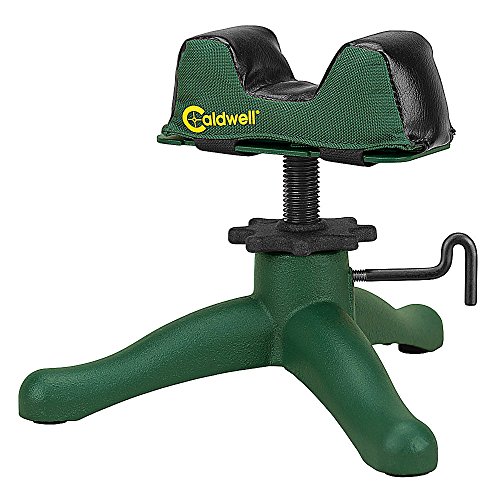
Caldwell The Rock Jr. with Durable Construction and Elevation Adjustments for Range, Sight In and Precision Shooting
Included for 'Best Shooting Rests for Stable, Accurate Aim' because the listing specifies Sight In and Precision Shooting, details this guide uses to compare options.
View on Amazon
Caldwell Zeromax Shooting Rest, Full Length Frame
Included for 'Best Shooting Rests for Stable, Accurate Aim' because the listing specifies Full Length Frame, details this guide uses to compare options.
View on AmazonQuick comparison: bench, front, and full-length rests
| Rest type | Typical footprint | Stability | Adjustability | Portability | Best use |
|---|---|---|---|---|---|
| Bench rest | 18–30 in. long by 8–14 in. wide | Highest, especially with a 15–30 lb base | Usually broad elevation and windage adjustment | Low to moderate | Bench shooting, load development, and precision sight-in |
| Front rest | 8–14 in. long by 5–9 in. wide | Moderate to high, depending on weight | Front elevation adjustment; rear bag supplies support | High | Rimfire, hunting rifles, and ranges with limited space |
| Full-length rest | 24–36 in. long by 8–14 in. wide | High, with support along much of the stock | Often adjustable at the front and rear | Low | Large rifles, repeated groups, and users wanting minimal movement |
1. Bench rests: the most stable choice for a fixed shooting position
A bench rest is the strongest option when the firearm will stay in one place and the shooting bench has enough room. Many use a steel, cast-metal, or reinforced composite frame with a padded front cradle and a separate rear bag. Heavier bases resist recoil and reduce the small shifts that can open up groups.
Choose a bench rest when stability matters more than carrying comfort. A base weighing 15–30 pounds is substantially steadier than a lightweight 3–6 pound model, but it may require two-handed lifting and a vehicle rather than a range bag. Check that the feet fit entirely on the bench; a rest hanging over the edge can rock during recoil.
What to check before buying
- Elevation range: Look for roughly 3–6 inches of vertical adjustment if you use different rifles or scopes.
- Windage control: A windage-adjustable top makes fine horizontal corrections without dragging the firearm across the bags.
- Base width: An 8–12 inch footprint usually needs a bench at least 18 inches deep for a safe margin around the rest.
- Recoil clearance: Confirm that the stock and magazine do not contact the frame as the firearm moves rearward.
- Contact surfaces: Soft, replaceable pads protect the stock and reduce sliding, but overly soft foam can compress unevenly.
A bench rest is often the best pick for centerfire rifles, heavy varmint rifles, and methodical zeroing. It is less attractive for a small range table, a shared bench, or anyone who must walk from a parking area to the firing line.
2. Front rests: the practical option for portability and limited space
A front rest supports the fore-end while the shooter controls the rear of the firearm with a sandbag or rear support. Its smaller footprint leaves more room for ammunition, a spotting scope, or a shooting notebook, making it a good match for crowded benches and compact range tables.
Front rests are usually lighter than full bench systems. A 3–8 pound model can be carried comfortably, although lighter designs may shift under hard-recoiling rifles. Some include a filled front bag; others use a cradle that accepts a separate bag. A separate rear bag is important because the front rest alone does not support the buttstock or control elevation at the rear.
Best firearm matches
- Rimfire rifles: Nearly any padded front rest can work because recoil is limited.
- Sporting and hunting rifles: Choose a wider, non-marring cradle that supports the stock without pressing on the barrel.
- Heavy-recoil rifles: Use a substantial, non-slip base and verify that the manufacturer permits the cartridge and firearm weight.
- Shotguns: Compatibility is less predictable because stocks, forends, and barrel shapes vary; use a rest specifically suited to the firearm and task.
- Pistols: A rifle-style front rest is generally not the right choice. Use a purpose-designed pistol support only when permitted by the range and appropriate to the firearm.
Front rests are the best choice when you need a useful balance of stability and portability. They are also easier to store in a closet because many measure less than 14 inches long and can fit on a shelf without disassembly.
3. Full-length rests: maximum contact for repeatable support
A full-length rest supports the firearm at both the front and rear, and sometimes along the stock’s center section as well. The longer platform keeps the rifle aligned and can reduce rocking when the shooter is adjusting a scope or checking a group.
This design is particularly useful for long, heavy rifles, firearms with unusual stock shapes, and shooters who want consistent support from shot to shot. The trade-off is size. A 30-inch rest can consume most of a narrow bench, leaving less than 6 inches of free space on either side of a 42-inch-wide table.
Look for independently adjustable front and rear supports, smooth elevation controls, and padding that does not squeeze the stock. A full-length rest should not force the barrel or action into a stressed position. If the firearm has a free-floating barrel, the front support should bear on the stock or approved contact area rather than the barrel itself.
Decision matrix by shooting situation
| Your situation | Best starting choice | Why | Important limitation |
|---|---|---|---|
| Small range bench or shared table | Compact front rest | Leaves room for other equipment and fits an 18–24 in. deep bench | Requires a separate rear bag |
| Maximum precision from one fixed position | Heavy bench rest | Weight and windage controls minimize movement | Awkward to carry and store |
| Long or heavy rifle | Full-length rest | Supports more of the firearm and reduces tipping | Needs about 30–36 in. of bench length |
| Frequent transport to public ranges | Light front rest with rear bag | Easy to pack and set up without tools | Less resistant to heavy recoil |
| Multiple rifles with different stocks | Adjustable bench or full-length rest | Wider height and contact adjustments improve fit | Costs and weighs more than a basic rest |
Construction details that affect accuracy and service life
| Construction choice | Advantage | Trade-off | What to look for |
|---|---|---|---|
| Steel frame | Strong and resistant to flex | Heavy; may rust if stored damp | Powder-coated finish, broad feet, and protected adjustment threads |
| Cast aluminum | Lower weight with good rigidity | Can be less forgiving of impacts or over-tightening | Thick cast sections and metal rather than plastic adjustment hardware |
| Composite frame | Light, corrosion-resistant, and easy to carry | May flex more under heavy recoil | Reinforced joints and a rubberized, non-slip base |
| Leather or heavy fabric bags | Conform well to a stock and provide controlled friction | Can absorb moisture and need occasional refilling | Double stitching, replaceable covers, and a stable fill |
| Closed-cell foam padding | Resists water and does not readily absorb oil | Can compress permanently if thin or low density | At least 1/2 inch of dense, replaceable padding at contact points |
Setup space, compatibility, and adjustment
Measure the shooting bench before selecting a rest. Allow at least 3 inches of clear bench space around the base so the feet sit flat and the controls remain accessible. For a 30-inch full-length rest, a bench around 36 inches long is a practical minimum; a 42-inch bench gives more room for a spotting scope and ammunition.
Check firearm weight and stock shape rather than relying only on the rest’s stated dimensions. A wide, flat-bottomed target stock may need a broader cradle than a slim hunting stock. The contact surfaces should support the stock without touching the trigger, magazine release, bolt handle, barrel, or muzzle device.
Adjustment knobs should turn smoothly without excessive side play. Elevation controls are useful for matching different rifles, while windage controls are most valuable during precise sight-in work. For a simple hunting-rifle setup, a fixed front rest with a rear bag may be more practical than paying for controls you will rarely use.
Setup and moving realities
- Place the rest on a level, dry bench and confirm that every foot is fully supported.
- Set the front and rear supports so the firearm is level without forcing the stock into position.
- Confirm that the action, trigger, barrel, and moving parts have adequate clearance.
- After firing, check whether the rest has walked or rotated; add a non-slip mat if the range permits it.
- Wipe metal parts dry before storage, especially after humid outdoor use.
Before buying a heavy model, check the packed dimensions against your vehicle and storage area. A 30-inch rest may fit through a normal doorway, but its wide base and carrying case can be awkward in a narrow closet. The parts most likely to wear first are bag seams, foam pads, rubber feet, and adjustment threads. Replacement pads and bags are worth prioritizing over decorative features.
Which of the best shooting rests should you choose?
Choose a bench rest when you want the steadiest platform for repeated groups and do not mind the weight. Choose a front rest when you need a compact, affordable setup for a range bag or limited bench. Choose a full-length rest when broad support and alignment matter more than storage space.
For most people buying a first rest, a medium-weight front rest paired with a properly sized rear bag offers the best balance. If your priority is maximum repeatability from a permanent bench, spend more on a heavy, adjustable bench rest. For a long or unusually heavy rifle, verify the contact points and weight rating before choosing a full-length design.