Key takeaways
- Measure the entire delivery route: entry doors, hallway turns, stairs, and closet openings. Compare the narrowest point with the washer’s packaged dimensions, not just its listed body width. Confirm whether the delivery team can remove doors if needed.
- Allow operating clearance: leave roughly 1 inch at the sides and rear where practical, while following the manual’s ventilation and hose-clearance requirements. A front-loader needs additional room for its door to open; a top-loader needs unobstructed lid space above.
- Account for connections: hoses often need several inches behind the machine. A washer that fits the wall-to-wall measurement may not fit once hoses are attached.
- Check the floor: the washer must sit level on a firm surface. On an upper floor, avoid placing it on a flexible platform, and follow the manufacturer’s instructions for vibration control.
The best budget washing machine depends on the space, plumbing, and laundry load: choose a compact portable washer for a no-hookup rental, a 2.5–3.5 cu. ft. top-loader for a small household, or a 4.5 cu. ft. or larger full-size model for family loads. Before buying, compare usable capacity, overall dimensions, cycle options, water use, and the route into your home—not just the sale price.
Quick picks by laundry situation
| Situation | Good fit | What to check first |
|---|---|---|
| Apartment without washer hookups | Portable washer, roughly 0.9–2.0 cu. ft. | Faucet adapter compatibility, sink access, drain-hose placement, and storage space |
| Closet or narrow laundry area | Compact front-loader, roughly 2.2–2.5 cu. ft. | Full door-open depth, required clearances, and whether a compatible dryer can stack above it |
| One or two people with standard hookups | Full-size top-loader, roughly 3.5–4.5 cu. ft. | Machine width, lid clearance, water levels, and bulky-item capacity |
| Kids, pets, or frequent bedding loads | Full-size washer, about 4.5 cu. ft. or more | Heavy-duty and rinse options, cycle time, and enough room to load items loosely |
Budget washer types: what your money buys
Prices vary with promotions, finish, and local availability, but these broad ranges help set expectations. A lower purchase price can mean fewer cycles, a smaller drum, or more manual work. Include delivery, installation parts, and any required plumbing changes in your budget.

Winado 15.6LBS Full Automatic Portable Washing Machine with Drain Pump
Included for 'Best Budget Washing Machines for Every Laundry Space' as a relevant option in this category; details come from the product listing.
View on Amazon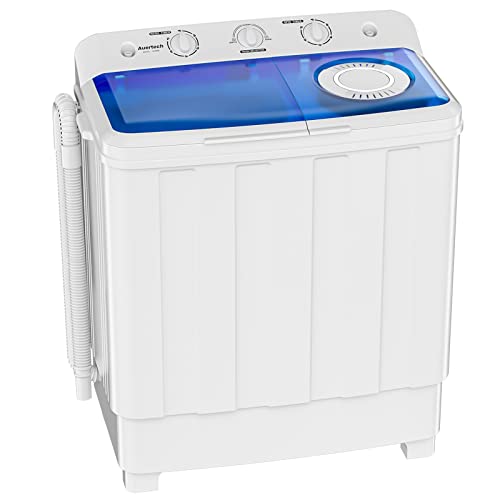
Auertech Portable Washing Machine, 28lbs Twin Tub Washer Mini Compact Laundry Machine with Drain Pump, Semi-automatic 18lbs Washer 10lbs Spinner Combo for Dorms, Apartments, RVs
Included for 'Best Budget Washing Machines for Every Laundry Space' because the listing specifies Semi-automatic 18lbs Washer 10lbs Spinner Combo for Dorms and Apartments, details this guide uses to compare options.
View on Amazon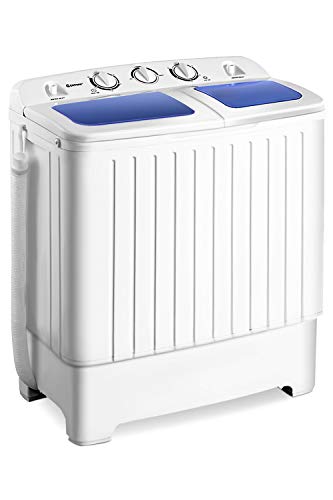
Giantex Portable Mini Compact Twin Tub Washing Machine 20lbs Washer Spain Spinner Portable Washing Machine, Blue+ White
Included for 'Best Budget Washing Machines for Every Laundry Space' because the listing specifies Blue+ White, details this guide uses to compare options.
View on Amazon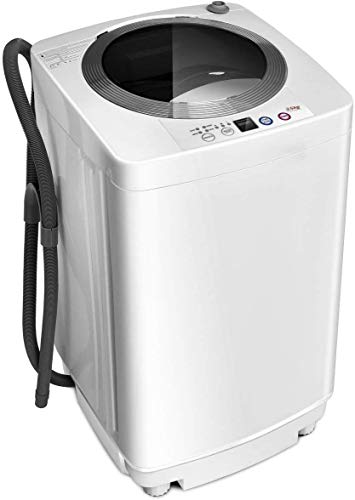
Giantex Portable Washing Machine, Full Automatic Washer and Dryer Combo, with Built-in Pump Drain 8 LBS Capacity Compact Laundry Washer Spin Dryer for Apartment RV Dorm
Included for 'Best Budget Washing Machines for Every Laundry Space' because the listing specifies Full Automatic Washer and Dryer Combo, details this guide uses to compare options.
View on Amazon| Washer type | Typical capacity | General price range | Main trade-off |
|---|---|---|---|
| Portable, faucet-connected | About 0.9–2.0 cu. ft. | Usually $200–$500 | Small loads and hands-on hookup; often no permanent installation |
| Compact front-loader | About 2.2–2.5 cu. ft. | Usually $700–$1,200 | Fits tighter spaces, but costs more per cubic foot and may need a separate dryer |
| Full-size top-loader | About 3.5–5.0 cu. ft. | Usually $400–$800 | Often the best capacity for the price, but needs space above the washer for its lid |
| Full-size front-loader | About 4.5–5.0 cu. ft. | Usually $600–$1,000 | Can be water-efficient and stackable when designed for it, but needs space for the door to swing |
Measure the laundry area—and the path to it
Most full-size washers are about 27 inches wide and 30–34 inches deep, though controls, hoses, and door shapes vary. Compact models are commonly about 24 inches wide; portable models may be narrower, but check their height and faucet connection. Use the manufacturer’s installation drawing for the exact model before ordering.
- Measure the entire delivery route: entry doors, hallway turns, stairs, and closet openings. Compare the narrowest point with the washer’s packaged dimensions, not just its listed body width. Confirm whether the delivery team can remove doors if needed.
- Allow operating clearance: leave roughly 1 inch at the sides and rear where practical, while following the manual’s ventilation and hose-clearance requirements. A front-loader needs additional room for its door to open; a top-loader needs unobstructed lid space above.
- Account for connections: hoses often need several inches behind the machine. A washer that fits the wall-to-wall measurement may not fit once hoses are attached.
- Check the floor: the washer must sit level on a firm surface. On an upper floor, avoid placing it on a flexible platform, and follow the manufacturer’s instructions for vibration control.
A 24-inch-deep closet, for example, will not usually take a standard-depth full-size washer once hoses are included. A compact unit may work, but only if its specified installation depth and door clearance fit. In a bathroom or kitchen, confirm that the open lid or door will not block a walkway, cabinet, or toilet.
Capacity, cycles, and water use: compare the useful features
Capacity is measured in cubic feet, but the number is a guide, not a promise that every bulky item will fit. A 2.5 cu. ft. compact washer suits small, frequent loads; a 3.5–4.5 cu. ft. machine is more flexible for couples or small families; and a 4.5 cu. ft. or larger drum is more practical for regular bedding and family laundry. Wash bulky items individually and leave room for them to move.
Cycle names differ by brand, so look for functions rather than marketing labels. A budget machine is more useful if it has Normal, Delicates, Heavy Duty, and a rinse-and-spin option. A quick cycle is handy for lightly soiled items, but it is not a substitute for a full wash on dirty clothes. If anyone in the household has sensitive skin, check for an extra-rinse setting.
Water use depends on the model, load size, selected cycle, and local supply. High-efficiency front-loaders generally use less water per load than traditional deep-fill top-loaders, while some top-loaders offer load sensing or adjustable water levels. Compare the model’s EnergyGuide label or official product specifications instead of assuming that “high efficiency” means the same savings across every cycle. An HE washer may also require HE detergent.
Choose by installation and household needs
| Your situation | Best starting point | Why—and what could be inconvenient |
|---|---|---|
| Renter with no dedicated hookups | Portable washer, if the landlord and faucet allow it | Can connect to a compatible sink faucet and drain to a sink; moving and storing it between uses takes effort |
| Small apartment with permanent hookups | Compact front-loader | Uses a narrow footprint and some models can stack; check dryer compatibility and installation depth |
| Household with children or pets | Full-size washer with Heavy Duty and extra-rinse options | Larger loads reduce how often you wash, but a packed drum can clean poorly—capacity is not a reason to overload |
| Low budget and standard laundry hookups | Basic full-size top-loader | Often offers the most capacity per dollar; may use more water and needs clear space for the lid |
| Limited bending or lifting | Front-loader on a manufacturer-approved pedestal, if floor height and access work | Raises the opening, but adds cost and can complicate loading, stacking, or reaching controls; compare top-loader height too |
Installation costs and upkeep that can change the deal
A standard washer generally needs hot- and cold-water supplies, a drain, and a grounded electrical outlet. Some homes need new hoses, a drain standpipe, or a shutoff-valve repair; gas is not normally needed for a washer. Confirm the installation requirements with the manual and installer before purchase. A portable model may avoid permanent plumbing work, but it still needs a suitable faucet, a stable place to stand, and a drain that can handle discharge water.
Measure the machine’s weight and packaged weight if you will carry it up stairs or move it yourself. Full-size washers are heavy appliances; arrange delivery and installation rather than planning to lift one without appropriate help. Remove shipping bolts from front-loaders before use, level the feet, and keep hoses from kinking. Incorrect leveling or leaving shipping hardware in place can cause excessive vibration and damage.
For longer life, follow the detergent dose instructions, avoid overloading, and leave the door or lid open to dry when safe to do so. Front-loader door gaskets and detergent dispensers can collect residue; clean them as the manual recommends. Hoses and inlet screens are also worth checking periodically. These small chores can prevent odors, slow filling, and leaks—the kinds of problems a low sticker price does not reveal.
How to make the final choice
- Measure the opening, machine space, connection depth, and delivery route.
- Choose the smallest capacity that comfortably handles your normal loads, with extra room for bulky items if needed.
- Confirm hookups, electrical requirements, drain arrangement, and whether stacking or a pedestal is approved.
- Compare cycle functions and published water and energy information for the exact model.
- Add delivery, hoses, installation, and any required modifications to the purchase price.
For many shoppers with standard hookups, a basic full-size top-loader is the best budget washing machine because it balances capacity and upfront cost. For a tight closet, choose a properly measured compact model; for a rental without hookups, start with a portable unit and verify faucet compatibility before buying.