Fabric office chairs collect a specific set of stains: coffee at the front edge of the seat, ink on the armrest, sweat and skin oil across the back and headrest, and the occasional lunch spill. The damage usually comes from the cleanup, not the spill. Scrubbing pushes the stain deeper into the foam, where it wicks back to the surface as the chair dries. Too much water soaks the cushion, which takes days to dry and grows mildew. Household cleaners with bleach or ammonia leave a pale ring on dark upholstery that is far more visible than the original mark. And a hair dryer aimed at a wet spot sets whatever protein or tannin remains.
Upholstery on a $100 to $200 ergonomic chair is typically a polyester or polyester-blend weave over 2 to 4 inches of foam, sometimes with a mesh back. It responds well to gentle, low-moisture cleaning if you identify the stain type first and work from the outside in. The steps below cover routine cleaning and the four most common stain types, with the time each step takes.
Our top picks

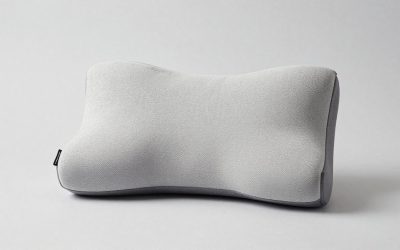
 CILI Heated Lumbar Support Pillow for Office
- Ergonomic Design: CILI lumbar support pillow for office…
- Vibration Massage: Equipped with two vibrating motors, CILI…
- Heating Function: CILI massage pillow comes with heating…
As an Amazon Associate we earn from qualifying purchases at no extra cost to you.
What You Need
| Item | Why | Optional? |
|---|---|---|
| Vacuum with upholstery or brush attachment | Removes dust and crumbs so you do not grind them in while cleaning | No |
| Three or four clean white microfiber or cotton cloths | White shows what is lifting and does not transfer dye; you need separate cloths for solution, rinse, and blotting | No |
| Upholstery cleaner spray formulated for fabric and mesh, about 500 ml, $15 to $25 | Balanced surfactant that lifts food, drink, and sweat stains without bleaching; the TONBEEN multi-surface spray is a typical example | No, or substitute the dish soap solution below |
| Small bowl of cool water with 2 to 3 drops of clear dish soap | Homemade alternative for water-based stains | Optional |
| White vinegar | Neutralizes odor and helps release tannins from coffee and tea | Optional |
| Isopropyl alcohol, 70 percent | Dissolves ballpoint ink and some marker | Optional |
| Baking soda | Absorbs oil from fresh grease stains and deodorizes | Optional |
| Soft-bristle brush (an old toothbrush works) | Agitates cleaner gently on textured weaves without fraying | Optional |
| Fan | Speeds drying without heat | Optional |
Step-by-Step
1. Check the cleaning code (2 minutes)
Look under the seat for a tag with a letter. W means water-based cleaners are safe; S means solvent only, no water; WS means either; X means vacuum only. Most fabric office chairs in the $100 to $200 range are W or WS. If the tag is missing, treat the chair as W but test first. Chairs marked S need a dry-cleaning solvent, not the water-based steps below.
2. Vacuum thoroughly (5 minutes)
Run the brush attachment over the seat, back, armrests, and every seam. Pull the seam gaps open slightly to get crumbs out. Pay attention to the crease between seat and back, which collects the most debris. Skipping this step means dragging grit across the fabric during cleaning, which dulls the weave.
3. Test in a hidden spot (3 minutes plus 10 minutes drying)
Spray or dab your cleaner on the underside of the seat or the back of the backrest near the bottom. Blot with a white cloth after 30 seconds. Look for dye on the cloth and any color change on the fabric after it dries. If either appears, dilute the cleaner further or switch to plain water and dish soap.
4. Blot fresh spills immediately (2 minutes)
For anything wet, press a dry cloth firmly onto the spot and hold for 10 seconds, lift, and repeat with a clean section until nothing more transfers. Do not wipe. This single step removes 70 to 80 percent of most liquid spills before they set.
5. Treat coffee, tea, soda, and juice (10 minutes)
Lightly mist the stain with upholstery cleaner or dab with the soap solution using a cloth wrung nearly dry. Wait 1 to 2 minutes. Blot with a dry cloth, working from the outer edge toward the center. Repeat 3 to 5 times. For a dried coffee ring, follow with a cloth dampened in 1 part vinegar to 3 parts water, press, and blot. Finish by pressing a cloth dampened in plain water to rinse, then blot dry.
6. Treat sweat and skin oil on the back and headrest (10 minutes)
These show as a darker, slightly shiny patch. Spray cleaner over the whole affected area rather than just the center so you do not create a clean spot with a dirty border. Agitate gently with the soft brush in small circles for 20 to 30 seconds. Blot with a damp cloth, then a dry one. Repeat once. For odor, add a light vinegar-water press before the final rinse.
7. Treat grease and food oil (15 minutes)
Scrape off any solids with a spoon edge. Sprinkle baking soda over the spot and let it sit 10 minutes to absorb oil, then vacuum it up. Apply cleaner, wait 2 minutes, agitate lightly, and blot. Oil stains often need two rounds; let the area dry between them so you can see what remains.
8. Treat ballpoint ink (10 minutes)
Dampen a cotton swab or cloth corner with 70 percent isopropyl alcohol and dab the mark; do not rub. The ink transfers to the cloth. Move to a clean section of cloth each dab so you do not redeposit ink. Follow with a damp water cloth to remove alcohol residue, then blot dry. Test alcohol in a hidden spot first; it can lift dye on some polyester blends.
9. Dry properly (2 to 6 hours)
Blot as much moisture as possible with dry cloths, pressing firmly. Point a fan at the chair or move it near an open window. Do not use a hair dryer or place the chair in direct sun; heat sets protein stains and can shrink or stiffen the weave. A spot-cleaned area dries in 2 to 4 hours; a fully cleaned seat takes 4 to 6. Do not sit on it until dry, or the foam will hold body-shaped damp patches.
10. Restore the nap (2 minutes)
Once dry, brush the cleaned area gently in one direction with the soft brush or vacuum it again. This lifts fibers that were flattened by blotting and blends the cleaned patch with the surrounding fabric.
Mistakes to Avoid
- Scrubbing. It drives the stain into the foam and frays the weave; blot and press instead.
- Soaking. Foam holds water for days and mildews. Cloths should be wrung nearly dry.
- Bleach, ammonia, or oxygen brightener sprays. They lighten dyed polyester and leave a permanent halo.
- Heat drying. Sets coffee, tea, sweat, and food proteins.
- Cleaning only the stain on a broadly soiled chair. You end up with a clean circle in a dingy field; clean the whole panel.
- Skipping the hidden-spot test. Some upholstery dyes lift with alcohol or strong cleaners.
- Using colored cloths or paper towels. Dye transfer and lint both show on dark fabric.
- Ignoring the cleaning code. An S-coded fabric will water-spot and stiffen with any water-based method.
How Often
Vacuum the chair every 2 weeks; it takes 5 minutes and prevents grit from abrading the weave. Blot spills the moment they happen. Do a light full-surface clean of the seat, back, and headrest every 3 to 4 months, or monthly if the chair is used 8 hours a day in a warm room where sweat and skin oil build quickly. Armrest pads collect the most hand oil and benefit from a wipe every couple of weeks. Chairs in households with pets or kids may need the full routine every 6 to 8 weeks.
When to Call a Pro or Replace
Professional upholstery cleaning runs $40 to $80 per chair, which makes sense for a chair that cost $250 or more or one with an S cleaning code that needs solvent extraction. For a $100 to $200 ergonomic chair, it rarely pays. Replace the seat cushion or the chair when the foam has absorbed a spill and smells even after drying, when the fabric has worn through at the front edge, when a stain has set through heat and survives two full cleaning rounds, or when the chair is more than 5 years old and the cylinder or mechanism is also failing. Replacement seat covers and cushions for common chairs cost $25 to $60 and are worth it on a chair whose frame and mechanism are sound. In 2026 a new mid-range fabric ergonomic chair starts around $100, so weigh that against professional cleaning plus any parts.
FAQ
Can I use a carpet cleaner on a fabric office chair?
Only if it is labeled safe for upholstery and the chair’s code is W or WS. Carpet formulas are often stronger and can leave residue that attracts dirt. A dedicated fabric and mesh upholstery spray, or dish soap in cool water, is safer.
How do I get sweat stains out of the back of an office chair?
Spray the entire back panel with upholstery cleaner, agitate lightly with a soft brush, blot with a damp cloth and then a dry one, and finish with a 1 to 3 vinegar and water press for odor. Dry with a fan. Cleaning the whole panel prevents a visible clean patch.
Will cleaning shrink or stiffen the fabric?
Not if you use cool water, wring cloths nearly dry, and air dry without heat. Stiffness after cleaning usually means cleaner residue; press with a plain damp cloth to rinse and blot again.
How do I clean the mesh back on a hybrid chair?
Mesh is the easy part. Vacuum, then wipe with a cloth dampened in the same cleaner or soap solution, and let it air dry. Mesh does not absorb, so stains lift in one pass; the fabric seat is where the steps above matter.