Key takeaways
- Measuring width and forgetting depth. A 48-inch desk that fits the wall still fails if the room is 5 feet deep and the chair has nowhere to go.
- Buying 24 inches deep out of habit. In a narrow room, 4 inches of depth is the difference between a chair that rolls back and one that hits the bed.
- Ignoring the control box and feet. The advertised 32 by 20 inch top can need 34 by 22 inches of floor once the frame is counted.
- Putting the desk on the short wall. It blocks the walkway and forces a small desk when the long wall could take a 48-inch one.
- Overloading a mobile desk. Rolling frames are laptop desks; a monitor arm exceeds their 20- to 45-pound rating and makes them tippy.
- Skipping the lowest-height check. Compact frames often bottom out at 28 to 29 inches, too high for seated use under about 5 feet 8 inches without raising the chair.
The Short Answer
For a narrow home office, the limiting dimension is almost always depth, not width. A standing desk 20 to 21 inches (51 to 53 cm) deep is the practical minimum for a laptop and one monitor, and 24 inches (61 cm) is the ceiling for a room or nook under 6 feet across, because you still need 30 to 36 inches behind the desk for the chair. Widths of 32 to 48 inches (81 to 122 cm) cover most narrow rooms; go wider only if the desk runs along the long wall. Height ranges are consistent at roughly 28 to 47 inches (71 to 119 cm) across sizes, so focus your measuring on depth plus chair clearance and let width follow the wall.
Standard Sizes
Narrow spaces call for the shallow end of the standard size ladder. The table shows the depths and widths that fit hallways, alcoves, and rooms under 7 feet wide, with the total room depth each configuration needs once a chair is included.
Our top picks


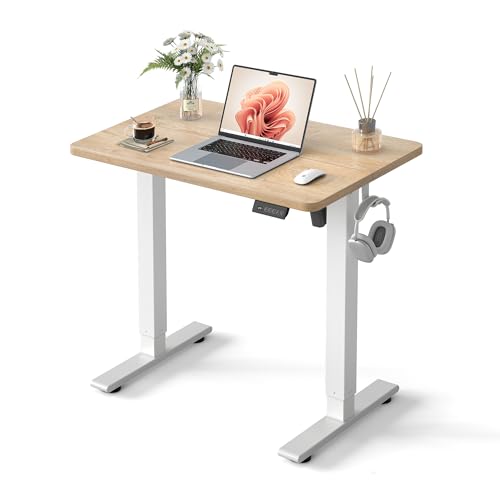
 FEZIBO Standing Desk 48 × 24 Inch
FSC-certified wood supports a more sustainable build choice
Three memory presets simplify sit-stand height switching
Motor runs under 45 decibels during adjustment
176-pound load capacity trails some heavier-duty desks
48 x 24 inch top limits space for larger setups
As an Amazon Associate we earn from qualifying purchases at no extra cost to you.
| Configuration | Desk size | Metric | Room depth needed (desk + chair) | Best for | Typical price |
|---|---|---|---|---|---|
| Mobile mini desk | 24 to 28 x 16 to 18 in | 61 to 71 x 41 to 46 cm | 46 to 54 in (117 to 137 cm) | Hallway nook, laptop only, rolls away | $35 to $80 |
| Shallow compact | 32 x 19 to 20 in | 81 x 48 to 51 cm | 50 to 56 in (127 to 142 cm) | Alcove or closet, laptop plus 24-in monitor | $80 to $140 |
| Compact with storage | 32 x 21 to 22 in | 81 x 53 to 56 cm | 52 to 58 in (132 to 147 cm) | Bedroom wall, drawers replace a side cabinet | $100 to $150 |
| Long and shallow | 48 x 20 to 22 in | 122 x 51 to 56 cm | 50 to 58 in (127 to 147 cm) | Narrow room, desk along the long wall | $110 to $180 |
| Standard depth | 48 x 24 in | 122 x 61 cm | 54 to 60 in (137 to 152 cm) | Rooms at least 6 ft across, dual monitors | $110 to $200 |
Examples across the range include the COMHOMA Small Standing Desk with Storage Drawer, a mobile rolling model at about $39.54; the Cubiker 32″ Small Sit Stand Desk with splice board at about $89.99; the 32 Inch White Electric Standing Desk with Drawers at about $132.99; and the FEZIBO Standing Desk 48 x 24 Inch at about $112.99 for rooms with a little more depth. Note that some 32-inch tops are two-piece “splice” boards that bolt together on the frame; they ship in a smaller box but can show a seam under a mouse pad.
How to Measure Your Space
- Measure room depth first. From the wall the desk backs onto to the opposite wall, bed, or sofa. Subtract 36 inches (91 cm) for the chair; what remains is your maximum desk depth. If the result is under 20 inches, use a stool or a mobile desk you pull out to work.
- Measure the wall width. Corner to the nearest door frame, closet, or window trim below 48 inches. Subtract 2 inches for baseboards and cord routing.
- Check the frame footprint. On many frames the feet extend 1 to 2 inches past the top at each side and the control box adds 1 to 2 inches of depth. Add those to the top size before comparing to your wall.
- Verify vertical clearance. At 47 inches plus a monitor, the top of the screen sits near 65 inches. Look for shelves, sloped ceilings, and window sashes in that zone.
- Plan the chair’s parking spot. In a space too narrow for the chair to live at the desk, measure where it goes when you stand; a 24-inch-wide chair under a 32-inch desk is fine, but it must clear the walkway.
- Mark the walkway. If the desk sits in a hallway or passage, you need 30 inches (76 cm) clear beside it when the chair is pushed in. Tape the footprint on the floor and test it for a day.
By Room or Use Case
Hallway or landing nook
Depth is usually 18 to 24 inches and traffic passes beside you. A 24- to 28-inch-wide mobile desk with locking casters lets you roll it into the nook to work and back against the wall afterward. Keep the load to a laptop and a lamp; these frames are rated for 20 to 45 pounds.
Closet office
Standard closets are 24 inches deep and 48 to 72 inches wide behind the doors. A 32 by 20 inch or 48 by 20 inch desk slides in with a couple of inches to spare, and the chair sits in the room. Remove the closet doors or use bifolds that fold fully out of the way, and add a power strip inside since closets rarely have outlets.
Narrow bedroom, under 7 feet wide
Run the desk along the long wall, not the short one. A 48 by 20 or 48 by 22 inch desk gives full width for two 24-inch monitors while stealing only 20 inches of room depth. Leave 30 inches between the chair and the bed.
Shared wall with a window
A window sill at 30 to 36 inches will block a rising desk. Either center the desk under the sill with the top no wider than the wall below, or choose a 20-inch-deep desk so the back edge clears the sill trim. Confirm the sash still opens at your standing height.
Common Sizing Mistakes
- Measuring width and forgetting depth. A 48-inch desk that fits the wall still fails if the room is 5 feet deep and the chair has nowhere to go.
- Buying 24 inches deep out of habit. In a narrow room, 4 inches of depth is the difference between a chair that rolls back and one that hits the bed.
- Ignoring the control box and feet. The advertised 32 by 20 inch top can need 34 by 22 inches of floor once the frame is counted.
- Putting the desk on the short wall. It blocks the walkway and forces a small desk when the long wall could take a 48-inch one.
- Overloading a mobile desk. Rolling frames are laptop desks; a monitor arm exceeds their 20- to 45-pound rating and makes them tippy.
- Skipping the lowest-height check. Compact frames often bottom out at 28 to 29 inches, too high for seated use under about 5 feet 8 inches without raising the chair.
FAQ
What is the narrowest standing desk depth that still works with a monitor?
About 20 inches (51 cm). That puts a 24-inch monitor on a slim stand roughly 20 to 22 inches from your eyes with the keyboard in front, which is at the close end of comfortable. Below 20 inches, plan on a laptop or a wall-mounted monitor.
Can a standing desk fit in a hallway?
Yes, if the hallway is at least 54 inches wide where the desk sits: an 18-inch desk plus a 36-inch chair zone. In narrower halls, use a mobile desk you roll out to work and back afterward.
Is a 32-inch standing desk wide enough?
For a laptop and one 24-inch monitor, yes. Two monitors need 42 inches or more. In 2026 the 32-inch class commonly includes a drawer or two, which recovers the storage you lose by not having room for a cabinet.
How much clearance do I need behind a standing desk in a small room?
36 inches (91 cm) is comfortable and 30 inches (76 cm) is the working minimum for rolling a chair back. If you cannot get 30, use a stool that tucks fully under the desk, or plan to stand most of the day.