Key takeaways
- Setting the desk to the chair instead of the body. Adjust the chair to your legs first, then bring the desk to your elbows.
- Standing too high. Wrists bent upward and shoulders lifted mean the surface is 1 to 2 inches too tall. Lower it until forearms are level or slightly downhill.
- Forgetting shoes. An inch of sole changes your standing height by an inch. Measure in the footwear you actually wear at the desk.
- Ignoring the keyboard tray. A tray drops the typing surface 1.5 to 2 inches, so a desk that seems too tall may be correct with a tray installed.
- Chasing monitor height with desk height. Raising the desk to lift the screen raises the keyboard too. Fix the monitor separately with an arm or stand.
- Buying a converter without checking collapsed height. A 5-inch platform on a 30-inch desk gives a 35-inch seated surface, which is unusable for anyone under 6 feet 6 inches.
What's inside
The Short Answer
The ideal desk height puts the work surface at or just below your elbow height with your shoulders relaxed and your upper arms hanging straight down. Seated, that is 27 to 30 inches (69 to 76 cm) for most adults between 5 feet 4 inches and 6 feet tall. Standing, it is 40 to 46 inches (102 to 117 cm) for the same range. The fixed 29- to 30-inch desks sold as standard are sized for a person about 5 feet 10 inches to 6 feet; everyone shorter is typing with raised shoulders unless they lift the chair and add a footrest. A quick formula: seated desk height in inches is roughly your height in inches times 0.41, and standing height is roughly your height times 0.62. Then fine-tune by an inch either way for keyboard thickness and footwear.
Standard Sizes
These ranges assume a keyboard resting directly on the desktop. If you use a keyboard tray, subtract 1.5 to 2 inches from the desk height; if you type on a thick mechanical keyboard, add half an inch.
As an Amazon Associate we earn from qualifying purchases at no extra cost to you. Product prices and availability are accurate as of the date shown and are subject to change.



| User height | Seated desk height | Standing desk height | Seat height | Monitor top edge (seated) |
|---|---|---|---|---|
| 5 ft 0 in (152 cm) | 24.5 to 25.5 in (62 to 65 cm) | 37 to 38.5 in (94 to 98 cm) | 15.5 to 16.5 in (39 to 42 cm) | 43 to 44 in (109 to 112 cm) |
| 5 ft 4 in (163 cm) | 26 to 27 in (66 to 69 cm) | 39.5 to 41 in (100 to 104 cm) | 16.5 to 17.5 in (42 to 44 cm) | 46 to 47 in (117 to 119 cm) |
| 5 ft 8 in (173 cm) | 27.5 to 28.5 in (70 to 72 cm) | 42 to 43.5 in (107 to 110 cm) | 17.5 to 18.5 in (44 to 47 cm) | 49 to 50 in (124 to 127 cm) |
| 6 ft 0 in (183 cm) | 29 to 30 in (74 to 76 cm) | 44.5 to 46 in (113 to 117 cm) | 18.5 to 19.5 in (47 to 50 cm) | 52 to 53 in (132 to 135 cm) |
| 6 ft 4 in (193 cm) | 30.5 to 31.5 in (77 to 80 cm) | 47 to 48.5 in (119 to 123 cm) | 19.5 to 20.5 in (50 to 52 cm) | 55 to 56 in (140 to 142 cm) |
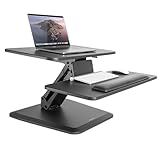
Match those numbers to product ranges before buying. A full electric desk such as the ErGear 71 x 30 Inch Electric Standing Desk, about $259.99, typically travels from roughly 28 to 48 inches, which covers users from about 5 feet 4 inches to 6 feet 5 inches. Desktop converters are more limited: an 18-inch lift such as the Perfect POSTURE Dual Monitor Riser at about $389.99 (or the Single Monitor version at about $394.99) reaches standing height for most users on a 29-inch desk but adds 4 to 6 inches to your seated surface when collapsed. Compact gas-spring risers like the Mount-It! Compact Standing Desk Riser at about $219.99 usually lift 14 to 16 inches, enough for users up to about 6 feet.
How to Measure Your Space
- Set your chair first. Sit with feet flat, knees at about 90 degrees, and thighs level. Measure floor to the top of the seat cushion; this is your seat height and it anchors everything else.
- Find seated elbow height. Relax your shoulders, bend your elbows to 90 degrees, and measure from the floor to the underside of your forearm. Your seated desk height is that number minus 0 to 1 inch.
- Find standing elbow height. Stand in the shoes you work in, arms relaxed at your sides, then bend elbows to 90 degrees. Measure floor to forearm. Standing desk height is that number minus 0 to 1 inch.
- Measure your existing desk. Floor to top surface. The difference between this and your seated target tells you whether to raise the chair (and add a footrest), lower the desk, or replace it.
- Check monitor height. With the desk at either height, the top edge of the screen should sit at or slightly below eye level, 20 to 30 inches (50 to 76 cm) from your face. A monitor arm or riser fixes this independently of desk height.
- Verify the travel range. Subtract your seated target from your standing target. Most people need 13 to 17 inches of travel. Confirm the desk or converter you are considering covers both endpoints, not just the span.
By Room or Use Case
Fixed-height desk you already own
A 29- to 30-inch desk is too tall for anyone under about 5 feet 9 inches. Raise the chair until your elbows match the desk, then put a 3- to 5-inch footrest under your feet so your knees stay level. This costs $15 to $40 and fixes most shoulder tension without a new desk.
Full sit-stand electric desk
Buy for the low end of the range, not the high end. Many budget frames bottom out at 28 or 29 inches, which is still too high for a user of 5 feet 4 inches seated. Frames that drop to 24 to 25 inches exist but cost more. Anyone over 6 feet 2 inches should confirm the top of the range reaches at least 48 inches.
Desktop converter on a standard desk
Converters solve the standing height problem well but make the seated problem worse, because the collapsed platform sits 4 to 6 inches above the desk. The workaround is to type on the desk surface when seated and only use the riser standing, which means moving your keyboard twice a day. Users over 6 feet should confirm the lift reaches 17 to 18 inches.
Shared desk for two heights
When a 5-foot-4 and a 6-foot user share one workstation, an electric desk with four memory presets is the only clean answer. Save seated and standing heights for each person. A fixed desk cannot serve both without one of them compromising by 3 inches.
Common Sizing Mistakes
- Setting the desk to the chair instead of the body. Adjust the chair to your legs first, then bring the desk to your elbows.
- Standing too high. Wrists bent upward and shoulders lifted mean the surface is 1 to 2 inches too tall. Lower it until forearms are level or slightly downhill.
- Forgetting shoes. An inch of sole changes your standing height by an inch. Measure in the footwear you actually wear at the desk.
- Ignoring the keyboard tray. A tray drops the typing surface 1.5 to 2 inches, so a desk that seems too tall may be correct with a tray installed.
- Chasing monitor height with desk height. Raising the desk to lift the screen raises the keyboard too. Fix the monitor separately with an arm or stand.
- Buying a converter without checking collapsed height. A 5-inch platform on a 30-inch desk gives a 35-inch seated surface, which is unusable for anyone under 6 feet 6 inches.
FAQ
What is the standard desk height in the United States?
Most fixed desks are 29 to 30 inches (74 to 76 cm) tall. That fits a person about 5 feet 10 inches to 6 feet. Shorter users need a higher chair and a footrest, or an adjustable desk.
How high should a standing desk be for a 5-foot-6 person?
About 40.5 to 42 inches (103 to 107 cm) to the top surface, with the keyboard resting on the desk. Add half an inch for thick shoes or subtract an inch if you prefer forearms angled slightly downward.
Should my desk be at elbow height or slightly below?
Slightly below is usually more comfortable. Aim for the surface 0 to 1 inch under your elbows so your forearms slope gently downward and your wrists stay neutral rather than cocked upward.
Do I need memory presets on an adjustable desk?
They are the difference between a desk you adjust and a desk you actually stand at. In 2026 nearly every electric frame over $150 includes at least two presets; without them, most people stop switching positions within a few weeks.