Key takeaways
What's inside
For anyone clocking forty or more hours a week at a desk, the daily battle against lower back stiffness, tight hips, and shoulder fatigue is all too familiar. In the quest for a pain-free workday, the traditional setup is facing a major challenger. The core of this debate centers on a fundamental choice: do you want a seat that actively forces your body to support itself, or one that carefully cradles your frame to minimize pressure points?
As we look at the evolving landscape of home office design in 2026, the choice between an active sitting stool and an ergonomic office chair has shifted from a matter of style to a critical decision about your physical health. Active sitting stools demand continuous, subtle muscular engagement, while ergonomic chairs rely on highly adjustable, passive structural support. Choosing the wrong one can lead to premature fatigue, muscle strain, or a quick return to bad slouching habits.
As an Amazon Associate we earn from qualifying purchases at no extra cost to you. Product prices and availability are accurate as of the date shown and are subject to change.
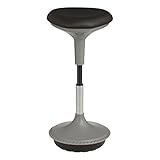


To help you decide, we will compare the postural mechanics of both seating styles. Along the way, we will refer to popular options on the market today, including dynamic stools like the Learniture Adjustable Height Active Learning Stool ($160.99) and the budget-friendly Storex Active Tilt Stool ($74.15), alongside fully featured task chairs like the HOLLUDLE Ergonomic Mesh Office Chair ($169.99) and the Marsail Ergonomic Office Chair ($118.94).
Quick Verdict
If your primary goal is to build core strength, prevent midday sluggishness, and seamlessly transition between sitting and standing at a height-adjustable desk, an active sitting stool is your best option. However, if you suffer from chronic lower back pain, work long, uninterrupted hours, or require precise skeletal support for your shoulders, neck, and arms, a traditional ergonomic office chair is the superior choice for long-term comfort.
Side by Side
Understanding how these two seating styles compare across daily use, space requirements, and long-term durability is key to making the right investment. Below is a detailed breakdown of how they perform head-to-head:
| Feature | Active Sitting Stool | Ergonomic Office Chair |
|---|---|---|
| Comfort & Support Style | Active/dynamic support; forces core engagement and muscle activation. | Passive/structural support; cradles the spine, shoulders, and head. |
| Postural Impact | Opens hip angle to 110–120 degrees; naturally aligns the lumbar curve. | Maintains a 90-degree hip angle; relies on adjustable lumbar pads to support the spine. |
| Price Range | $50 to $250 (average entry-level is around $75 to $160). | $100 to $1,000+ (highly adjustable home options run $120 to $300). |
| Space Needed & Footprint | Very compact; base diameter of 12 to 15 inches; easily slides under desks. | Large footprint; base diameter of 26 to 28 inches; requires room to roll and recline. |
| Durability & Maintenance | High durability; simple construction with few moving parts; easy to wipe clean. | Moderate to high; complex mechanical joints, gas cylinders, and mesh that can sag over time. |
| Weight & Portability | Lightweight (typically 10 to 18 lbs); easy to carry between rooms. | Heavy (typically 30 to 50 lbs); relies on casters for movement on flat floors. |
| Visual Style | Minimalist, modern, and unobtrusive; fits easily into non-office rooms. | Commanding, functional, and utilitarian; looks distinctly like office furniture. |
| Resale Value | Moderate; appeals to niche buyers, fitness enthusiasts, or teachers. | High; broad appeal for students, remote workers, and gamers. |
| Best For | Part-time sitting, standing desk users, and short, high-focus tasks. | 8+ hour workdays, dedicated home offices, and users needing neck or arm support. |
Where Active Sitting Stool Wins
The primary benefit of an active sitting stool is its ability to prevent physical stagnation. Traditional chairs allow your muscles to completely relax, which often leads to a rounded spine, a collapsed chest, and a forward-leaning neck. An active stool counteracts this by removing the backrest entirely, forcing your core muscles to take over the job of keeping you upright.
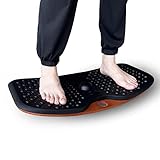
Most active stools feature a rounded or pivoting base that encourages continuous micro-movements. For example, options like the Learniture Adjustable Height Active Learning Stool utilize a foam-padded backless design with a rocking motion that keeps your pelvis tilted slightly forward. This forward tilt opens up your hip angle to roughly 110 to 120 degrees, compared to the strict 90-degree angle of a standard chair. This open posture naturally coaxes the lumbar spine into its healthy, inward curve, reducing the pressure on your spinal discs.
Additionally, active stools are highly compatible with standing desks. Because they lack arms and wide backrests, they are easy to mount and dismount. A stool with a wide height range, such as the Storex Active Tilt Stool with its 12-to-24-inch adjustment capacity, allows you to transition quickly from a low sit to a high perch. Perching—where you lean your weight against the seat while keeping your feet planted on the floor—distributes your weight evenly, reduces pressure on your legs, and keeps your body primed for movement throughout the day.
Where Ergonomic Office Chair Posture Wins
While active sitting is excellent for building strength and staying alert, the human body is not built to maintain active muscle tension for eight consecutive hours. This is where the ergonomic office chair excels. When physical or mental fatigue sets in, a high-quality task chair provides the passive structural support your body needs to rest without collapsing into a slouch.
Ergonomic chairs use specialized support zones to target the key areas where the body holds stress. A well-designed backrest, such as the V-shaped back on the HOLLUDLE Ergonomic Mesh Office Chair, mirrors the natural S-curve of your spine. This design, paired with adjustable lumbar support, holds your lower back in place so your core muscles don’t have to work constantly to keep you upright. This is crucial during long, deep-focus tasks when your mental energy is focused entirely on your computer screen rather than your posture.
Furthermore, ergonomic chairs offer essential support for your upper body. Models like the Marsail Ergonomic Office Chair feature adjustable 3D armrests and dedicated headrests. Properly adjusted armrests support the weight of your forearms, taking the strain off your trapezius muscles and shoulders. This prevents the tension headaches and neck stiffness that often come from hovering your hands over a keyboard without forearm support. For long work sessions, a supportive chair remains the safest option for preventing cumulative strain injuries.
Cost Over 5 Years
When budgeting for home office furniture, it is important to look beyond the initial purchase price and consider the long-term cost of ownership. Active sitting stools and ergonomic chairs have very different life expectancies due to their mechanical complexity.
Active stools are simple by design. They typically consist of a weighted rubber or plastic base, a single pneumatic gas cylinder, and a small, fabric- or vinyl-covered foam seat. With very few moving parts to wear out, a mid-range stool costing $100 to $170 will easily last five years without needing repairs or replacement parts. The main wear point is the seat cushion, which may compress slightly over time. Over a five-year period, the cost of owning an active stool averages out to just $15 to $35 per year.
In contrast, ergonomic office chairs are complex machines. They feature multiple adjustable joints, tilt lock mechanisms, tension knobs, casters, and expansive mesh backrests. In budget to mid-range chairs ($100 to $200), these components are under constant mechanical stress. Over five years, gas cylinders can lose pressure, mesh can stretch and sag, and armrest pads can crack. If you choose a budget model, you may need to replace the entire chair or source replacement parts around year three or four. Consequently, a mid-range ergonomic chair can cost $30 to $60 per year over a five-year lifespan, making it a slightly higher financial commitment.
Which One for Your Home
Your home’s layout, daily routine, and household dynamic should play a major role in your final choice. Here is how both options perform in common home environments:
Small Apartment
If you live in a compact apartment or work from a multi-purpose room, space is a primary concern. Active sitting stools are the clear winner here. With a small footprint and no armrests, they can slide completely under your desk when not in use, keeping walkways clear. They are also lightweight, making it easy to move them from a bedroom workspace to the living room to serve as extra seating for guests.
Family with Kids or Pets
In a busy home with young children or active pets, safety and stability are key. Here, the traditional ergonomic office chair is the safer option. Its wide, five-star wheeled base is highly stable and difficult to tip over. Active sitting stools—especially wobble stools designed to tilt and rock—can easily tip over if a child climbs on them or a pet bumps into them. A heavy task chair with locking casters provides a much more stable and secure seating option for a bustling household.
Rental Home
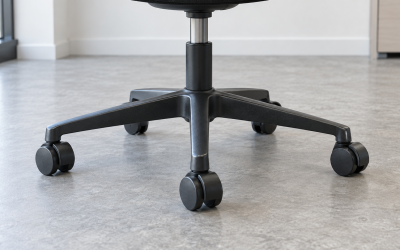
For renters, protecting the flooring is often a top priority. Standard office chair casters can easily scratch hardwood or snag low-pile carpets, often requiring you to buy a bulky plastic chair mat. Active sitting stools typically feature non-slip, non-marring rubber bases designed to grip the floor without scratching. This makes them a floor-friendly option that won’t risk your security deposit.
Long-Term Home
If you have a dedicated, permanent home office where you plan to work for years to come, investing in a high-quality ergonomic office chair is the best move. A dedicated workspace allows you to set up a full-sized task chair, adjust it perfectly to your desk height, and leave it in place. The comprehensive support of a full-back chair is ideal for the long-term physical demands of a full-time remote career.
FAQ
Can I use an active sitting stool as my only office chair?
For most people, using an active sitting stool for a full eight-hour workday is not recommended right away. Because these stools require constant muscle engagement, using one all day without a transition period can lead to fatigue and muscle soreness in your lower back and core. It is best to start by using the stool for 1 to 2 hours a day, gradually increasing your time as your core strength improves, or alternating it with a supportive chair.
Does an active sitting stool actually burn calories?
Yes, but the amount is modest. Because active stools encourage micro-movements, fidgeting, and continuous core engagement, they increase your energy expenditure slightly compared to sitting motionless in a highly supportive chair. While it won’t replace a workout, this active movement keeps your heart rate slightly higher and improves circulation, helping to ward off midday fatigue.
Which option is better for lower back pain?
The answer depends on the cause of your back pain. If your pain stems from weak core muscles and habitual slouching, an active sitting stool can help by building core strength and keeping your spine in a natural alignment. However, if you have a herniated disc, sciatica, or joint instability, the passive, adjustable lumbar support of an ergonomic office chair is much safer, as it reduces pressure on your spine and allows your back muscles to rest.
How do I know if my ergonomic chair is set up correctly for my posture?
To set up an ergonomic chair correctly, adjust the seat height so your feet rest flat on the floor with your knees at a 90-degree angle. Your thighs should be parallel to the ground, and there should be a 2-to-3-inch gap between the back of your knees and the edge of the seat. Finally, adjust the lumbar support so it fits snugly into the natural curve of your lower back, and set the armrests so your shoulders remain relaxed while your elbows rest at a 90-degree angle.