Key takeaways
- Reduced Cumulative Fatigue: By encouraging continuous micro-movements, dynamic chairs prevent your muscles from seizing up and improve blood circulation throughout long working sessions.
- Autonomic Lumbar Alignment: Instead of relying on a static plastic block that presses into your lower back, dynamic lumbar systems self-adjust their depth and angle based on the pressure your body exerts.
- Superior Thermal Regulation: Premium dynamic chairs utilize highly breathable, dual-weave elastomeric mesh. High-end models take this further with integrated, low-decibel cooling fans that prevent heat build-up during intense workdays.
- Highly Adaptable Armrests: Advanced models often feature 4D or 5D armrests that pivot, slide, tilt, and height-adjust, ensuring your wrists and elbows are supported whether you are typing on a keyboard, writing on a tablet, or holding a mobile device.
- Robust Build Quality: Dynamic chairs are built to withstand constant movement, typically featuring heavy-duty aluminum wheelbases, class-4 gas cylinders, and weight capacities ranging from 300 to 350 pounds.
The home office landscape has evolved far beyond basic cushioning and simple height adjustments. Today, the conversation surrounding workplace wellness is dominated by “active sitting” and “kinetic alignment.” This has paved the way for premium seating options designed to move with your body rather than forcing you to sit still. However, with high-end models easily crossing the four-figure mark, many remote workers and office professionals are left wondering: are dynamic ergonomic office chairs worth the extra money?
As we analyze the state of home office setups in 2026, the transition toward dynamic ergonomics has become more than a passing trend—it is a fundamental shift in how we approach sedentary health. To help you decide if this investment makes sense for your daily routine, we have broken down the mechanics, the costs, and the real-world performance of these advanced seating systems.
The Short Answer
Yes, dynamic ergonomic office chairs are worth the extra money, but only if you sit at your desk for more than six hours a day and actively suffer from muscle stiffness or spinal fatigue. The critical condition is that you must be willing to utilize the dynamic features—such as weight-activated tilt tension and responsive lumbar support—rather than locking the chair into a rigid, static position. If you only use your desk occasionally or prefer a highly structured, unyielding posture, a premium static chair will deliver a similar level of comfort for a fraction of the cost.
What You Actually Get
To understand the price premium, it is important to distinguish between a standard ergonomic chair and a truly dynamic one. Traditional ergonomic chairs rely on manual adjustments. You sit down, pull a series of levers to set the height, tilt, and lumbar depth, and lock the chair into place. If you shift from a forward-leaning typing posture to a relaxed reclining posture, you must manually readjust the chair to maintain proper support.
Our top picks
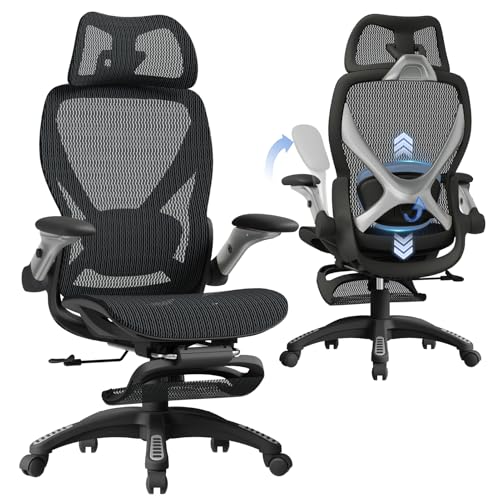 ELABEST X100 Ergonomic Mesh Office Chair with
3D lumbar system tracks natural spine curvature
18-inch extendable footrest adds a relaxation mode
Dual-Stripe AirMesh adds extra airflow over standard mesh
At 43 pounds, it is heavier than typical desk chairs
Multiple adjustment systems add a learning curve to set up

As an Amazon Associate we earn from qualifying purchases at no extra cost to you.
A dynamic ergonomic chair, by contrast, is engineered to respond to your body’s micro-movements automatically. These chairs utilize complex weight-activated tensioners, split-back designs, and pivoting joints that bend, twist, and tilt in tandem with your musculoskeletal system. When you lean left to reach for a document, the lumbar support shifts laterally with your spine. When you recline, the seat pan glides forward to keep your feet flat on the floor and your eyes aligned with your monitor.
Furthermore, high-end dynamic chairs integrate advanced materials and auxiliary systems that you will not find on budget models. For example, a premium option like the LiberNovo Omni PRO ($1,183) features a highly tailored 45cm seat depth, dynamic frame geometry, and an active built-in ventilation fan that draws just 5 watts of power to circulate air through the seat mesh. On the other end of the spectrum, high-value hybrid models like the ELABEST X100 ($314.99) bridge the gap by combining static adjustability—such as 5D flip-up armrests and a 3D lumbar support system—with dynamic mesh backrests and integrated footrests for post-work relaxation. When you pay for a dynamic chair, you are paying for the engineering research, high-caliber materials (such as elastomeric mesh and die-cast aluminum), and complex mechanical linkages that make active sitting possible.
Pros
- Reduced Cumulative Fatigue: By encouraging continuous micro-movements, dynamic chairs prevent your muscles from seizing up and improve blood circulation throughout long working sessions.
- Autonomic Lumbar Alignment: Instead of relying on a static plastic block that presses into your lower back, dynamic lumbar systems self-adjust their depth and angle based on the pressure your body exerts.
- Superior Thermal Regulation: Premium dynamic chairs utilize highly breathable, dual-weave elastomeric mesh. High-end models take this further with integrated, low-decibel cooling fans that prevent heat build-up during intense workdays.
- Highly Adaptable Armrests: Advanced models often feature 4D or 5D armrests that pivot, slide, tilt, and height-adjust, ensuring your wrists and elbows are supported whether you are typing on a keyboard, writing on a tablet, or holding a mobile device.
- Robust Build Quality: Dynamic chairs are built to withstand constant movement, typically featuring heavy-duty aluminum wheelbases, class-4 gas cylinders, and weight capacities ranging from 300 to 350 pounds.
Cons
- High Upfront Cost: True dynamic chairs represent a significant investment, with top-tier models ranging from $800 to over $1,500.
- An Initial Adjustment Period: Because dynamic sitting engages stabilizing muscles in your core and lower back that may have atrophied from years of using static chairs, you may experience mild muscle soreness during the first 7 to 10 days of use.
- Increased Mechanical Complexity: With more moving parts, pivoting joints, and potential electronic components (such as built-in fans), there are more areas that may require maintenance or develop squeaks over years of heavy use.
- Aesthetic Polarity: The highly technical, skeletonized look of dynamic chairs does not suit every home decor style, occasionally clashing with classic or minimalist residential aesthetics.
Who Should Buy It
You should invest in a dynamic ergonomic chair if you are a professional who spends 8 to 12 hours a day at a desk and frequently experiences lower back stiffness, shoulder tension, or hip fatigue. It is also an excellent choice for individuals who find themselves constantly fidgeting or shifting in their seats, as the chair’s responsive mechanism will accommodate these movements without sacrificing spinal alignment. Additionally, tech enthusiasts and remote workers who prioritize long-term preventative health and thermal comfort will find immense value in the active engineering of these high-end seating systems.
Who Should Skip It
You should skip the dynamic category if your desk usage is limited to casual browsing, gaming, or administrative tasks lasting under three hours a day. In these scenarios, the biological benefits of active sitting are negligible, and a standard ergonomic office chair will be more than adequate. You should also pass on these chairs if you prefer the plush, sinking sensation of a traditional leather executive chair, as dynamic models prioritize structural support and breathability over thick foam padding.
Cheaper Alternatives
If you are not ready to spend upwards of $1,000 on a fully dynamic system, there are excellent mid-tier and specialized options that offer outstanding comfort without the premium price tag. Below is a comparison of alternative routes you can take:
| Option Category | Estimated Cost | Key Trade-offs |
|---|---|---|
| Premium Static Ergonomic (e.g., ELABEST X100 style) | $300 – $450 | Offers robust manual adjustments (3D lumbar, 5D arms, footrest) but lacks the auto-adjusting, fluid kinetic frame and active electronic cooling of top-tier models. |
| Mid-Range Mesh Task Chair | $150 – $250 | Provides basic height and tilt adjustability with standard mesh. However, the mesh may sag over time, and the plastic frame offers limited spinal responsiveness. |
| Active Balance Stool / Wobble Board | $80 – $150 | Great for core activation and short-burst focus sessions, but completely lacks back support, armrests, and headrests, making it unsuitable for full 8-hour workdays. |
FAQ
What is the difference between static and dynamic ergonomics?
Static ergonomics requires you to manually adjust the chair’s components to fit your body in a fixed position. Dynamic ergonomics uses flexible frames, weight-sensitive tension springs, and pivoting joints to automatically adjust the backrest, seat pan, and lumbar support in real-time as you move throughout the day.
Do dynamic chairs actually help with chronic lower back pain?
Yes, for many users. Chronic sitting pain is often caused by static load—holding one position for hours, which compresses spinal discs and restricts blood flow. Dynamic chairs encourage constant, gentle micro-movements that distribute your body weight more evenly, keep spinal joints lubricated, and reduce localized pressure points.
How does the active cooling fan work in premium chairs?
High-end dynamic chairs like the Omni PRO feature silent, low-wattage fans integrated directly beneath the seat pan or behind the backrest. Powered by a standard USB connection, these fans pull heat away from your body and push cool air through the mesh, keeping your body temperature regulated without producing distracting noise.
Is the learning curve for a dynamic chair really noticeable?
It can be. If you are transitioning from a soft, unsupportive chair, your body may experience mild fatigue during the first week. This is because your stabilizer muscles are actively engaging to support your posture. Once this initial adjustment period passes, most users report a significant decrease in daily fatigue and muscle soreness.