Key takeaways
- Solid Wood Desktop (Premium Walnut or Oak):
- Initial Purchase: $800 to $1,400 (for a high-quality, solid hardwood top).
- Yearly Maintenance: $15 per year for wood oils, conditioners, or specialized cleaners ($75 total over 5 years).
- Refinishing (Optional at Year 4 or 5): $50 for sandpaper, stain, and polyurethane if you wish to erase surface scratches.
- Resale Value at Year 5: Approximately $400 to $600 (holds 50% of its value due to the timeless nature of solid wood).
- Net Cost over 5 Years: $525 to $925.
Our top picks


As an Amazon Associate we earn from qualifying purchases at no extra cost to you.
With remote and hybrid work cementing themselves as permanent fixtures of our professional lives in 2026, setting up an ergonomic, beautiful home office has shifted from a temporary fix to a critical home improvement project. When designing your workspace, the single most important surface you will interact with daily is your desktop. This brings most buyers to a classic crossroad: the debate over solid wood vs laminate desk top durability work performance.
Do you invest in a natural, organic slab of hardwood that ages with unique character, or do you opt for an engineered, high-performance laminate surface designed to repel coffee spills, pen ink, and heavy monitor mounts? While both materials serve excellent purposes, choosing the wrong one can lead to premature wear, sagging, or unnecessary maintenance headaches. To help you make the right choice, we will break down the structural differences, daily wear-and-tear resilience, and long-term costs of both options.
Quick Verdict
If you want a heirloom-quality desk that can be sanded down, refinished, and customized over decades of use—and you have the budget to support it—solid wood is the ultimate choice. However, if you require a highly scratch-resistant, moisture-proof, and zero-maintenance work surface that easily handles high-traffic family use, heavy computer equipment, and daily spills without staining, laminate offers superior practical durability at a much more accessible price point.
Side by Side
To understand how these materials perform under the pressure of daily work, let us compare their core characteristics side by side:
| Feature | Solid Wood Desktop | Laminate Desktop |
|---|---|---|
| Comfort & Tactility | Warm to the touch, natural texture, absorbs room acoustics well. | Cooler, smoother, can feel slightly sterile or plastic-like. |
| Scratch & Dent Resistance | Moderate to low; susceptible to fingernail scratches, pen impressions, and dropped objects. | High to excellent; protective wear layers resist keys, cups, and daily abrasions. |
| Moisture & Stain Resistance | Porous; requires immediate cleanup to prevent water rings and ink staining. | Non-porous; completely impervious to water, coffee, and mild cleaning chemicals. |
| Price Range | $400 to $2,500+ (depending on wood species like Walnut, Oak, or Cherry). | $80 to $400 (for standalone tops; complete desks vary). |
| Maintenance Required | Periodic oiling or waxing; must be kept in controlled humidity (35% to 55%). | Zero maintenance; simple wipe-down with a damp microfiber cloth. |
| Structural Integrity & Sagging | Excellent stiffness; can span 60 to 72 inches without bowing under heavy loads. | Good, but depends on the core material (MDF or particleboard) and support frame. |
| Resale Value | High; retains value well as a premium furniture asset. | Low; generally considered utility furniture with minimal depreciation recovery. |
| Best For | Dedicated executive offices, design enthusiasts, and long-term heirloom investments. | Active family spaces, high-traffic multi-use rooms, and budget-conscious ergonomic setups. |
Where Solid Wood Wins
The primary appeal of solid wood lies in its authentic, organic nature. Unlike engineered alternatives, a solid wood desktop is milled directly from hardwood trees such as oak, walnut, maple, or cherry. This construction gives it a structural integrity that laminate composites simply cannot replicate.
First and foremost, solid wood excels in long-term restoration. If you accidentally gouge your solid wood desktop with a sharp object, drop a heavy computer chassis, or leave a dark water ring from an iced glass, the desk is not ruined. You can sand down the damaged area, apply a matching stain, and reseal it with polyurethane or hardwax oil. This ability to be restored gives solid wood a virtually infinite lifespan.
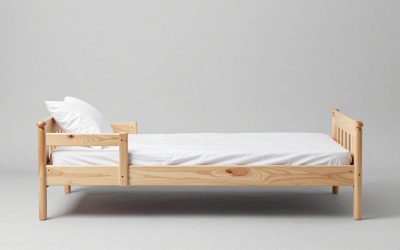
We see this enduring appreciation for natural timber across various home categories. For instance, homeowners love the structural warmth of products like the Mellow Naturalista Classic – 12 Inch Solid Wood Platform Bed with Wooden Slats, No Box Spring Needed, Easy Assembly, Queen, Pine ($149.99), which highlights how real wood brings a grounding, sturdy aesthetic to a bedroom. Similarly, in the kitchen, the tactile pleasure and food-safe properties of items like the Wooden Spoons for Cooking – 10 Pcs Non Toxic Teak Kitchen Utensils Set ($39.99) demonstrate why natural woods remain highly valued over synthetic alternatives.
Furthermore, solid wood has incredible load-bearing capacity. A 1.5-inch thick solid oak desktop can easily support heavy multi-monitor arms, desktop computer towers, and studio speakers (often weighing upwards of 80 lbs combined) over a wide 60-inch span without bowing or showing signs of stress.
Where Laminate Desk Top Durability Work Wins
While solid wood is beautiful, it requires a level of care and environmental control that does not always align with a busy lifestyle. This is where high-pressure laminate (HPL) and thermofused laminate (TFL) excel. Laminate desktops consist of a dense core of medium-density fiberboard (MDF) or particleboard wrapped in a decorative paper layer and sealed under extreme heat and pressure with a protective resin wear layer.
This synthetic outer shell makes laminate desktops almost entirely impervious to the hazards of daily office work. If you spill hot coffee, knock over a glass of water, or accidentally write off the edge of your notebook with a permanent marker, a laminate surface will not absorb the liquid. It can be cleaned effortlessly with a simple multi-surface spray.
This level of daily, hassle-free resilience makes laminate the go-to choice for modern, adjustable-height standing setups. A prime example is the UPLIFT DESK V3 2-Leg Black Laminate Wood Standing Desk – Adjustable Height, Advanced 1-Touch Memory Keypad, Under Desk Cable Management, Wire Grommets & Rocker Board (Black C-Frame, 60 x 30 inch) ($808), which pairs a commercial-grade laminate surface with a heavy-duty motorized frame. In these dynamic setups, the lightweight yet rigid nature of laminate prevents motor strain while resisting the inevitable scuffs of moving monitors, cables, and desk accessories.
Laminate is also highly stable in varying climates. Solid wood naturally expands and contracts with changes in seasonal humidity, which can lead to warping or hairline cracks if the indoor air becomes too dry or too damp. Laminate, because of its engineered core, remains perfectly flat and dimensionally stable whether it is placed in a damp basement office or a sunny loft.
For high-use, collaborative, or multi-generational spaces, laminate is incredibly practical. You can see this utility in heavy-duty utility furniture like the Flash Furniture 24”W x 48”L Rectangular Grey Thermal Laminate Activity Table – Standard Height Adjustable Legs ($133.39), where a thermal laminate surface is specifically chosen to endure years of heavy impact, glue, paint, and rough handling without showing wear.
Cost Over 5 Years
To understand the true economic value of solid wood vs laminate desk top durability work performance, we must look beyond the initial price tag and evaluate the total cost of ownership over a five-year period.
Let us look at a typical scenario for both options, assuming a standard 60-inch by 30-inch workspace:
- Solid Wood Desktop (Premium Walnut or Oak):
- Initial Purchase: $800 to $1,400 (for a high-quality, solid hardwood top).
- Yearly Maintenance: $15 per year for wood oils, conditioners, or specialized cleaners ($75 total over 5 years).
- Refinishing (Optional at Year 4 or 5): $50 for sandpaper, stain, and polyurethane if you wish to erase surface scratches.
- Resale Value at Year 5: Approximately $400 to $600 (holds 50% of its value due to the timeless nature of solid wood).
- Net Cost over 5 Years: $525 to $925.
- High-Quality Laminate Desktop:
- Initial Purchase: $150 to $350 (for the desktop surface alone).
- Yearly Maintenance: $0 (requires only standard household soap and water).
- Refinishing: $0 (laminate cannot be sanded or refinished; if severely damaged, it must be replaced).
- Resale Value at Year 5: Approximately $30 to $70 (laminate furniture depreciates rapidly on the secondary market).
- Net Cost over 5 Years: $120 to $280.
While solid wood requires a higher upfront financial commitment and minor ongoing maintenance, it acts as an asset that retains value. Laminate, on the other hand, represents a highly economical, low-risk investment with zero maintenance costs, though it offers very little return if you decide to sell or upgrade your office setup down the road.
Which One for Your Home
Your decision ultimately depends on how your home office integrates with your daily life, family dynamics, and living space.
Small Apartment (Space-Optimized Workspaces)
In a compact apartment, your desk often has to wear multiple hats. It might serve as your workstation from 9 to 5, your dining table at 6 PM, and a prep surface or crafting station over the weekend. Because of this high-frequency, multi-purpose use, laminate is highly recommended. It handles wet glasses, hot plates, and accidental food spills without requiring coasters or immediate panic, making your small space much easier to manage.
Family with Kids and Pets
If your workspace is situated in a common area where children do homework, work on art projects, or play, or where pets like to jump up next to your keyboard, laminate is the clear winner. The impact-resistant resin layer protects the desk from dropped toys, heavy scissor tips, crayons, and pet claws. It keeps your office looking tidy and professional without requiring you to constantly police your family’s behavior around your furniture.
Rental Property or Temporary Setup
If you rent your home and expect to move within the next few years, transportability is a major factor. Solid wood desktops are exceptionally heavy—often weighing between 60 and 90 pounds for a standard 60-inch slab. They are also prone to corner dings and edge chips during moves. A high-quality laminate desktop is significantly lighter, making it much easier to pack, lift, and transport up apartment stairwells without risking expensive damage.
Long-Term Home Office (The Forever Workspace)
If you have a dedicated, climate-controlled home office in a house you plan to stay in for many years, solid wood is an unmatched choice. Working at a solid wood desk offers a tactile, premium experience. The natural grain reduces glare from overhead lights, feels warmer under your forearms than plastic laminate, and creates a sophisticated, grounding aesthetic that makes spending long hours at your desk more enjoyable. Over the years, any minor scratches simply add to the desk’s unique story and patina.
FAQ
Does solid wood warp more than laminate?
Yes. Solid wood is a natural, hygroscopic material, meaning it absorbs and releases moisture from the surrounding air. If your home office experiences extreme shifts in humidity (such as an uninsulated basement or attic), solid wood can cup, twist, or develop small cracks. Laminate utilizes an engineered MDF or particleboard core that is highly stable and will not warp under normal indoor humidity fluctuations.
Can you fix a scratch on a laminate desktop?
Generally, no. Unlike solid wood, which can be sanded down and refinished, laminate features a very thin protective plastic and paper layer over a composite core. If a scratch penetrates through this top layer, it cannot be sanded out. Minor scuffs can sometimes be masked with specialized laminate repair pastes or color-matched wax sticks, but deep gouges are permanent.
Which material is better for heavy dual-monitor mounts?
Solid wood is superior for heavy, clamp-on monitor arms. Because solid wood has continuous, natural grain fibers, it can withstand high concentrated clamping pressure without cracking. Cheap laminate tops with low-density particleboard cores can compress, crack, or sag under the heavy leverage of a dual-monitor clamp. If using laminate with a heavy mount, it is wise to use a metal reinforcement plate to distribute the weight.
Is laminate toxic or bad for indoor air quality?
Modern, high-quality laminate desks are highly regulated and safe. In the past, some composite wood cores used glues containing urea-formaldehyde. However, reputable manufacturers now produce desktops that comply with strict emissions standards, such as CARB Phase 2 or GreenGuard Gold certifications, ensuring they do not off-gas harmful chemicals into your home office.