Our Top Picks
 【Upgraded Larger and Thicker】Vaydeer Elbow Rest Pad 1pcMedium7.38 x 5.08 x 0.1 inches0.3 poundsCheck on Amazon
An elbow rest pad for a desk is a cushioned strip or pad, usually memory foam or gel under a fabric or PU leather cover, that spreads the pressure of your forearm and elbow over a larger area so the hard desk edge does not press on the nerve that runs along the inner elbow. It helps most if you lean on your desk for long stretches, have a desk without armrest-height chair arms, or already feel tingling in your ring and little fingers after work. It will not fix a desk or chair that is set at the wrong height, so get the heights right first and use the pad to finish the job.
Why the Elbow Hurts on a Desk Edge
The ulnar nerve passes close to the skin at the inside of the elbow, the spot people call the “funny bone.” Resting that point on a hard surface for hours compresses the nerve. The usual result is aching, numbness or pins and needles in the outer fingers. A desk edge also concentrates force in a narrow line across the forearm, which can leave red marks and soreness even when the nerve is not involved.

MEKASS L-Shaped Desk Elbow Pad for Desk, Memory Foam Elbow Support Padding with Non-Slip, Ergonomic Desk Edge Cushion, Wrist Comfort Support for Office Home 2 Pcs (Diamond Black)
Chosen because it specifies Memory Foam Elbow Support Padding with Non-Slip and Ergonomic Desk Edge Cushion.
View on Amazon【Upgraded Larger and Thicker】Vaydeer Elbow Rest Pad 1pc, Desk Wrist Rest Memory Foam Armrest, Ergonomic Mouse Cushion Support, Wrist Pain Relief for Computer Laptop Working Typing Gaming Office Gadget
Chosen because it specifies Desk Wrist Rest Memory Foam Armrest and Ergonomic Mouse Cushion Support.
View on Amazon
JIKIOU L-Shaped Desk Elbow Pad for Desk,Memory Foam Elbow Support Pad 2Pack
Chosen because it specifies Memory Foam Elbow Support Pad 2Pack.
View on Amazon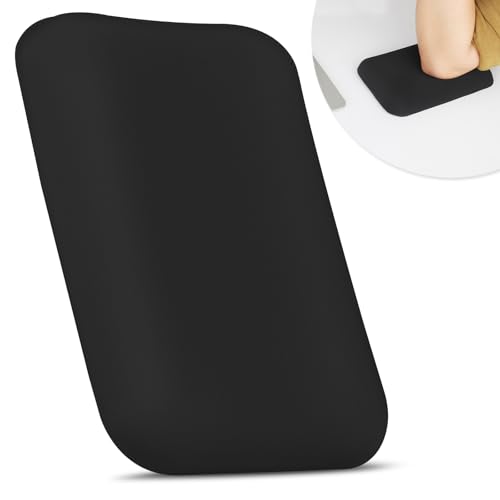
Leolee Elbow Rest Pads for Desk, Black Ergonomic Arm Rest Pads
Chosen because it specifies Black Ergonomic Arm Rest Pads.
View on AmazonA pad does two things: it increases contact area so pressure per square inch drops, and it rounds off the sharp edge. Neither works if the elbow is still the main point carrying your upper body weight, which is why posture and height come first.
Set Heights Before You Buy a Pad
| Setting | Target | How to check |
|---|---|---|
| Elbow angle while typing | 90–110 degrees | Forearms roughly level or sloping slightly down to the keys |
| Desk or keyboard surface | At or 1 in below seated elbow height | Most adults: 25–29 in from the floor |
| Chair armrests | Level with desk surface or just below | Shoulders should not lift when arms rest |
| Forearm support zone | Mid-forearm, not the elbow tip | The pad should sit under the fleshy part of the forearm |
If the desk is higher than your elbows, you will press down on the edge no matter how soft the pad is. Lower the desk, raise the chair with a footrest, or use a keyboard tray. Once the surface is roughly at elbow height, a pad turns a tolerable setup into a comfortable one.
Types of Elbow Rest Pads
Flat desk pads
Rectangular pads, often around 10 to 12 inches long and 4 to 6 inches wide, that lie on the desktop where your forearm rests. Usually memory foam in a stretch fabric or PU cover with a non-slip base. Simple and cheap.
Edge-wrap or clamp-on pads
Foam or gel pieces that wrap over the front edge of the desk, cushioning both the top and the edge. Good for sharp laminate or glass edges. Some attach with adhesive strips, others clip on.
Full-length desk edge cushions
Long strips of foam, sometimes the full width of the desk, that stick along the front edge. Useful if you move along the desk or share it, but adhesive can mark wood finishes.
Clamp-on arm rest extensions
A padded platform on a bracket that clamps to the desk edge and extends toward you, sometimes with a swivel. These support the forearm when the desk is too shallow or when you want arm support away from the desk. Popular among gamers and people using a mouse for long periods.
Wearable elbow pads
Soft sleeves worn over the elbow. They move with you, which helps if you lean on several surfaces through the day, but they can feel warm.
Material Trade-Offs
| Filling | Typical thickness | Feel | Lifespan | Watch out for |
|---|---|---|---|---|
| Memory foam | 0.6–1.2 in | Slowly molds to the arm | 1–3 years daily use | Firms up in cold rooms; flattens over time |
| Gel or gel-infused foam | 0.4–0.8 in | Cooler, slightly springy | 2–4 years | Gel can feel firm; cheap gel cases can split |
| High-density polyurethane foam | 0.5–1 in | Firmer, more supportive | 2–4 years | Less contouring |
| Silicone | 0.2–0.5 in | Grippy and dense | Long | Thin; mainly softens edges |
Covers matter for comfort and cleaning. PU leather wipes clean and suits shared desks but gets warm against bare skin. Lycra or knit fabric breathes better and is often removable and washable. A rubberized or silicone base keeps the pad from sliding when you move your mouse.
Thickness and Height: Do Not Overcorrect
A pad adds height to your forearm. A 1-inch pad on a desk that is already slightly high lifts your shoulders further. If the desk is right at elbow height, a thin pad of 0.5 to 0.75 inches is usually enough. Thicker pads suit desks that are slightly low, or users who rest their whole forearm rather than just the elbow region.
Which Pad for Which Situation
| Situation | Best option | Typical price range |
|---|---|---|
| Sharp desk edge marks your forearms | Edge-wrap or full-length edge cushion | Usually $10–$30 |
| Mouse arm aches after long sessions | Single memory foam pad under mouse forearm | Usually $10–$25 |
| Shallow desk, arms hang off the edge | Clamp-on arm rest extension | Usually $25–$70 |
| Chair has no armrests | Two flat pads or a clamp-on extension | Usually $20–$70 |
| Tingling in ring and little fingers | Soft wide pad plus reduced leaning; see a clinician if it persists | Usually $15–$40 |
| Standing desk user | Thin non-slip flat pad; avoid adhesive | Usually $10–$25 |
Placement Tips
- Place the pad so it supports the forearm 2 to 4 inches below the elbow, not the bony point itself.
- Keep your keyboard close enough that you do not have to reach; reaching pushes weight back onto the elbow.
- If you use a wrist rest too, the two should be at similar heights so the forearm stays level.
- Move during the day. No pad makes static leaning for hours harmless.
Care and Replacement
Wipe PU covers with a damp cloth and mild soap. Remove and wash fabric covers on a gentle cycle and air dry; heat can shrink the cover and harden foam. Replace the pad when it no longer springs back within a few seconds after you lift your arm, or when you can feel the desk through it at your usual resting spot.
When a Pad Is Not Enough
Persistent numbness, weakness in your grip or symptoms that wake you at night are signs to talk to a doctor or physical therapist rather than buying more padding. A pad is a comfort tool. It reduces pressure, but it does not treat nerve irritation that has already set in.