Key takeaways
- Wood construction: Solid wood generally offers better repairability and a more substantial feel than thin veneer, but inspect the listing for details about the species, joins, and whether the legs attach securely.
- Surface durability: Look for a sealed, even finish that resists minor spills and routine wiping. Softer woods can still work well, but they will show dents and marks sooner than harder species.
- Ergonomic height: A coffee table is usually most comfortable when it sits around sofa-seat height or slightly lower. Check the dimensions against your seating so drinks and devices are easy to reach without excessive bending.
- Edges and corners: Rounded corners and softened live edges reduce painful impacts, particularly in compact rooms or homes with children. Sharp, square profiles need more clearance around walking paths.
- Base stability: Wide leg placement, solid hardware, and a level footprint matter more than visual heft. A stable table should not rock when someone leans lightly on its edge.
What's inside
Choosing the best wood for a coffee table is less straightforward than it looks. A beautiful grain can hide a surface that dents easily, while a thick-looking tabletop may still wobble, flex, or create uncomfortable knee clearance around a sofa. Daily use also matters: coffee, laptops, toys, feet, and frequent cleaning all test a table’s finish and construction.
This guide evaluates five promising options through an ergonomics-and-durability lens. We consider tabletop thickness, edge treatment, stability, storage, usable proportions, and how each design is likely to perform in a busy living room rather than judging appearance alone.
As an Amazon Associate we earn from qualifying purchases.


How to Choose a/an Wood For A Coffee Table (2026)
- Wood construction: Solid wood generally offers better repairability and a more substantial feel than thin veneer, but inspect the listing for details about the species, joins, and whether the legs attach securely.
- Surface durability: Look for a sealed, even finish that resists minor spills and routine wiping. Softer woods can still work well, but they will show dents and marks sooner than harder species.
- Ergonomic height: A coffee table is usually most comfortable when it sits around sofa-seat height or slightly lower. Check the dimensions against your seating so drinks and devices are easy to reach without excessive bending.
- Edges and corners: Rounded corners and softened live edges reduce painful impacts, particularly in compact rooms or homes with children. Sharp, square profiles need more clearance around walking paths.
- Base stability: Wide leg placement, solid hardware, and a level footprint matter more than visual heft. A stable table should not rock when someone leans lightly on its edge.
The Best Wood For A Coffee Table (2026)s Reviewed
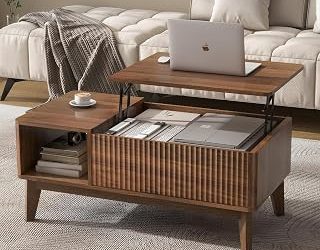
Solid Wood Farmhouse Coffee Table
This 47-inch, two-tier farmhouse table is a practical choice for buyers who need both a substantial work surface and accessible storage. The lower shelf can keep remotes, books, and baskets off the main surface, although its larger footprint deserves careful measurement in front of a compact sofa.
Natural Wood Live Edge Coffee Table
The live-edge design makes each table visually distinctive and preserves the irregular character that many buyers want from natural wood furniture. Before buying, check the precise dimensions and edge profile: organic contours can reduce usable surface area and may be less comfortable than a uniformly softened edge.
WELLAND Live Edge Cedar Coffee Table
The WELLAND model combines a cedar live-edge top with black hairpin legs in a compact 32.5-by-17-inch format. Its smaller depth suits tighter seating arrangements, while the slim metal base leaves more visible floor space; however, the lightweight silhouette is best positioned where it will not be repeatedly bumped.
Solid Wood Rustic Live-Edge Coffee Table
With a 2-inch tabletop and farmhouse styling, this rustic center table is aimed at shoppers who prioritize visual solidity and a pronounced natural edge. The thick top should feel reassuring under normal use, but measure carefully around the sofa because a heavy-looking profile can make a narrow room feel crowded.
47.24-Inch Rounded-Corner Wood Coffee Table
This rectangular table pairs a natural wood appearance with rounded corners and metal legs, a useful combination for households where people frequently walk around the table. The softened corners improve safety during close passes, while the thick tabletop creates a sturdy visual presence; confirm the listed construction and hardware details before expecting heirloom-level durability.
Frequently Asked Questions
Which wood is most durable for a coffee table?
Hardwoods such as oak, maple, and walnut usually resist dents better than softer woods. Durability also depends on moisture protection, joinery, leg attachment, and whether the tabletop is solid, engineered, or veneered.
Is a thick tabletop better?
Thickness can improve rigidity and provide a more substantial feel, but it is not a guarantee of quality. A well-supported thinner top may outperform a thick panel with weak joints, and excessive thickness can reduce knee and leg clearance.
Are live-edge coffee tables practical?
Yes, provided the edge is stable, smooth, and sealed. Live-edge tables offer character, but their irregular outline can make cleaning, placing drinks, and aligning the table with a sofa slightly less convenient.
What coffee-table height is most comfortable?
A height close to the sofa seat is a reliable starting point, with slightly lower tables often working well for relaxed seating. Prioritize easy reach without forcing users to lean forward, and leave enough clearance for legs and walking routes.
Final Thoughts
For flexible storage and everyday practicality, the Solid Wood Farmhouse Coffee Table is a strong starting point. The WELLAND Live Edge Cedar Coffee Table suits smaller rooms, while the 47.24-Inch Rounded-Corner Wood Coffee Table is appealing when safer edges and an easy-to-navigate footprint matter most.