Key takeaways
- Capacity: Swing and spindle travel determine how large and how deep a workpiece you can handle. For furniture work, a generous throat and at least 2 inches of travel are practical starting points.
- Speed control: Variable-speed systems are convenient, but stepped pulleys can be durable and mechanically simple. Choose a range that accommodates small bits, Forstner bits, and occasional metal hardware.
- Table and base: Look for cast iron or similarly rigid supports, secure locking points, and enough surface area for clamps. A tilting table is useful only when its angle scale and locking mechanism hold reliably.
- Runout and alignment: Low spindle runout matters more than headline motor power. Laser guides help with positioning, but they cannot correct a loose chuck, flexing column, or poorly aligned table.
- Operator comfort: A balanced feed handle, accessible depth stop, clear controls, and manageable belt changes reduce fatigue and encourage consistent technique during repetitive drilling.
What's inside
Choosing a wood drill press is less straightforward than comparing motor amperage. A machine that looks capable on a specification sheet may have excessive spindle play, a cramped table, awkward speed changes, or a base that walks across the bench under load. Those shortcomings show up quickly when drilling shelf-pin rows, hinge cups, dowel holes, or repeated joinery.
This guide evaluates benchtop drill presses from an ergonomics-and-durability perspective: control placement, table support, usable drilling capacity, vibration, adjustment effort, and long-term serviceability. It also includes a portable drill guide for woodworkers who need accuracy without dedicating permanent bench space to a machine.
As an Amazon Associate we earn from qualifying purchases.




How to Choose a/an Wood Drill Press (2026)
- Capacity: Swing and spindle travel determine how large and how deep a workpiece you can handle. For furniture work, a generous throat and at least 2 inches of travel are practical starting points.
- Speed control: Variable-speed systems are convenient, but stepped pulleys can be durable and mechanically simple. Choose a range that accommodates small bits, Forstner bits, and occasional metal hardware.
- Table and base: Look for cast iron or similarly rigid supports, secure locking points, and enough surface area for clamps. A tilting table is useful only when its angle scale and locking mechanism hold reliably.
- Runout and alignment: Low spindle runout matters more than headline motor power. Laser guides help with positioning, but they cannot correct a loose chuck, flexing column, or poorly aligned table.
- Operator comfort: A balanced feed handle, accessible depth stop, clear controls, and manageable belt changes reduce fatigue and encourage consistent technique during repetitive drilling.
The Best Wood Drill Press (2026)s Reviewed
WEN 12-Inch Benchtop Drill Press DP1263V
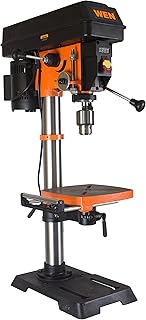
The WEN DP1263V is a strong all-around choice for furniture shops that need useful reach without moving to a floor-standing machine. Its 6.2-amp variable-speed motor, cast-iron construction, laser, and LED work light cover both precision layout and general-purpose drilling. The larger swing is particularly helpful when positioning wide cabinet sides, although the heavier body deserves a properly reinforced bench.
SKIL 10-Inch 5-Speed Benchtop Drill Press DP9505-00
The SKIL DP9505-00 is a sensible compact option for occasional woodworking and home workshops. Its five fixed speeds keep the mechanism straightforward, while the laser alignment and work light make repetitive hole placement easier. It is best suited to moderate workloads where convenient setup and a smaller footprint matter more than maximum throat depth.
WOODSKIL 8-Inch Benchtop Drill Press
With a 2.3-amp induction motor, five speeds, a 1/2-inch keyed chuck, and a 2-inch spindle stroke, the WOODSKIL is sized for lighter furniture components and DIY work. Its cast-iron table bevels to 45 degrees, giving it useful flexibility for angled drilling. The smaller 8-inch swing limits large panels, but that compactness can improve bench ergonomics in a crowded workspace.
VEVOR 10-Inch Benchtop Drill Press
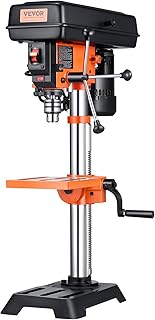
The VEVOR benchtop drill press offers a practical balance of 10-inch swing, five adjustable speeds, and a cast-iron frame. Its table tilts from 0 to 45 degrees for angled work, though users should verify the table is square after adjustment rather than relying solely on the scale. It is a capable value-oriented machine for woodworkers who want basic capacity and a stable platform at a modest size.
SpeTool Portable Drill Guide S04003
The SpeTool S04003 is not a powered drill press, but it solves a different accuracy problem: making straight holes with a handheld drill where a benchtop machine cannot reach. Its all-aluminum base, liner ball bearings, spring assistance, and stated 0.004-inch precision make it attractive for on-site furniture repairs, doweling, and large panels. It requires a suitable drill and careful clamping, but stores far more easily than a conventional press.
Frequently Asked Questions
Is a drill press worth buying for woodworking?
Yes, if you regularly drill repeated, perpendicular, or accurately spaced holes. A drill press improves consistency and reduces wrist strain, especially for Forstner bits and large-diameter holes. For occasional repairs, a portable guide may provide better value and flexibility.
What size drill press is best for furniture making?
A benchtop model with roughly 10 to 12 inches of swing and at least 2 inches of spindle travel is a versatile target. The ideal size still depends on your workpieces and bench space; a larger machine is not automatically more accurate if its support surface is unstable.
Are lasers important on a wood drill press?
Lasers are useful for quick visual positioning, especially on repetitive work, but they are an aid rather than a precision system. Confirm the bit’s actual location, keep the table square, and use fences or stop blocks when repeatability matters.
How should a benchtop drill press be mounted?
Fasten it to a rigid, level bench or a dedicated stand. The mounting surface should resist rocking and absorb vibration, with enough room to support the workpiece. Always secure awkward or small stock rather than holding it by hand near the bit.
Final Thoughts
The WEN DP1263V is the most versatile pick for demanding home furniture work, while the SKIL DP9505-00 suits smaller shops seeking simple operation and a compact footprint. For portability rather than permanent bench space, the SpeTool S04003 is a smart complement to a quality handheld drill.