Key takeaways
- Clean on an overcast day above 60 F. Direct sun dries cleaner into streaks and slows curing of any sealer applied afterward.
- Mask or remove hardware-mounted cushions and slings first; brightener chemistry can spot polyester weaves and aluminum.
- Allow 48 hours of dry time before sealing or oiling. Trapped moisture is what causes cloudy blotches and early peeling.
- Put felt or nylon glides under leg ends. Wicking from a damp patio is a bigger long-term threat than sunlight.
What's inside
Teak earns its reputation from oil-rich, tight-grained heartwood that shrugs off rot, but the parts that actually fail first are rarely the boards themselves. They are the contact surfaces and connections: the seat slat you slide across, the arm rest your forearm rides on, the mortise-and-tenon shoulder that carries your weight every time you lean back. Aggressive cleaning is the single fastest way to age those details, raising fibers that snag skin and clothing, washing binder out of glue lines, and leaving fasteners sitting in wet, acidic residue.
This guide approaches teak maintenance the way a furniture engineer would: cleaning as a durability procedure rather than a cosmetic one. You will learn how to assess joints before you wet anything, how two-stage cleaner and brightener chemistry actually works, the scrubbing technique that lifts grime without fuzzing the surface, how to decide between sealer, oil, or bare silver patina, and how to finish so the piece feels good against bare arms and legs for another decade.
🛒 Best Price Today on Amazon
Prime members get fast, free shipping on everything above, plus member-only deals. New members get a 30-day free trial — cancel anytime.
Our Recommended Picks
As an Amazon Associate we earn from qualifying purchases.



Inspect the Structure Before You Wet It
Water and scrubbing pressure will find every weakness, so find them first. Sit in each chair and shift your weight side to side, listening for a click at the leg-to-rail junction. Check that stainless or brass hardware still sits flush and that no bolt head has sunk into softened wood. Look for open joint lines wider than a business card edge, and for black staining around fasteners, which signals moisture already tracking inside. Tighten what is loose and let any damp piece dry fully before cleaning, because saturating a compromised joint is how a stable chair becomes a wobbly one.
Understand Two-Stage Cleaner and Brightener Chemistry
Gray teak is not dirty, it is UV-weathered lignin. That is why a single soapy wash leaves things looking dull. Proper systems work in two passes: a mildly alkaline cleaner that lifts mildew, pollen, sunscreen, and airborne grease, followed by a mild acid brightener that neutralizes the surface and restores warm color. Kits such as the Furniture Clinic Teak Care Kit bundle cleaner, brightener, and oil so the pH sequence is handled for you. For heavily neglected pieces, Bayes High Performance Teak Cleaner & Restorer and STAR BRITE Premium Outdoor Teak Cleaner both do the heavy lifting in fewer passes, while the standalone Furniture Clinic Teak Cleaner is the sensible choice when you only need routine soil removal without changing the finish plan.
Scrub Technique That Protects the Surface
Pressure washers are the most common cause of ruined teak. Even at moderate settings they erode the softer earlywood between grain lines, leaving a corduroy texture that traps dirt and delivers splinters. Instead, wet the piece with a garden hose, work in shade so the cleaner does not flash-dry, and use a white nylon or soft-bristle brush. Scrub gently across the grain to release grime from the pores, then make your final light passes with the grain to lay the fibers back down. Rinse each section completely before moving on, and never let cleaner dry on cushion straps, powder-coated frames, or adjacent stone.
Sealer, Oil, or Honest Patina
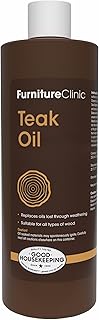
This decision matters more for longevity than the cleaning itself. Sealers deposit UV inhibitors and water repellent without feeding mildew, which makes them the durable choice for anything living outdoors year-round; the EcoDecors Teak Cleaner & Teak Sealer Kit pairs both stages for that path. Teak oil behaves differently. It looks superb and restores a rich matte depth, but organic oils are food for mold in humid climates, so reserve products like Furniture Clinic Teak Oil for sheltered pieces, shower benches, indoor furniture, and boat trim you maintain frequently. Choosing bare patina is entirely valid too, as long as you still clean annually so soil does not hold moisture against the grain.
Finish for Skin Contact, Not Just Looks
Wet cleaning always raises some fiber. Once the piece is bone dry, run a bare hand over every surface a body touches: seat slats, front seat edges, arm tops, and backrest crowns. Anywhere that feels fuzzy or fibrous, hand-sand with 180 grit on a cork block, following the grain, then soften sharp arris edges with a few passes of 220. Skip the random-orbit sander on curved arms, where it dishes the profile and thins the section that carries the most leverage. Ten minutes of hand work here is what separates furniture people willingly sit on from furniture that stays folded in the garage.
Tips
- Clean on an overcast day above 60 F. Direct sun dries cleaner into streaks and slows curing of any sealer applied afterward.
- Mask or remove hardware-mounted cushions and slings first; brightener chemistry can spot polyester weaves and aluminum.
- Allow 48 hours of dry time before sealing or oiling. Trapped moisture is what causes cloudy blotches and early peeling.
- Put felt or nylon glides under leg ends. Wicking from a damp patio is a bigger long-term threat than sunlight.
Frequently Asked Questions
How often should teak patio furniture be cleaned?
Once a year is enough for most climates, ideally in spring before heavy use. Humid or heavily shaded settings with mildew pressure may warrant a light second pass in late summer. Anything more frequent than that with an abrasive brush starts costing you surface material.
Can I use household bleach or dish soap?
Chlorine bleach strips color unevenly and can corrode stainless fasteners over repeated use, while dish soap leaves surfactant residue that attracts fresh dirt. A dedicated teak cleaner is formulated to rinse clean and stay compatible with hardware and adjacent surfaces.
Will sealing stop the gray patina permanently?
No. Sealers slow UV graying substantially but wear thin, typically needing renewal every one to two seasons depending on exposure. Treat it as scheduled maintenance rather than a permanent barrier.
Is a badly weathered, black-stained piece worth restoring?
Usually yes, if the joints are sound. Surface blackening is generally mildew and tannin staining within the top fraction of a millimeter, and a restorer-grade cleaner plus light sanding resolves it. Structural rot at the joints is the real deciding factor.
Conclusion
The best way to clean teak in 2026 has not changed much, because good practice was never about stronger chemicals or more pressure. Check the structure, use a proper cleaner and brightener sequence, scrub with soft bristles, decide deliberately between sealer and oil, and finish by hand where skin meets wood. Do that once a year and your teak will keep getting better rather than quietly wearing out.