Key takeaways
- Suspension and reach: Telescoping bars with 360° rotating hooks are the difference between a light that hangs where you need it and one that slides down the fender lip mid-job. Check the extended span against your widest vehicle, not your narrowest.
- Ingress and impact ratings: Look for an explicit IP54 minimum for brake cleaner overspray and coolant mist, plus an IK08 impact rating. Unrated polycarbonate housings tend to spider-crack at the lens seam first, which is also where moisture enters.
- Beam quality over raw lumens: A diffused 1,500-lumen bar with a wide throw often reveals more than a 3,000-lumen unit that punches a hot spot into aluminum and blinds you on the rebound. Prioritize a frosted lens and 4000–5000K neutral white for accurate wire-color identification.
- Magnet quality and mounting redundancy: N45-grade neodymium magnets hold on painted surfaces at awkward angles, but magnets alone are a single point of failure. The best designs pair magnets with hooks so vibration from a running engine cannot walk the light loose.
- Power architecture and grip: Decide between an integrated 5200mAh cell (simpler, fully cordless) and a platform battery you already own (instantly swappable, no downtime). Either way, the body should have a textured or rubber-overmolded grip zone you can reposition one-handed.
What's inside
An engine bay is one of the least forgiving spaces a person can work in. You are bent forward at the waist, arms extended past your center of gravity, often holding a torque wrench in one hand and nothing useful in the other. A light that has to be repositioned every four minutes, or held in your teeth, quietly adds strain to a job that is already hard on the lumbar spine and shoulders. The failure mode is rarely dramatic — it’s a dropped fixture, a cracked lens, a hinge that no longer holds angle, and a fastener you rounded off because the shadow hid it.
This guide evaluates under hood work lights the way a durability engineer would: how the housing survives repeated impact against valve covers, whether the hooks span a real fender width without walking loose, how the beam is diffused to avoid the retinal fatigue that comes from staring into raw LED emitters, and whether the controls can be operated with gloved, greasy hands. Runtime and lumen claims matter, but they matter less than whether the tool still works after eighteen months in a rolling cabinet.
As an Amazon Associate we earn from qualifying purchases.


How to Choose an Under Hood Work Light (2026)
- Suspension and reach: Telescoping bars with 360° rotating hooks are the difference between a light that hangs where you need it and one that slides down the fender lip mid-job. Check the extended span against your widest vehicle, not your narrowest.
- Ingress and impact ratings: Look for an explicit IP54 minimum for brake cleaner overspray and coolant mist, plus an IK08 impact rating. Unrated polycarbonate housings tend to spider-crack at the lens seam first, which is also where moisture enters.
- Beam quality over raw lumens: A diffused 1,500-lumen bar with a wide throw often reveals more than a 3,000-lumen unit that punches a hot spot into aluminum and blinds you on the rebound. Prioritize a frosted lens and 4000–5000K neutral white for accurate wire-color identification.
- Magnet quality and mounting redundancy: N45-grade neodymium magnets hold on painted surfaces at awkward angles, but magnets alone are a single point of failure. The best designs pair magnets with hooks so vibration from a running engine cannot walk the light loose.
- Power architecture and grip: Decide between an integrated 5200mAh cell (simpler, fully cordless) and a platform battery you already own (instantly swappable, no downtime). Either way, the body should have a textured or rubber-overmolded grip zone you can reposition one-handed.
The Best Under Hood Work Lights (2026) Reviewed
Milwaukee 2125-20 M12 Bare Underhood Light
Structurally the most confidence-inspiring option here, with a rigid extension mechanism and hook geometry that stays put through vibration. Because it’s a bare tool on the M12 platform, you get zero recharge downtime if you already own batteries, which is the real ergonomic win on a long job.
LUTEC 3000LM Motion Sensor Under Hood Light Bar
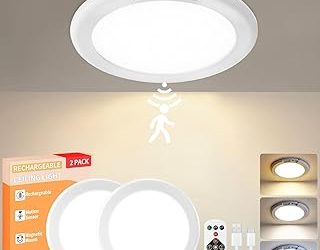
The motion sensor sounds like a gimmick until your hands are full and you no longer have to grope for a switch with a knuckle. The wide diffused bar spreads light evenly across the bay rather than spotlighting one accessory, which meaningfully reduces the squinting and repositioning that cause neck fatigue.
3000LM Rechargeable Auto On/Off Underhood Work Light
The auto on/off behavior pairs well with the magnetic-plus-hook mounting, making this an easy grab-and-go light for roadside work where you’re setting up in the dark. The 5200mAh cell comfortably outlasts a typical evening repair at mid-brightness.
Magnetic Cordless Under Hood Work Light Bar for Mechanics (Green)
This is the spec sheet to beat if durability is your primary filter: N45 magnets, 360° hooks, IP54 sealing, and an IK08 impact rating on a 3,000-lumen bar. The high-visibility green housing is also easier to spot before you close a hood on it.
ATD Tools 80050A LED Under Hood Light (1500L)
A restrained, professional-grade choice from a brand that sells to working shops. At 1,500 lumens it’s dimmer on paper, but the even white output and durable build make it comfortable for extended diagnostic sessions where glare, not brightness, is the limiting factor.
Frequently Asked Questions
How many lumens do I actually need under a hood?
Between 1,500 and 3,000 lumens covers nearly all engine bay work. Above that, glare bouncing off aluminum and chrome usually costs you more visibility than the extra output gains, so favor diffusion and beam width over peak numbers.
Are magnets or hooks the more reliable mount?
Hooks resist vibration better; magnets are faster and work on interior panels and subframes. Choose a light with both and use them together whenever the engine will be running.
Will an under hood light survive being dropped on concrete?
Models with a stated IK08 rating and a recessed or frosted lens generally will. Unrated lights typically fail at the lens edge or the hinge joint, which is also the hardest part to repair.
Is a bare tool worth it if I don’t own that battery platform?
Usually not. Buy into a bare tool only when you already have batteries and a charger, otherwise an integrated 5200mAh light delivers better value with less to keep track of.
Final Thoughts
For working mechanics who already own M12 batteries, the Milwaukee 2125-20 is the most durable long-term choice. If you want a self-contained light, the LUTEC 3000LM motion sensor bar offers the best hands-free ergonomics, while the IP54/IK08-rated Magnetic Cordless Work Light Bar is the toughest option for anyone who treats their tools hard.