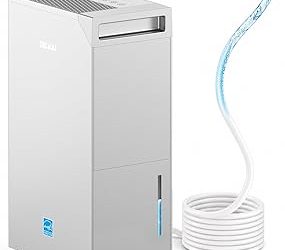
Key takeaways
- Lift height and body mechanics: Measure from your floor to the top of the cabinet. Anything above 36 inches forces the bottle above your navel with arms extended, the worst possible leverage. If the household includes anyone with a shoulder, wrist, or lower-back limitation, plan on 3-gallon bottles or move to a bottom loader.
- Dispense height and actuation: Spouts should clear a tall tumbler without tilting, and the controls should respond to a light press or a paddle nudge. Stiff buttons that need a braced thumb create repetitive strain in kitchens that fill twenty glasses a day.
- Hot-tank construction: Stainless reservoirs and silicone tubing tolerate constant 190°F cycling far better than plastic tanks with adhesive seams. This is the single component that decides whether the unit lasts two years or seven.
- Cabinet rigidity and footprint: Press the side panel with your palm. If it drums or bows, that panel is also failing to brace the compressor, and vibration noise will worsen as mounts age. A wide, low base with a slightly rearward center of mass resists tipping when a child pulls the spout.
- Serviceable details: A removable, deep drip tray, an accessible probe you can wipe down, and a genuine child safety lock on the hot tap separate designs built for years of maintenance from designs built for a showroom.
What's inside
A full 5-gallon bottle weighs roughly 42 pounds, and a top-loading dispenser asks you to raise that weight to about chest or shoulder height, invert it, and seat it on a probe without slopping water down the cabinet. That single motion is where most buyer regret starts. It is also where injuries start: the lift happens with arms extended away from the body, which multiplies spinal load far beyond the bottle’s actual mass. The second regret arrives later, usually somewhere between month eight and month eighteen, when a thin-gauge chassis starts to flex, a hot-tank gasket weeps, or the compressor develops a rattle it never had in week one.
This guide evaluates top-loading water dispensers the way a durability lab would: load path and lift geometry, dispense height relative to a standing adult’s wrist, the materials in contact with hot water, and how the cabinet holds tolerance after thousands of thermal cycles. I have also included two bottom-loading models for comparison, because if the lift itself is your sticking point, the honest recommendation is to eliminate the lift rather than optimize it. Every pick below is judged on repeated real-world use, not first-week impressions.
As an Amazon Associate we earn from qualifying purchases.


🛒 Best Price Today on Amazon
Prime members get fast, free shipping on everything above, plus member-only deals. New members get a 30-day free trial — cancel anytime.
How to Choose a Top Loading Water Dispenser (2026)
- Lift height and body mechanics: Measure from your floor to the top of the cabinet. Anything above 36 inches forces the bottle above your navel with arms extended, the worst possible leverage. If the household includes anyone with a shoulder, wrist, or lower-back limitation, plan on 3-gallon bottles or move to a bottom loader.
- Dispense height and actuation: Spouts should clear a tall tumbler without tilting, and the controls should respond to a light press or a paddle nudge. Stiff buttons that need a braced thumb create repetitive strain in kitchens that fill twenty glasses a day.
- Hot-tank construction: Stainless reservoirs and silicone tubing tolerate constant 190°F cycling far better than plastic tanks with adhesive seams. This is the single component that decides whether the unit lasts two years or seven.
- Cabinet rigidity and footprint: Press the side panel with your palm. If it drums or bows, that panel is also failing to brace the compressor, and vibration noise will worsen as mounts age. A wide, low base with a slightly rearward center of mass resists tipping when a child pulls the spout.
- Serviceable details: A removable, deep drip tray, an accessible probe you can wipe down, and a genuine child safety lock on the hot tap separate designs built for years of maintenance from designs built for a showroom.
The Best Top Loading Water Dispenser (2026)s Reviewed
Brio 130 Series Top-Load Cooler
The most confidently engineered top loader here: the spill-free loading collar guides the bottle onto the probe so you are not fishing blind at shoulder height, and the panel gauge and hinge tolerances hold up under daily handling. Hot, cold, a child safety lock, and Energy Star 3.0 certification make it the default recommendation for households committed to a top-load format.
Feelfunn Top Loading Water Dispenser
A sensible, straightforward cabinet that accepts both 3- and 5-gallon bottles, which matters more than it sounds: dropping to 3 gallons cuts the lift by roughly 17 pounds and turns a two-person job into a one-person job. Controls are light to actuate and the hot tap lock is properly stiff rather than decorative.
Freestanding Top Loading Cooler with Child Safety Lock
The value option, and a reasonable one for apartments and low-traffic offices where the unit dispenses a few gallons a week rather than a few a day. Expect a lighter chassis and more audible compressor cycling over time, so give it a level floor and avoid pushing it flush against a resonant wall.
Brio 130 Series Bottom Load Dispenser
If the overhead lift is the problem, this solves it outright: the bottle slides into the base at knee height, which keeps the load close to your body and off your shoulders. Hot, room, and cold taps plus an empty-bottle alert make it the ergonomic upgrade most buyers eventually wish they had chosen first.
Brio Self-Cleaning Bottom Load Cooler
The ozone self-cleaning cycle addresses the maintenance chore nobody actually performs, sanitizing the internal tanks and lines without disassembly. Three temperature settings and a heavier, better-braced cabinet make this the longevity pick for high-volume kitchens.
Frequently Asked Questions
Is a top loader worse for my back than a bottom loader?
Mechanically, yes. Lifting 42 pounds to chest height with extended arms produces substantially higher compressive load on the lumbar spine than sliding the same bottle into a base cabinet. Top loaders remain fine for able adults using 3-gallon bottles.
How do I load a bottle without spilling?
Hug the bottle at hip height, step close to the cabinet, then pivot and invert in one continuous motion while keeping the neck aligned with the probe. Models with a guided loading collar are far more forgiving of imperfect technique.
How often should the unit be sanitized?
Every three months for conventional models, or after any bottle sits partially full for more than a week. Self-cleaning units still benefit from a quarterly wipe of the probe, spouts, and drip tray.
Do these consume much electricity?
The hot tank dominates usage. Energy Star 3.0 models with insulated tanks and an off switch for the heater cut standby draw meaningfully, particularly in homes that rarely use hot water.
Final Thoughts
For a true top-load setup, the Brio 130 Series Top-Load is the pick, with the Feelfunn a solid alternative if you plan to run 3-gallon bottles. If you would rather retire the overhead lift entirely, the Brio Self-Cleaning Bottom Load offers the best combination of ergonomics and long-term durability in this group.