Key takeaways
- Fence lock effort and reach: Stand at the saw and pretend to set a rip. A front-mounted lever you can operate with a straight wrist beats a rear cam clamp that forces you to bend across the blade path dozens of times a session.
- Working height: Table surface should land near your wrist crease when standing relaxed — roughly 34 to 38 inches for most adults. Benchtop saws on a low stand push you into a hunched spine, so budget for the right table or accept the folding stand’s fixed height.
- Trunnion and arbor build: Cast or heavy-stamped trunnions with sealed bearings keep bevel settings honest; thin sheet-metal assemblies drift out of 90° and transmit buzz into your hands. Check whether the bevel and height cranks turn smoothly through their full range, not just at the ends.
- Stand rigidity versus mobility: Rolling stands save your lower back, but only if the legs lock without wobble. Any lateral flex at the tabletop shows up as burn marks and drifting rip cuts.
- Dust path: A shrouded blade with a rear port pulls chips away from face level. Open-bottom designs dump fines into the room and onto the trunnion, which is bad for your lungs and worse for the adjustment mechanism.
What's inside
Spec sheets in this price bracket read like carbon copies: 10-inch blade, 15 amps, 0–45° bevel, a stand of some kind. What they never disclose is how the saw treats your body and how it holds tolerance after a hundred sheets of plywood. Two saws with identical numbers can feel completely different at the third hour — one has a fence lever you can throw with a relaxed wrist, the other makes you lean over the table and shove a stiff cam with the heel of your hand. That reaching, bracing, and re-squaring is where fatigue and inaccuracy come from, not from horsepower.
This guide grades sub-$500 table saws on the things that wear out and the things that wear you out: fence lock geometry, working height, trunnion and arbor construction, stand rigidity, and where the dust actually goes. Every pick below is a jobsite or benchtop direct-drive saw, so none will hold a cabinet saw’s dead-flat cast iron top — but several are honestly built enough to serve a furniture shop for years if you match the machine to your work.
As an Amazon Associate we earn from qualifying purchases.


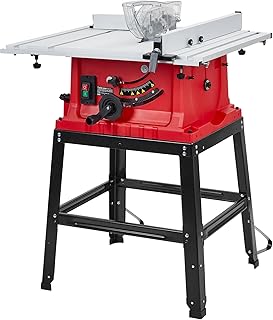

How to Choose a Table Saw For Under 500 (2026)
- Fence lock effort and reach: Stand at the saw and pretend to set a rip. A front-mounted lever you can operate with a straight wrist beats a rear cam clamp that forces you to bend across the blade path dozens of times a session.
- Working height: Table surface should land near your wrist crease when standing relaxed — roughly 34 to 38 inches for most adults. Benchtop saws on a low stand push you into a hunched spine, so budget for the right table or accept the folding stand’s fixed height.
- Trunnion and arbor build: Cast or heavy-stamped trunnions with sealed bearings keep bevel settings honest; thin sheet-metal assemblies drift out of 90° and transmit buzz into your hands. Check whether the bevel and height cranks turn smoothly through their full range, not just at the ends.
- Stand rigidity versus mobility: Rolling stands save your lower back, but only if the legs lock without wobble. Any lateral flex at the tabletop shows up as burn marks and drifting rip cuts.
- Dust path: A shrouded blade with a rear port pulls chips away from face level. Open-bottom designs dump fines into the room and onto the trunnion, which is bad for your lungs and worse for the adjustment mechanism.
The Best Table Saw For Under 500 (2026)s Reviewed
DEWALT DWE7491RS 10-Inch with Rolling Stand
The rack-and-pinion fence is the reason this saw stays the reference point — it tracks parallel across the full 32-1/2-inch rip capacity and locks with a light front-lever throw, so you set width without reaching over the blade. The rolling stand handles the lifting, the trunnion holds bevel repeatably, and parts availability means it stays serviceable long past warranty.
SKIL TS6307-00 Portable Jobsite Saw
SKIL’s rack-and-pinion fence rivals the DEWALT’s for smoothness, and the folding stand sets the table at a genuinely comfortable standing height rather than the knee-level compromise many benchtop kits force. The bevel scale sits where you can read it without crouching, which sounds minor until you’re dialing in a run of chair legs.
DOVAMAN DTS10A 10-Inch Table Saw with Stand
The copper-wound motor pulls cleanly at 5300 RPM and the single-side extension gives you real support for panel work without a huge footprint. Fence lock effort is higher than the name-brand saws and the top needs a check for flatness on arrival, but the 3.35-inch cut depth at 90° handles thick hardwood stock most compact saws can’t.
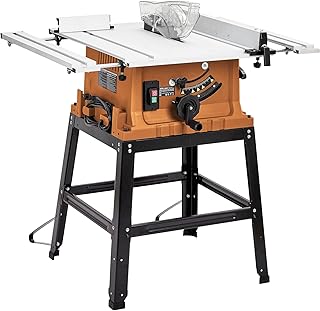
10-Inch 5000 RPM Saw with 36 x 25-Inch Tabletop
That oversized table is the ergonomic story here: more surface means less bracing with your off hand and steadier control on wide crosscuts. The included cover protects the arbor area between sessions, which matters in a dusty garage where grit accelerates bearing wear.
Orange 10-Inch Multifunctional Saw with Stand and Push Stick
A sensible starter package with a bundled push stick, adjustable blade height, and a stand that keeps the top off the floor. Treat the factory blade as temporary and expect to fine-tune the fence for parallel — do both and it cuts furniture-grade joinery well above its price.
Frequently Asked Questions
Is a rolling stand worth the extra money?
If you move the saw more than once a week, yes — a wheeled stand removes repeated 60-to-90-pound lifts from your lumbar spine. For a saw that lives in one spot, put the money toward a better blade and a proper outfeed table instead.
Should I replace the included blade?
Almost always. Stock 24T and 36T blades are framing blades; a 40–50 tooth ATB combination blade cuts furniture stock with far less tearout and, because it loads the motor less, reduces vibration reaching your hands.
Can these saws handle hardwood?
Yes, within their depth of cut — typically 3 to 3-1/3 inches at 90°. Feed at a steady moderate rate rather than forcing the stock; direct-drive universal motors recover from momentary bogging but repeated stalling cooks the windings.
Do I need dust collection in a home shop?
Connect at least a shop vac to the rear port. Fine wood dust is a respiratory hazard at breathing height and it packs into the trunnion and height mechanism, which is the most common cause of stiff, drifting adjustments on budget saws.
Final Thoughts
For furniture work where accuracy and long-term serviceability matter most, the DEWALT DWE7491RS earns its price through fence precision and a stand that spares your back. The SKIL TS6307-00 is the value pick with nearly the same fence quality and a comfortable working height, while the DOVAMAN DTS10A suits anyone who needs generous cut depth and a wider table without stretching the budget. Whichever you choose, keep the riving knife and guard installed, and swap in a quality blade before your first real project.