Key takeaways
- Tooth count: Higher tooth counts generally produce smoother crosscuts, while lower counts remove material faster and suit rougher work. For furniture, 60 to 100 teeth is a sensible range for most 10- or 12-inch miter saws.
- Tooth geometry: ATB teeth are versatile for wood and sheet goods. TCG profiles are more resistant to abrasive laminates and can be a better choice where edge durability matters more than aggressive cutting.
- Blade diameter and arbor: Match the blade diameter and arbor exactly to your saw. A 10-inch blade with a 5/8-inch arbor is not interchangeable with a 12-inch blade using a 1-inch arbor unless the saw and manufacturer-approved hardware support it.
- Kerf and stability: A thin-kerf blade can reduce cutting resistance, which is helpful on compact saws, but a heavier plate may run more steadily and withstand repeated shop use better. Look for a blade that remains quiet and controlled during the cut.
- RPM and maintenance: Never exceed the blade’s marked maximum speed. Clean pitch from the teeth periodically, inspect for damaged carbide, and replace a blade that begins wandering, burning, or requiring unusual feed pressure.
What's inside
Choosing a miter-saw blade is less about counting teeth than matching the blade to the material, saw, and finish you expect. A poor match can leave chipped laminate, fuzzy crosscuts, excessive vibration, or a blade that dulls quickly under routine furniture-making work.
This guide focuses on ergonomics, cut quality, and long-term durability. The recommendations cover fine crosscutting, general shop use, framing, plywood, MDF, laminate, and aluminum-related applications, with practical notes on arbor fit, tooth geometry, speed limits, and when a multi-blade set is more useful than a single premium blade.
As an Amazon Associate we earn from qualifying purchases.


Best Saw Blade For Miter Saw (2026)
How to Choose a Saw Blade For Miter Saw (2026)
- Tooth count: Higher tooth counts generally produce smoother crosscuts, while lower counts remove material faster and suit rougher work. For furniture, 60 to 100 teeth is a sensible range for most 10- or 12-inch miter saws.
- Tooth geometry: ATB teeth are versatile for wood and sheet goods. TCG profiles are more resistant to abrasive laminates and can be a better choice where edge durability matters more than aggressive cutting.
- Blade diameter and arbor: Match the blade diameter and arbor exactly to your saw. A 10-inch blade with a 5/8-inch arbor is not interchangeable with a 12-inch blade using a 1-inch arbor unless the saw and manufacturer-approved hardware support it.
- Kerf and stability: A thin-kerf blade can reduce cutting resistance, which is helpful on compact saws, but a heavier plate may run more steadily and withstand repeated shop use better. Look for a blade that remains quiet and controlled during the cut.
- RPM and maintenance: Never exceed the blade’s marked maximum speed. Clean pitch from the teeth periodically, inspect for damaged carbide, and replace a blade that begins wandering, burning, or requiring unusual feed pressure.
The Best Saw Blade For Miter Saw (2026)s Reviewed
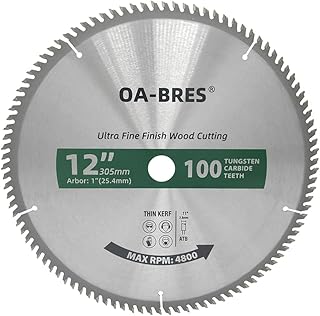
12-Inch 100-Tooth ATB TCT Ultra Fine Finish Blade
This high-tooth-count blade is aimed at clean, detailed crosscuts in furniture parts, trim, and finish lumber. Its 1-inch arbor and 12-inch diameter make it a strong candidate for larger miter saws, while the ATB tooth pattern favors a polished wood edge over fast stock removal.
10-Inch 120-Tooth TCG Aluminum-Working Blade
The 120-tooth TCG design is built for exceptionally fine cuts and offers a more abrasion-tolerant tooth profile than a conventional general-purpose wood blade. It is particularly interesting for shops that work with laminate-faced panels or occasionally cut nonferrous aluminum, but users should confirm the saw, blade, and material recommendations before cutting metal.
KENDO 10-Inch 40T/60T Circular Saw Blade Set
This two-blade set is a practical choice when one blade cannot cover every task. The 40-tooth blade handles faster, rougher work, while the 60-tooth option is better suited to plywood, MDF, laminate, and cleaner furniture cuts; keeping both available also reduces unnecessary wear on the finer blade.
10-Inch 80-Tooth Fine-Finish Woodworking Blade
An 80-tooth configuration is a useful middle ground for home workshops that prioritize clean crosscuts without making every cut at a slow pace. The tungsten-carbide teeth and stated 7,000-RPM maximum should provide a durable setup when the blade is paired with a compatible 5/8-inch-arbor saw and used within its limits.
WEN BL1080 10-Inch 80-Tooth Carbide-Tipped Blade
The WEN BL1080 is a straightforward fine-finish option for miter- and table-saw users who want a dedicated crosscut blade from an established tool brand. Its 80 carbide-tipped teeth favor smooth wood cuts, and the familiar 10-inch, 5/8-inch format makes compatibility simple for many consumer saws.
Frequently Asked Questions
Is a higher tooth count always better for a miter saw?
No. More teeth can improve the finish, but they also cut more slowly and may clear chips less efficiently. Choose a higher count for visible crosscuts and a lower count when speed, thick stock, or rough construction work is the priority.
What blade is best for cutting plywood and MDF?
A 60- to 100-tooth carbide blade is usually a sensible starting point, especially with plywood veneer or coated panels. Support the sheet well, let the blade reach full speed, and avoid forcing the cut, since excessive feed pressure can cause chipping and heat.
Can one blade cut wood, laminate, and aluminum?
Some TCG blades are designed to handle more abrasive materials and may be suitable for specific aluminum applications, but a standard wood blade should not be assumed safe for metal. Follow the blade manufacturer’s material guidance and use the correct saw setup and personal protection.
How can I make a miter-saw blade last longer?
Use the correct blade for the material, keep stock firmly supported, and avoid cutting dirty or embedded-nail lumber unless the blade is rated for it. Regularly remove resin buildup and replace the blade when sharpening or tooth damage is more economical than continued poor performance.
Final Thoughts
For large saws and exceptionally clean furniture cuts, the 12-Inch 100-Tooth ATB blade is a compelling specialist choice. The KENDO 40T/60T set offers the most flexible everyday coverage, while the WEN BL1080 is a sensible dedicated fine-finish option for many 10-inch home-shop miter saws.