Key takeaways
- Clearance: Measure the chair’s full reclined depth, not just its upright footprint, and leave enough room for walking, cleaning, and opening nearby doors.
- Support: Look for a seat that keeps your hips slightly higher than your knees, supports the lower back, and positions the head without forcing the chin toward the chest.
- Operating effort: Manual push-back mechanisms save space and electricity, while power controls can be easier for users with limited leg or hand strength.
- Frame and mechanism: For durability, prioritize a stable base, smooth extension action, reinforced stress points, and hardware that does not wobble when you shift your weight.
- Fabric and maintenance: Choose upholstery suited to the room’s traffic. Chenille and woven fabric feel warm and forgiving, while faux leather is easier to wipe but may feel less breathable.
What's inside
Finding a recliner for a small room is less about choosing the smallest chair and more about controlling how it moves, supports the body, and occupies its footprint. A chair that fits between two walls may still block a walkway when reclined, feel unstable under daily use, or leave taller users without adequate leg support.
This guide evaluates compact recliners through an ergonomics-and-durability lens: clearance, sitting posture, entry and exit effort, upholstery practicality, moving parts, and likely use patterns. The goal is to help you match a chair to a bedroom, apartment living room, nursery, reading corner, or home theater without sacrificing usable comfort.
As an Amazon Associate we earn from qualifying purchases.


How to Choose a Recliner For Small Space (2026)
- Clearance: Measure the chair’s full reclined depth, not just its upright footprint, and leave enough room for walking, cleaning, and opening nearby doors.
- Support: Look for a seat that keeps your hips slightly higher than your knees, supports the lower back, and positions the head without forcing the chin toward the chest.
- Operating effort: Manual push-back mechanisms save space and electricity, while power controls can be easier for users with limited leg or hand strength.
- Frame and mechanism: For durability, prioritize a stable base, smooth extension action, reinforced stress points, and hardware that does not wobble when you shift your weight.
- Fabric and maintenance: Choose upholstery suited to the room’s traffic. Chenille and woven fabric feel warm and forgiving, while faux leather is easier to wipe but may feel less breathable.
The Best Recliner For Small Space (2026)s Reviewed
HRVEOCEI Modern Small Recliner
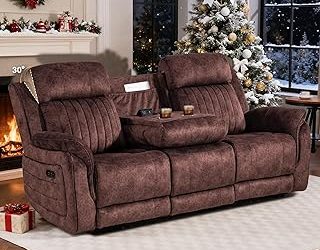
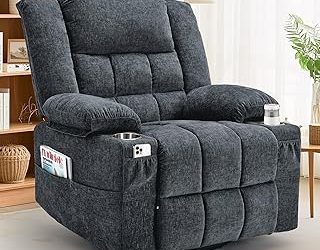
The HRVEOCEI is a practical compact option for buyers who want adjustable positioning without a bulky profile. Its push-back design, cup holder, extended footrest, and broad 90-to-160-degree range make it useful for reading, television, or occasional napping. The main durability checkpoint is the footrest: extend and retract it smoothly rather than using it as a step.
Furnimart Small Manual Recliner
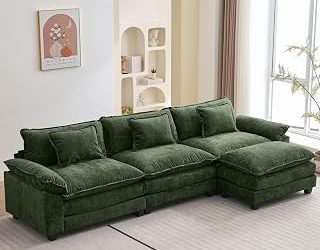
Furnimart takes a softer, more lounge-oriented approach with overstuffed chenille and chunky cushioning. That padding can reduce pressure around the shoulders and thighs, though buyers should confirm that the seat depth suits their leg length; very deep cushions can leave shorter users without firm back contact. As a manual chair, it keeps controls simple and avoids motor-related maintenance.
Sweetcrispy Massage Recliner
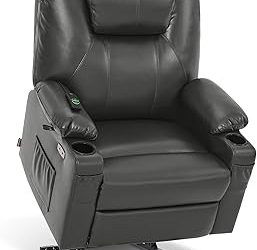
The Sweetcrispy combines compact seating with massage functions and lumbar support, making it a compelling choice for a dedicated relaxation corner. Ergonomically, the lumbar feature is most useful when it fills the natural lower-back gap without pushing the pelvis forward. Treat the massage system as a comfort add-on, while assessing the chair first as a stable everyday seat.
Zero Wall Power Recliner
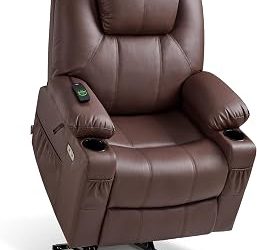
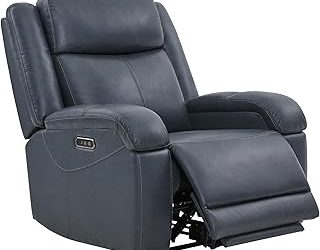
The Zero Wall Power Recliner is designed for rooms where conventional reclining clearance is difficult. Its forward-gliding action can sit closer to a wall than a traditional recliner, and powered adjustment is convenient when precise positioning matters. The light-brown faux leather should be straightforward to wipe clean, but it may retain more warmth than fabric during extended sitting.
Korser Swivel Rocker Recliner
This Korser model adds both swivel and rocking movement, giving it a useful role in a nursery, reading space, or living room where orientation changes frequently. The side pockets keep remotes and books within reach, reducing repeated twisting. Because motion adds another load path to the base, check that the chair remains planted and quiet as you rock or rotate it.
Frequently Asked Questions
How much space does a small recliner need?
Start with the manufacturer’s upright and reclined dimensions, then add a practical circulation zone in front. A small recliner still needs enough clearance for the footrest to open without striking a coffee table, wall, or person’s legs.
Are push-back recliners durable?
They can be, particularly when the mechanism is operated from a seated position with controlled pressure. Avoid forcing the footrest closed, leaning heavily on one arm, or allowing children to climb on the extended leg rest, since those habits concentrate stress on the frame and linkage.
Is a power recliner suitable for a small room?
Yes, provided the chair’s motor and power cable do not create a trip hazard. A power model is often easier to adjust precisely and may be preferable for users who find manual levers or push-back mechanisms difficult.
What is the difference between a swivel rocker and a standard recliner?
A swivel rocker can rotate and gently rock in addition to reclining, which improves flexibility in a multipurpose room. The trade-off is a more complex base and a greater need for clearance around the chair, so it should sit on a level surface with room to move.
Final Thoughts
For straightforward compact comfort, the HRVEOCEI is a strong all-around starting point, while the Furnimart suits buyers who prioritize generous cushioning. Choose the Zero Wall Power Recliner when wall clearance is the limiting factor, or the Sweetcrispy when lumbar support and massage are central to your use case.