Key takeaways
- Glare control before brightness: A frosted or milky diffuser spreads light across the lens face instead of firing hot points downward. Mount the fixture toward the front edge of the cabinet so the beam falls on the work surface rather than bouncing off the backsplash into your line of sight.
- Selectable color temperature: 3CCT and 5CCT switches are worth the small premium. 2700–3000K suits open-plan kitchens where the counter is visible from the sofa; 4000K is the sweet spot for chopping, reading labels, and detail work; 5000K belongs in a workshop or garage bench, not above a dinner prep zone.
- Coverage, not just length: Aim to light roughly two-thirds to three-quarters of each cabinet’s width. Two 16-inch bars linked across a 36-inch cabinet produce far more even illumination than one long fixture pushed to a corner, and even light is what keeps your neck from craning toward a bright spot.
- Housing and heat: Extruded aluminum bodies pull heat away from the LEDs, which is the single biggest factor in whether a fixture still hits its rated output in year five. Thin plastic shells trap heat, shift color over time, and flex when you tighten mounting screws.
- Cord, switch, and dimmer quality: Check for a strain-relieved plug, generous cord length so you are not daisy-chaining extension leads, and a rocker or touch switch rated for repeated use. If you want dimming, look for a built-in dimmer rather than pairing an unlisted fixture with a wall dimmer, which is the usual source of flicker and buzz.
What's inside
Under-cabinet lighting is one of the few upgrades that changes how a kitchen feels to work in, not just how it photographs. Overhead fixtures sit behind you at the counter, which means your own torso casts a shadow exactly where the knife meets the cutting board. Buyers usually notice the symptom (squinting, leaning in, moving the mixing bowl toward the window) long before they identify the cause, and then they buy the brightest strip they can find. That fixes the shadow and creates a new problem: raw diodes reflecting off a polished quartz counter straight into your eyes.
This guide looks at plug-in under cabinet lighting through two lenses I care about most after years of specifying task fixtures: ergonomics, meaning glare control, beam placement, and color temperature that suits sustained close work; and durability, meaning housing material, thermal behavior, switch and cord longevity, and how well a linked run holds up after a few hundred on-off cycles. Plug-in models earn their place here because they need no electrician, no junction box, and no permission from a landlord, yet the good ones now match hardwired output.
As an Amazon Associate we earn from qualifying purchases.


🛒 Best Price Today on Amazon
Prime members get fast, free shipping on everything above, plus member-only deals. New members get a 30-day free trial — cancel anytime.
How to Choose Plug-In Under Cabinet Lighting (2026)
- Glare control before brightness: A frosted or milky diffuser spreads light across the lens face instead of firing hot points downward. Mount the fixture toward the front edge of the cabinet so the beam falls on the work surface rather than bouncing off the backsplash into your line of sight.
- Selectable color temperature: 3CCT and 5CCT switches are worth the small premium. 2700–3000K suits open-plan kitchens where the counter is visible from the sofa; 4000K is the sweet spot for chopping, reading labels, and detail work; 5000K belongs in a workshop or garage bench, not above a dinner prep zone.
- Coverage, not just length: Aim to light roughly two-thirds to three-quarters of each cabinet’s width. Two 16-inch bars linked across a 36-inch cabinet produce far more even illumination than one long fixture pushed to a corner, and even light is what keeps your neck from craning toward a bright spot.
- Housing and heat: Extruded aluminum bodies pull heat away from the LEDs, which is the single biggest factor in whether a fixture still hits its rated output in year five. Thin plastic shells trap heat, shift color over time, and flex when you tighten mounting screws.
- Cord, switch, and dimmer quality: Check for a strain-relieved plug, generous cord length so you are not daisy-chaining extension leads, and a rocker or touch switch rated for repeated use. If you want dimming, look for a built-in dimmer rather than pairing an unlisted fixture with a wall dimmer, which is the usual source of flicker and buzz.
The Best Plug-In Under Cabinet Lighting (2026), Reviewed
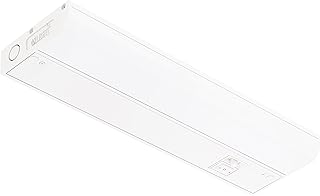
Ultra Slim 3CCT Linkable Under Cabinet Light, 16 Inch
The slim aluminum profile tucks behind most cabinet lips, which is what keeps the diode line out of your sightline while you stand at the counter. With 3000K/4000K/5000K on a body switch and ETL listing, it is the sensible default for a standard 30 to 36 inch run.
Enbrighten 24 Inch Plug-In Under Cabinet Light
Five color temperatures plus genuine dimming and one-touch sync across linked bars make this the most ergonomically flexible pick here: full output for prep, dialed down and warm for evenings. The 1561-lumen rating is generous, so plan on running it below maximum most of the time.
40 Inch 5CCT Plug-In or Hardwired Fixture with Built-In Dimmer
A single 40-inch bar under a wide cabinet gives you a continuous, shadow-free wash instead of the scalloped pattern you get from short segments. The integrated dimmer avoids compatibility guesswork, and the plug-in-or-hardwired option means the fixture survives a future kitchen remodel.
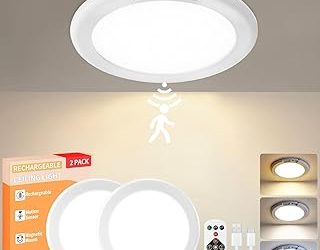
Motion Sensor Under Cabinet Light, 16 Inch 2-Pack
Motion sensing belongs in pantries, closets, and the cabinet above a sink where your hands are usually wet or full. Sweep-to-activate is the right ergonomic answer there, though I would not put a sensor above a main prep zone where you want light to stay put.
JUSJUBR 12 Inch Plug-In Light Bars, 4-Pack
Four short bars let you place light precisely over a desk, shelf, or fragmented cabinet layout, and the memory function means each bar wakes at your last brightness. At 6500K it reads cool and clinical, so treat it as a workspace and display tool rather than kitchen mood lighting.
Frequently Asked Questions
How many lumens do I actually need under a cabinet?
Roughly 200 to 300 lumens per linear foot covers most kitchen prep. Higher output is fine, but only if you can dim it; sustained work under an undimmable 1500-lumen bar at close range is a recipe for eye fatigue.
Should I mount the fixture at the front or back of the cabinet?
Front, in nearly every case. Front mounting throws light onto the counter and hides the lens behind the cabinet’s face frame. Rear mounting mostly illuminates the backsplash and reflects glare toward you.
Do linkable fixtures need separate outlets?
No. Linking connects several bars to one plug, which is the cleanest way to avoid trailing cords along the counter. Check the manufacturer’s maximum linked length so you stay within the rated load.
Will plug-in cords be visible?
Some cord is inevitable, but self-adhesive channels or a small hole drilled through a cabinet side panel hide almost all of it. Route cords away from heat sources and never pinch them under a cabinet door.
Final Thoughts
For most kitchens the Enbrighten 24 Inch is the pick I would install in my own home, because dimming plus five color temperatures solves both glare and mood in one fixture. Wide cabinets are better served by the 40 Inch 5CCT bar with its built-in dimmer, and if you just need clean, durable, well-diffused task light in a standard run, the Ultra Slim 3CCT 16 Inch is hard to beat for the money.