Key takeaways
- Mature load versus frame rating: A saturated canopy can weigh several times its dry mass. Softwood kit pergolas with 2×6 rafters handle jasmine and thunbergia comfortably; mature wisteria develops woody trunks that torque joints and needs 6×6 posts, through-bolted connections, and footings below frost line.
- Clearance you keep after year three: Measure your rafter height, then subtract the canopy depth the vine will build. Twining vines like sky vine hang tendrils and flower clusters downward. Anything under eight feet of headroom means annual underside trimming to preserve walking and seating comfort.
- Moisture retention against the timber: Dense evergreen growth traps humidity along the beam face, which is where rot and fastener corrosion begin. Plan for airflow gaps, keep stems off end grain, and favor stainless or hot-dip galvanized hardware anywhere a vine will sit permanently.
- Maintenance reach and posture: Ask honestly whether you will stand on a ladder twice a year with two-handed pruners. Seed-grown and lightweight vines forgive a missed season. Wisteria punishes one, growing into gutters, siding, and roof edges within a single flush.
- Establishment timeline and format: Live plants give you a usable canopy sooner and let you train structure early. Seeds cost less, arrive dormant, and suit patient growers who want to shape the leader from the ground up rather than correcting nursery growth habits.
What's inside
A pergola is a piece of furniture that happens to live outdoors, and like any furniture it has a load rating, a wear pattern, and a set of reach distances that determine whether you actually enjoy using it. Most plant guides ignore all three. They rank vines by bloom color and fragrance, then leave you with a mature specimen that adds two hundred pounds of wet biomass to a rafter system designed for shade cloth, or a canopy so low you duck every time you carry a tray outside. The problem buyers face is not finding a pretty climber. It is matching a living, expanding, water-heavy structure to a fixed wooden frame you would prefer not to rebuild in six years.
This guide evaluates pergola climbers the way I evaluate a dining chair joint: by how the load travels, where the moisture sits, how much clearance the user retains at head and shoulder height, and how much annual effort the thing demands from a person standing on a ladder with pruners. I have grouped the options by structural weight class, from lightweight seed-grown vines suitable for cedar and aluminum kits to heavyweight wisteria that belongs only on posts sunk in concrete. Fragrance and flower are noted where they matter, but the ranking follows durability.
As an Amazon Associate we earn from qualifying purchases.


🛒 Best Price Today on Amazon
Prime members get fast, free shipping on everything above, plus member-only deals. New members get a 30-day free trial — cancel anytime.
How to Choose a/an Pergola Plants (2026)
- Mature load versus frame rating: A saturated canopy can weigh several times its dry mass. Softwood kit pergolas with 2×6 rafters handle jasmine and thunbergia comfortably; mature wisteria develops woody trunks that torque joints and needs 6×6 posts, through-bolted connections, and footings below frost line.
- Clearance you keep after year three: Measure your rafter height, then subtract the canopy depth the vine will build. Twining vines like sky vine hang tendrils and flower clusters downward. Anything under eight feet of headroom means annual underside trimming to preserve walking and seating comfort.
- Moisture retention against the timber: Dense evergreen growth traps humidity along the beam face, which is where rot and fastener corrosion begin. Plan for airflow gaps, keep stems off end grain, and favor stainless or hot-dip galvanized hardware anywhere a vine will sit permanently.
- Maintenance reach and posture: Ask honestly whether you will stand on a ladder twice a year with two-handed pruners. Seed-grown and lightweight vines forgive a missed season. Wisteria punishes one, growing into gutters, siding, and roof edges within a single flush.
- Establishment timeline and format: Live plants give you a usable canopy sooner and let you train structure early. Seeds cost less, arrive dormant, and suit patient growers who want to shape the leader from the ground up rather than correcting nursery growth habits.
The Best Pergola Plants (2026)s Reviewed
410 Climbing Jasmine Seeds for Planting
My default recommendation for cedar, redwood, and powder-coated aluminum pergolas, because evergreen jasmine builds a slim, pliable canopy that never threatens the joinery. Starting from seed also lets you space plants evenly along the beams and train them without inheriting the tangled root-bound habit of pot-grown stock.
Thunbergia Grandiflora Sky Vine, Pack of 2
Blue trumpet vine covers fast and produces genuine privacy screening within a season, but it is a soft-stemmed twiner, so all the mass hangs from the rafters rather than pushing against them. Two plants handle a standard 10×12 frame; plan on an underside trim each spring to protect headroom over seating.
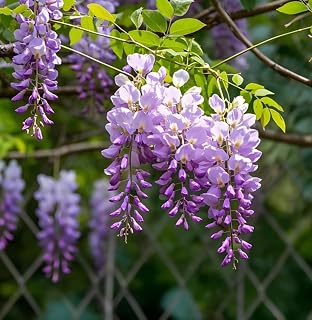
3 Wisteria Live Plants, 1–2 Ft
The most dramatic pergola canopy available and the most demanding structurally, so treat these as a commitment to a heavy-timber build. Three plants suit a long run or a double-post pergola where you can train separate leaders and manage each one from a stable ladder position.
Wisteria Seeds, 20 Heirloom Non-GMO
Best for growers who want full control of the trunk architecture, since you shape the leader from germination and can steer it away from beam ends and fastener lines. Accept the tradeoff: seed-grown wisteria takes years to flower, and this route is about long-term structure rather than a quick canopy.
2 Wisteria Live Plants, 1–2 Ft
The right count for a single standard pergola, with one plant per front post and no crowding at the center rafters. Two established trunks reach full coverage without the compounding weight and pruning workload of a three-plant planting on the same footprint.
Frequently Asked Questions
Will wisteria actually damage a pergola?
It can. Mature wisteria trunks thicken and twist with real force, splitting light rafters and loosening lag screws over time. On a heavy-timber frame with concrete footings and stainless hardware it is a lifetime feature; on a big-box kit it shortens the structure’s service life considerably.
How many plants do I need for a 10×12 pergola?
Two is the practical answer for most vines, one per front post, which gives even coverage without dense center growth that traps moisture. Use three only for longer runs or when you want faster fill and accept heavier pruning.
Are seeds worth it over live plants?
Seeds are worth it when you care about training the plant to your frame from the start and are comfortable waiting a season or more for meaningful coverage. Live plants are the better choice if you want usable shade sooner.
What maintenance keeps the timber healthy?
Prune the underside and beam faces annually to restore airflow, keep stems from wrapping fasteners, and inspect where growth contacts end grain, since that is where water lingers and rot starts.
Final Thoughts
For most homeowners with a standard cedar or aluminum pergola, the 410 Climbing Jasmine seeds deliver fragrance and evergreen cover with almost no structural cost, while the Thunbergia Grandiflora two-pack is the fastest route to real privacy without loading the rafters. If you have a heavy-timber frame with proper footings and want the classic cascading canopy, the 2 Wisteria Live Plants set is the disciplined choice: enough coverage for a full pergola, half the long-term pruning burden of a three-plant planting.