Our Top Picks
The best intelligent multi-function wash spot combo lights for most home stages, game rooms, and small event spaces are compact moving-head hybrids with a 10-50 degree motorized zoom, RGBW color mixing, and both DMX and wireless control, because they let you switch from a wide wash to a tight spot beam without changing fixtures.
What Makes a Wash-Spot Combo Actually Intelligent
A true hybrid uses one light engine and a motorized zoom lens or internal framing system to shift between functions. In wash mode, it acts like a PAR wash with soft edges and wide coverage for color washes on walls and ceilings. In spot mode, it tightens to a hard-edged beam with gobo projection, prism, and focus control for patterns and beam effects. Cheaper “combo” fixtures simply add a ring of wash LEDs around a central spot lens – they cannot blend the two effects and create uneven color.

NAOEVO 12Inch LED Light Bar and 2PCS 4Inch Pod Lights with 3-Lead Harness
Picked as a relevant option in this category.
View on Amazon
Nilight LED Light Bar 2PCS 60W 4 Inch Flood Spot Combo LED Work Light Pods Triple Row Work Driving Lamp with 12 ft Wiring Harness kit - 2 Leads
Chosen because it specifies 2 Leads.
View on Amazon
LEDKITO 12In LED Light Bar and 2PCS LED Cube Pods Light with Wiring Harness
Picked as a relevant option in this category.
View on Amazon
LEDKITO 20In LED Light Bar+4In LED Cube Pod Lights Amber White Strobe 6Mode
Picked as a relevant option in this category.
View on AmazonIntelligence refers to three things: motorized pan/tilt (usually 540-degree pan, 270-degree tilt), electronic control of zoom, focus, dimmer, and color, and addressable control via DMX512, wireless DMX, or app. For home use, look for fixtures with built-in auto and sound-active programs so you do not need a full lighting console to get usable effects.
Key Decision Criteria Before You Buy
1. Beam Angle and Zoom Range
Beam angle determines how much area a light covers at a given distance. A fixed 15-degree spot looks dramatic from 15 feet away but will leave dark gaps in a 10×12 ft room when mounted on an 8-foot ceiling. A motorized zoom solves this.
For home installations, a zoom range of at least 12 to 36 degrees is the sweet spot. At 12 degrees you get a punchy 3-foot diameter spot on the dance floor from 12 feet away. At 36 degrees you can wash an entire 10-foot wall from the same distance. Fixtures that zoom from 8 to 50 degrees offer more flexibility but usually cost more and need a larger housing.
| Zoom Setting | Beam Diameter at 8 ft Throw | Beam Diameter at 12 ft Throw | Best For |
|---|---|---|---|
| 10 degrees (tight spot) | 1.4 ft | 2.1 ft | Gobo projection, beam effects, table spotlight |
| 20 degrees (medium) | 2.8 ft | 4.2 ft | Two-person stage wash, small dance floor accent |
| 35 degrees (wide wash) | 5.0 ft | 7.6 ft | Full wall wash in 10×12 ft room, ceiling glow |
| 50 degrees (extra-wide wash) | 7.4 ft | 11.2 ft | Covering entire room from one corner, low ceilings |
2. Wash-to-Spot Control and Optics
Check how the fixture transitions. Motorized zoom with auto-focus maintains a sharp gobo when you narrow the beam. Manual-focus models require you to refocus after every zoom change, which is impractical when lights are mounted overhead.
Also consider the light source. Single 60W to 100W white LED engines with RGBW color mixing wheels give cleaner spot gobos, while RGBW 4-in-1 LED arrays give smoother washes but softer gobos. Hybrids with a separate LED ring for wash and a central white LED for spot offer the best separation but add weight.
3. Color Mixing and Output
RGBW (red, green, blue, white) is the minimum for home use because the dedicated white chip produces true pastels and warm whites that RGB alone cannot match. RGBWA+UV (with amber and ultraviolet) gives richer amber and better blacklight effects for parties but increases DMX channel count.
For a dark room with light-colored walls, 60W LED per head is enough to saturate a 12×15 ft space. For rooms with ambient light or dark paint, step up to 100W to 150W per fixture. Look for a CRI above 80 if you will use the lights for video calls or photography, and check for flicker-free dimming (often listed as 16-bit dimming) if you film content.
4. Control: DMX, Wireless, and App Options
- Wired DMX512: Most reliable, no interference, requires DMX cables daisy-chained from a controller. Best if your lights stay in one place, like a home theater or studio.
- Wireless DMX (2.4GHz W-DMX or similar): Eliminates cable runs across ceilings and doorways. Essential for renters or portable setups. Check that both transmitter and receiver use the same protocol. Built-in wireless receivers are cleaner than add-on dongles.
- IR Remote / App / Master-Slave: Good for simple use without a DMX controller. App control via Bluetooth is convenient for one or two lights but often lacks precise pan/tilt targeting. Master-slave lets several lights mirror the first unit automatically.
If you plan to run four or more fixtures, a basic 192-channel DMX controller, usually $50-$120, gives far better scene control than app-only operation. Choose fixtures with selectable DMX channel modes (e.g., 15-channel for simple use, 25-channel for full control) so you can grow into more complex programming.
5. Mounting, Weight, and Room Coverage
This is where home use differs most from stage use. A typical intelligent combo light weighs 10 to 22 pounds and is 11 to 16 inches tall. That weight matters for residential ceilings and portable stands.
- Ceiling mount: Requires a ceiling joist or a load-rated truss clamp. Drywall anchors alone are not safe. Allow at least 12 inches of clearance above the fixture for heat venting and 18 inches of pan rotation clearance on all sides. For 8-foot ceilings, a low-profile yoke mount keeps the beam from blinding seated guests.
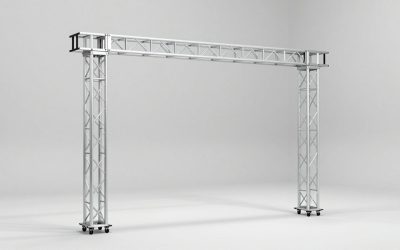
- Truss or T-bar stand: A 7-foot to 10-foot light stand can hold two to four compact hybrids (total load usually 60-80 pounds max per stand). Check the stand’s weight limit and footprint; a 4-foot wide base needs at least 3 feet of open floor space to stay stable.
- Table or floor placement: Only for fixtures under 12 pounds with a stable base. Beams at floor level create glare; elevate at least 5 feet for wash coverage.
For coverage, one wide-zoom fixture centered on a 10×12 ft room ceiling can wash all four walls when set to 35 degrees or wider from a 12-foot throw. For a 15×20 ft living room or garage studio, plan on two fixtures spaced 8 to 10 feet apart to avoid a dark center, or four fixtures for full 360-degree coverage.
Decision Matrix: Which Combo Light Fits Your Situation
| Your Situation | Recommended Spec | Why |
|---|---|---|
| Small apartment or bedroom studio (10×12 ft, 8 ft ceiling, renter) | Compact 60W RGBW, 12-36 degree zoom, wireless DMX + app, under 13 lbs | Light enough for a T-bar without ceiling drilling, wide zoom covers walls from short throw, wireless avoids cable damage to rental walls |
| Dedicated home theater or game room | 80W-100W RGBW with motorized focus and quiet fans, wired DMX | Higher output for ambient light, low fan noise matters for movies, fixed wiring is fine for permanent install |
| Multi-use living room for parties and kids | 60W hybrid with rugged ABS/ metal housing, sound-active and auto modes, 15-50 degree zoom | No controller needed for quick parties, extra-wide wash fills room from one corner, durable housing resists bumps |
| Home band, DJ, or content creator with small stage | 100W-150W RGBW or RGBWA, gobo wheel, prism, 8-40 degree zoom, 540/270 pan/tilt | Tighter spot for aerial beams and gobo logos, more DMX channels for programmed shows, brighter punch through haze |
Types You Will See in 2026 and When to Choose Each
Compact LED Moving Head Hybrids
These are the most common home-friendly option, usually 60W to 100W, with brands like Chauvet DJ, ADJ, and Elation offering several models. They balance output, size, and price, usually $250-$600 per fixture. Look for models with a true zoom lens rather than just a frost filter that diffuses a spot into a wash.
Battery-Powered Wireless Hybrids
Built-in rechargeable batteries and wireless DMX eliminate all cables for 4-6 hours. Ideal for temporary setups or rooms without nearby outlets, but they weigh more (16-22 pounds) and cost more, usually $400-$800. Battery capacity fades after 2-3 years, and output is often lower than plug-in models.
LED Bar Style Wash-Spot Combos
Linear bars with separate spot lenses along the bar. They provide wide wash coverage with less precise spot control and no pan/tilt. Good for wall washing behind a TV or bar area, not for moving beam effects. They mount easily under cabinets or on walls and weigh less than moving heads.
Installation and Durability Realities
Box size and weight are often overlooked. A single compact moving head often ships in a 16x16x14 inch box weighing 14-18 pounds. If you are carrying it up stairs or through a 28-inch interior doorway on a stand, measure first. Larger 150W units can ship in boxes over 20 inches on a side and require two-person lifting.
What wears first is not the LED, which is often rated for 30,000-50,000 hours, but the moving parts: pan/tilt belts, zoom motors, and cooling fans. In dusty home environments, vacuum the vents monthly and avoid running fixtures in enclosed cabinets. Listen for fan noise before buying if the light will be in a quiet theater; fans above 35dB are audible during dialogue.
For renters, avoid screw-in ceiling hooks. Use a freestanding tripod stand or a tension rod system rated for the load. Always secure with a safety cable, even at home, to prevent a 15-pound fixture from falling if a clamp loosens.
How to Aim and Program for Even Coverage
Mount the fixture as high as practical and tilt down 30 to 45 degrees for washes to avoid hot spots on one wall and dark corners on the opposite wall. For two lights, cross their beams in an X pattern rather than pointing both straight out; this fills the center and creates more dynamic movement.
Start with a warm white wash at 30% dimmer for general ambiance, then add color scenes. When using DMX, assign fixtures to opposite pan directions so a single pan command creates a symmetrical look. If you use sound-active mode at home, lower microphone sensitivity to prevent constant triggering from conversation.
Frequently Asked Questions
How many combo lights do I need for a typical living room?
For a 12×15 ft room with an 8-foot ceiling, two hybrids with 35-degree wide wash can cover all walls from a single T-bar. Add two more if you want separate beam effects while maintaining a background wash.
Can I run these on a standard household circuit?
Yes. A 100W LED hybrid draws under 1.5 amps at 120V at full output. You can safely run four to six fixtures on a single 15-amp household circuit, even with a controller and haze machine, but avoid daisy-chaining power through thin extension cords.
Do I need haze for spot beams to show?
Tight spot beams and gobos are nearly invisible in clean air. A light water-based haze, not dense fog, makes beams visible without clouding the room. For home use, a small hazer usually $150-$300 is better than a fog machine, which produces thick bursts that linger and trigger smoke detectors.