Our Top Picks
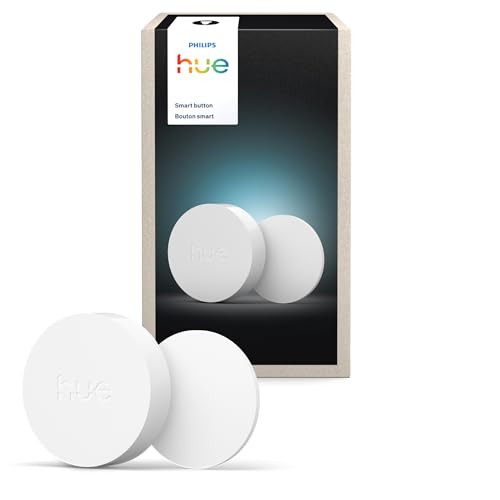 PHILIPS Hue Wireless Smart Light Switch Button1.77 x 1.77 x 0.51 inches1.77 x 1.77 x 0.51 inchesCheck on Amazon
For most large homes, the best automated lighting control system is Lutron RadioRA 3 for a professionally installed, dependable whole-home setup; choose Lutron HomeWorks QSX for extensive new construction, Control4 or Crestron Home when lighting must coordinate with security and entertainment, and a hub-based wireless system such as Philips Hue or Leviton Decora Smart when you want lower installation cost and gradual expansion.
Best automated lighting systems by situation
| Homeowner situation | Best fit | Why it fits | Typical installed or starting cost |
|---|---|---|---|
| Large existing home with finished walls | Lutron RadioRA 3 | Strong wireless coverage, dedicated keypads, reliable dimming and flexible room-by-room expansion | Usually $8,000–$30,000 depending on lighting points and labor |
| New construction or major renovation | Lutron HomeWorks QSX | Centralized or hybrid wiring, extensive zoning and cleaner integration with architectural lighting | Usually $20,000–$100,000 or more |
| Lighting plus shades, cameras, audio and climate | Control4 or Crestron Home | One automation platform can coordinate multiple home systems and user interfaces | Often $15,000–$100,000 or more |
| Gradual DIY installation | Leviton Decora Smart or Philips Hue | Lower initial commitment, app control and the ability to automate selected rooms first | Usually $300–$5,000 for a partial or modest whole-home setup |
| Rental or no-access wiring project | Philips Hue lamps and wireless controls | Portable equipment with little or no alteration to electrical boxes | Usually $100–$1,500 depending on room count |
What makes a system suitable for a large home?
A large home needs more than a smart bulb in every room. It needs dependable communication between distant floors, a sensible way to divide lights into zones, local control when the internet is unavailable, and a plan for adding rooms without replacing the original equipment.

GoveeLife Wireless Smart 6 Button Sensor, Group Control Multiple Devices
Chosen because it specifies Group Control Multiple Devices.
View on Amazon
ADJ Products Mydmx Go, App, Wireless DMX Lighting Controller
Chosen because it specifies App and Wireless DMX Lighting Controller.
View on Amazon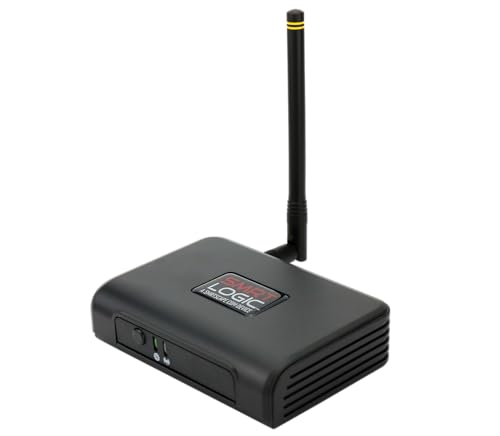
Unique Lighting Systems SMRT-T SMRT Logic System - Internet Gateway Only
Chosen because it specifies Internet Gateway Only.
View on AmazonPHILIPS Hue Wireless Smart Light Switch Button, White, 1 Pack, Portable and Battery Powered, Smart Home Control, Requires Hue Bridge, Easy, No-Wire Installation
Chosen because it specifies White and 1 Pack.
View on AmazonCount lighting loads, not just rooms. A 10-by-12-foot bedroom may need one ceiling fixture, two bedside lamps and a hallway switch, while a 20-by-30-foot great room may contain recessed downlights, pendants, cove lighting, artwork lighting and exterior circuits. Each group should be treated as a separate zone when it serves a different purpose. A useful starting point is one zone for general illumination, one for task lighting and one or two for accent or decorative lighting.
Also check the physical layout. Wireless control equipment may need a central processor on each floor or a device within reliable radio range. Thick masonry, foil-backed insulation, metal electrical boxes and detached garages can reduce coverage. A system that works in a 1,500-square-foot apartment may need repeaters, additional access points or wired links in a 6,000-square-foot home with several wings.
Wired versus wireless installation
Wired and centralized systems
In a centralized design, dimming modules or relay panels are grouped in an electrical or equipment room, while low-voltage keypads and control processors communicate with those modules. This can produce a clean architectural result: a single wall station can control several scenes, and the dimming equipment can be kept away from living spaces.
The trade-off is construction complexity. New control cable and larger conduit may be needed, and electrical panels require adequate space, ventilation and professional installation. A centralized approach is most economical during framing or a major remodel. It is less attractive when walls, ceilings and finished millwork would need to be opened.
Wireless and distributed systems
Wireless systems place smart dimmers, switches, plug-in modules or bulbs near the loads. They are usually easier to retrofit and let you complete one floor at a time. Lutron RadioRA 3 uses a dedicated lighting-control ecosystem rather than depending entirely on ordinary Wi-Fi, while Philips Hue relies primarily on smart lamps and a bridge-based control architecture.
Wireless does not mean installation-free. A smart wall dimmer still needs a compatible electrical box, a neutral wire in many installations and a load that falls within its supported wattage and lamp type. Before buying, confirm whether the circuit has a neutral conductor, whether the box is deep enough, and whether the dimmer supports LED loads without flicker. Some older homes have shallow boxes or multi-way circuits that require additional planning.
Zones, scenes and everyday control
Zones are the individual lighting groups you operate together. In a dining room, for example, the chandelier, wall sconces and cabinet lighting should not automatically be one zone if you want separate dinner and entertaining settings.
Scenes are combinations of brightness, color temperature and sometimes shade position. Useful scenes include:
- Arrive: entry, stair and kitchen lights turn on at moderate brightness.
- Entertain: dining and accent lights rise while glare-prone overhead lights remain lower.
- Movie: selected lights fade to a low level without making circulation paths completely dark.
- Night: bathrooms, stairs and hallways use low warm light instead of full brightness.
- All off: interior and exterior lighting turns off from one keypad when the household leaves.
Dedicated wall keypads are still important in a large home. Apps are useful for setup and unusual adjustments, but a physical button is faster when carrying groceries or walking through a dark hall. Voice control is convenient for broad commands such as “turn off the downstairs lights,” but it should supplement—not replace—wall controls. Voice assistants can mishear room names, require account permissions and may be unavailable during an internet outage.
Hub requirements and reliability
Most whole-home systems use a hub, processor or bridge. Philips Hue requires a Hue Bridge for its full feature set and for a more dependable multi-room installation than relying only on Bluetooth. Leviton Decora Smart products can use compatible network and smart-home platforms, depending on the device generation and control method. Lutron RadioRA 3 uses a central processor for app, remote and integration features, while local wall controls continue to provide the essential lighting function.
Ask an installer four practical questions:
- Which lights continue working if the internet goes down?
- Can the system operate locally if the cloud service is unavailable?
- What happens after a power outage, and do scenes restore automatically?
- Is the processor supported by a battery backup or an uninterruptible power supply?
For a substantial home, place the network equipment and lighting processor in a ventilated, documented location. Label circuits, keep a device list and record scene names. This reduces future service costs when a switch, access point or dimmer needs replacement.
Expansion costs that are easy to overlook
The initial controller is only part of the budget. Every added zone may require a dimmer, switch, keypad, lamp module, bridge capacity or programming time. A basic smart switch may cost roughly $40–$150, while a premium architectural keypad can cost several hundred dollars. Professional programming commonly adds several hundred to several thousand dollars, especially when scenes, schedules, shades and security events are coordinated.
Expansion is cheapest when the original system has spare capacity and compatible devices. Before choosing, ask whether the controller supports the number of devices you expect after five years, not merely the number you are installing today. Also check whether a future addition needs a subscription, a new bridge, a new radio standard or replacement of older devices.
Color-changing bulbs can appear inexpensive, but replacing dozens of lamps creates a maintenance issue: a failed bulb may require ladder access, app reassignment or a matching replacement. For primary ceiling lighting, permanently wired dimmers and fixtures are usually easier to maintain. Use smart bulbs where tunable white or saturated color is genuinely valuable, such as media rooms, bedrooms and decorative lighting.
How to choose without overbuying
- Draw the lighting plan. Mark every switch, fixture, exterior circuit and desired keypad location.
- Separate the zones. Keep task, ambient and accent lighting independent where their purposes differ.
- Identify the wiring condition. Check neutral wires, box depth, multi-way circuits and panel space.
- Choose the control level. Use a lighting-focused system for dependable dimming, or a broader automation platform if audio, shades, climate and security must share scenes.
- Plan coverage by floor and wing. Do not assume one wireless hub will serve a sprawling or masonry-heavy house.
- Price the five-year system. Include switches, keypads, processors, labor, programming, replacement lamps and likely future rooms.
- Test the most important scenes first. Confirm that arrival, bedtime, all-off and outage behavior match how the household actually moves through the home.
Bottom line
Choose Lutron RadioRA 3 when retrofit reliability and whole-home lighting are the priority. Choose Lutron HomeWorks QSX when a new build justifies centralized or hybrid wiring and highly coordinated architectural control. Choose Control4 or Crestron Home when lighting is one part of a larger automation design. For renters, budget-conscious projects and gradual upgrades, Philips Hue or Leviton Decora Smart can work well—provided you accept more dependence on bridges, networks, app ecosystems and device-by-device expansion.