Key takeaways
- Workstation stability: Look for a rigid cabinet or stand, solid wings, and minimal table flex. Stability reduces fatigue and helps prevent wandering cuts.
- Fence performance: A fence should lock squarely with one-handed pressure and remain parallel to the blade. Smooth adjustment matters as much as maximum rip capacity.
- Motor and electrical demands: Match horsepower and voltage to your circuit and materials. A stronger motor is useful, but it does not compensate for a poor fence or unstable base.
- Safety and ergonomics: Accessible controls, a dependable riving knife, clear blade visibility, and comfortable height make repeated work safer and less tiring.
- Dust and maintenance: Enclosed cabinets generally contain dust better than open stands. Check access to the blade, arbor, belts, and collection ports before committing.
What's inside
Choosing a table saw for furniture work is rarely as simple as comparing motor horsepower. A saw may have impressive specifications yet fall short when its fence drifts, its stand flexes, or vibration transfers into every cut. The challenge is finding the right balance of accuracy, mass, portability, dust control, and long-term serviceability—especially when a home workshop must serve both occasional repairs and demanding joinery.
This guide evaluates the leading options from an ergonomics-and-durability perspective. It focuses on how each saw behaves in a real workshop: setup effort, control layout, support for large panels, cut consistency, dust management, and the likelihood that the machine will remain dependable after years of use.
As an Amazon Associate we earn from qualifying purchases.



How to Choose a Hybrid Table Saw (2026)
- Workstation stability: Look for a rigid cabinet or stand, solid wings, and minimal table flex. Stability reduces fatigue and helps prevent wandering cuts.
- Fence performance: A fence should lock squarely with one-handed pressure and remain parallel to the blade. Smooth adjustment matters as much as maximum rip capacity.
- Motor and electrical demands: Match horsepower and voltage to your circuit and materials. A stronger motor is useful, but it does not compensate for a poor fence or unstable base.
- Safety and ergonomics: Accessible controls, a dependable riving knife, clear blade visibility, and comfortable height make repeated work safer and less tiring.
- Dust and maintenance: Enclosed cabinets generally contain dust better than open stands. Check access to the blade, arbor, belts, and collection ports before committing.
The Best Hybrid Table Saws (2026) Reviewed
Evolution R10TBLX 10-Inch Jobsite Table Saw
The Evolution R10TBLX is technically a portable jobsite saw rather than a traditional cabinet-style hybrid, but its wheeled stand makes it a practical choice for workshops that need to reclaim floor space quickly. Its zero-clearance throat plate, included dado plate, 26-inch rip capacity, and 15-amp motor give it useful furniture-making versatility, while the 0-to-45-degree bevel range supports common casework and trim cuts. It sacrifices the mass and quietness of a stationary saw, so careful stand leveling is essential for precision.
JET Deluxe XACTA 10-Inch Table Saw
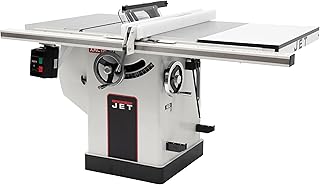
The JET Deluxe XACTA is the durability-first option for a dedicated shop. Its 3-horsepower, 230-volt motor and substantial 30-inch rip capacity suit hardwood, sheet goods, and repeated production work, while the heavier platform helps suppress vibration. This is a serious installation rather than a casual portable purchase: confirm that your electrical service, access route, and available footprint can support it.
JET ProShop II 10-Inch Table Saw
The JET ProShop II occupies a useful middle ground for home furniture shops. Its 1-3/4-horsepower, 120-volt motor is easier to accommodate than a 230-volt machine, and the steel wings provide a more planted work surface than many portable saws. It is a sensible choice for makers who value straightforward setup and dependable day-to-day handling over maximum heavy-duty capacity.
DOVAMAN 15A Dustless Portable Table Saw
The DOVAMAN DTS02M is another portable saw rather than a conventional hybrid, but it earns consideration where mobility and dust control dominate the brief. Its claimed 98% collection rate, 19-3/16-inch extension, and 0-to-45-degree bevel adjustment make it approachable for smaller furniture components and renovation work. Its lighter construction is best suited to controlled cuts in manageable stock, not continuous hardwood production.
Shop Fox W1837 10-Inch Hybrid Table Saw
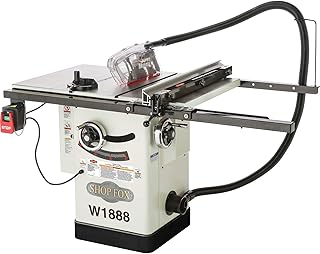
The Shop Fox W1837 is a strong all-around fit for the home workshop, combining an enclosed hybrid-style cabinet with a 2-horsepower motor and open-stand accessibility. The extra mass improves cutting comfort and helps keep the table settled during long rips, while the open base makes routine cleaning and maintenance less awkward. It offers a persuasive balance for furniture makers who want stationary-saw stability without stepping up to a larger industrial installation.
Frequently Asked Questions
What is a hybrid table saw?
A hybrid table saw generally combines the enclosed cabinet, improved dust containment, and heavier feel of a cabinet saw with a more approachable motor and price. Definitions vary, so evaluate the actual table, fence, trunnion, and stand rather than relying on the label alone.
Is a hybrid table saw better than a jobsite saw?
For stationary furniture work, usually yes: the additional mass typically reduces vibration and makes long cuts less tiring. A jobsite saw remains the better choice when portability, storage, or frequent transportation matters more than maximum stability.
Do I need 230 volts for furniture making?
No. A capable 120-volt saw can handle many home-shop tasks, particularly with a sharp blade and sensible feed rate. A 230-volt model becomes more attractive when cutting thick hardwood frequently or when you want the motor to maintain power under demanding loads.
How important is dust collection?
Very important. Effective collection improves visibility, reduces cleanup, and limits the amount of fine dust entering the breathing zone. Cabinet sealing, hose compatibility, and the blade guard’s collection path all matter—not just the advertised collection percentage.
Final Thoughts
For a dedicated home furniture shop, the Shop Fox W1837 is the most balanced starting point, while the JET Deluxe XACTA is the stronger choice for demanding hardwood work and long service life. If mobility is non-negotiable, the Evolution R10TBLX offers the most useful portable package, provided you accept the stability trade-off of a jobsite design.