Key takeaways
- Step geometry over step count: Flat treads around 4 inches deep spread load across the arch of your foot; narrow round tubing concentrates it under the toes and stings on a long climb. Look for consistent rung spacing near 10 to 12 inches so your stride doesn’t change mid-ascent.
- Handhold height: Your hands should reach a rail or grab loop while your shoulders are still in the water. Integrated handrails, like those on the Dockmate, dramatically reduce the awkward lunge that causes most dock-side falls.
- Static rating versus real loads: A 300 lb rating is a static figure. Climbing generates shock loads well above body weight, so leave headroom. The 750 lb class from JIF Marine, Dockmate, and Dock Edge is the safer bet for adults or shared family docks.
- Joint construction: Fully welded frames stay rigid; bolted rung-to-rail joints eventually loosen and creak. If a ladder is bolted, insist on stainless hardware with isolating washers to slow galvanic corrosion where stainless meets aluminum.
- Hinge and lock hardware: The flip-up mechanism is the wear point. A generously sized pivot, a quick-release safety pin, and a positive down-lock keep the ladder from creeping while you’re on it, and let you lift it clear before ice-out.
What's inside
Getting out of the water is the hardest thing a dock ladder ever has to do, and it’s the part most buyers underestimate. Cold muscles, a slick tread, one hand full of a mask or a rope, and suddenly a ladder that felt fine in the driveway becomes a shin-barking hazard. Add a season of freeze-thaw, UV, and salt spray, and the weak points show up fast: flexing side rails, hinge pins that gall, round rungs that bite bare feet, and fasteners that bleed rust down your decking.
This guide looks at flip-up dock ladders through two lenses that matter more than any spec sheet: ergonomics, meaning how the ladder behaves under a tired, wet body, and durability, meaning how it holds up after five or ten seasons of being flipped, splashed, and stored. Below are the models worth your money in 2026, plus the measurements and construction details I check before recommending anything.
As an Amazon Associate we earn from qualifying purchases.


How to Choose a Flip-Up Dock Ladder (2026)
- Step geometry over step count: Flat treads around 4 inches deep spread load across the arch of your foot; narrow round tubing concentrates it under the toes and stings on a long climb. Look for consistent rung spacing near 10 to 12 inches so your stride doesn’t change mid-ascent.
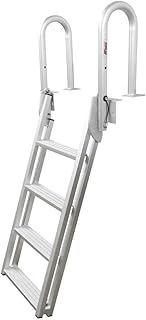
- Handhold height: Your hands should reach a rail or grab loop while your shoulders are still in the water. Integrated handrails, like those on the Dockmate, dramatically reduce the awkward lunge that causes most dock-side falls.
- Static rating versus real loads: A 300 lb rating is a static figure. Climbing generates shock loads well above body weight, so leave headroom. The 750 lb class from JIF Marine, Dockmate, and Dock Edge is the safer bet for adults or shared family docks.
- Joint construction: Fully welded frames stay rigid; bolted rung-to-rail joints eventually loosen and creak. If a ladder is bolted, insist on stainless hardware with isolating washers to slow galvanic corrosion where stainless meets aluminum.
- Hinge and lock hardware: The flip-up mechanism is the wear point. A generously sized pivot, a quick-release safety pin, and a positive down-lock keep the ladder from creeping while you’re on it, and let you lift it clear before ice-out.
The Best Flip-Up Dock Ladders of 2026, Reviewed
Extreme Max 3005.4227 Slanted 4-Step
The slanted geometry is the ergonomic standout here: angled rails keep your center of mass over the steps instead of behind them, so the climb feels more like stairs than a wall. The round-tube comfort frame is easy on the hands, though the 300 lb rating and tubular rungs make this a better fit for lighter, casual swimmers than for heavy daily use.
VEVOR 4-Step Flip-Up Dock Ladder
Wide non-slip treads and a pull-rope assist give this one the best value-per-dollar ergonomics in the group, and the aluminum alloy frame handles pontoon and freshwater duty without complaint. Expect to re-torque the fasteners after the first month; once settled, it’s a solid seasonal performer at 350 lb.
JIF Marine Hinged Flip-Up 4-Step
My pick for the best balance of comfort and structure: extra-wide 4-inch steps, a 750 lb capacity, and a quick-release pin that makes lifting the ladder out of harm’s way a one-handed job. The lift-up design also keeps the treads out of the waterline, which slows biofouling and extends the anti-slip surface’s life.
Dockmate Wide 5-Step
The extra step plus full handrails make this the most accessible ladder here, and the reason I recommend it for older swimmers, kids, or anyone climbing out with gear in hand. Corrosion resistance is genuinely tuned for salt water, and the 750 lb capacity means the frame never feels like it’s working.
Dock Edge Flip Up Wide Step, 7 Step
Built for high-freeboard docks where a four-step simply leaves you dangling, this welded aluminum ladder is the most rigid of the bunch, with no flex or chatter under load. It’s heavy and needs a solid mounting substrate, but if your deck sits well above the waterline it’s the only sensible answer.
Frequently Asked Questions
How many steps do I actually need?
Count on three submerged steps for a comfortable exit. Measure from your deck surface to the low-water line, divide by roughly 11 inches, then add three. Docks under 20 inches of freeboard usually land on a four-step; taller cribs need five to seven.
Will a flip-up ladder survive winter in place?
Flipping it up removes the treads from ice and wave action, which is most of the battle, but the hinge still sees load. Where ice sheets shift, pull the pin and store the ladder inside; anodizing and stainless hardware resist corrosion, not shearing ice.
Are flat steps really better than round rungs?
For bare feet, yes. Flat 4-inch treads distribute pressure across the whole foot and stay stable when your ankles are cold and unresponsive. Round tubing is kinder on the hands, which is why the best designs mix both.
What mounting hardware should I use?
Through-bolt into solid framing with stainless bolts, backing plates, and a bedding compound between the bracket and decking. Lag screws into aging wood are the single most common failure point I see, and it is entirely avoidable.
Final Thoughts
For most docks, the JIF Marine 4-Step hits the sweet spot of wide treads, 750 lb structure, and effortless lift-up storage. Choose the Dockmate Wide 5-Step if handrails and easier exits matter for your family or you’re in salt water, and step up to the Dock Edge 7-Step when your deck sits high enough that a shorter ladder would leave you climbing on your fingertips.