
Key takeaways
- Recommended Uses For Product: Body Shaping, Indoor, Weight Loss
- Material: Alloy Steel
- Handle Material: Rubber
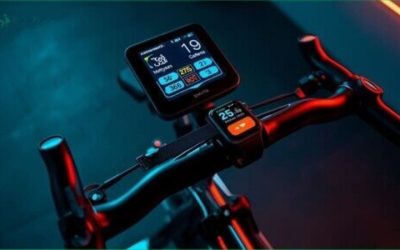
The console on a home exercise bike is the part most likely to disappoint, because it promises measurement and usually delivers estimation. Speed and distance on an indoor bike are derived from flywheel revolutions, which means they are internally consistent but not comparable to anything. Calorie counts are calculated from time and resistance using generic assumptions about body weight, so the number on the screen can be off by a wide margin in either direction.
None of that makes the console useless. It makes it useful for one specific thing: comparing you to yourself. If last Tuesday you covered a given distance at resistance eight in twenty-two minutes and today you did it in twenty, that is real progress regardless of whether the distance figure corresponds to anything in the outside world. The six uprights below are compared on how well they support that kind of tracking, which is the only kind that matters at home.
Our top picks
 MERACH Exercise Bike
- Recommended Uses For Product: Body Shaping, Indoor, Weight Loss
- Material: Alloy Steel
- Handle Material: Rubber
| Product | Key specs | |
|---|---|---|
 Schwinn Fitness 130 Upright Bike Schwinn Fitness 130 Upright Bike | Check price | |
| MERACH Exercise Bike | Recommended Uses For Product: Body Shaping, Indoor, Weight Loss Material: Alloy Steel Handle Material: Rubber | Check price |
 MERACH Exercise Bike MERACH Exercise Bike | Check price | |
 Marcy Home Fitness Personal Exercise Bike with Marcy Home Fitness Personal Exercise Bike with | Check price | |
 YOSUDA Exercise Bike YOSUDA Exercise Bike | Recommended Uses For Product: Indoor Material: Metal Handle Material: Aluminum | Check price |
 Exercise Bike Exercise Bike | Power Source: Battery Powered Recommended Uses For Product: Indoor Material: Alloy Steel | Check price |
 pooboo Folding Exercise Bike pooboo Folding Exercise Bike | Recommended Uses For Product: Indoor Maximum Weight Recommendation: 300 Pounds Resistance Mechanism: Magnetic | Check price |
 NordicTrack G LE Exercise Bikes NordicTrack G LE Exercise Bikes | Check price |
As an Amazon Associate we earn from qualifying purchases at no extra cost to you.
Quick Comparison
| Product | Best For | Standout Feature | Watch Out For |
|---|---|---|---|
| YOSUDA App-Connected Bike | Session history and progress | App logs and stores every ride | Account and phone required |
| Schwinn 130 Upright Bike | Structured on-board workouts | Built-in programmes, no phone needed | Bulkiest machine of the group |
| MERACH Magnetic Bike | Repeatable steady sessions | Consistent resistance settings | Basic console metrics only |
| MERACH Brake Pad Bike | Higher intensity training | Firm resistance for hard efforts | Pad wear changes feel over time |
| 5-in-1 Foldable Senior Bike | Graded progression | Sixteen distinct resistance levels | Simple display, limited data |
| Marcy Personal Exercise Bike | Riding by feel and time | Uncluttered, easy-to-read readout | Coarse resistance steps |
How to Choose
- Decide whether you will actually log rides: App connectivity only pays off if you open the app. If you know you will not, a bike with clear on-board programmes gives you structure without the extra step.
- Prefer numbered resistance levels to a plain knob: Discrete levels let you repeat an effort exactly next week. A continuously variable knob feels smooth but makes week-to-week comparison guesswork.
- Treat calorie readouts as relative, not absolute: Use them to compare one of your sessions to another, never as a dietary figure. The underlying calculation cannot account for your body composition or efficiency.
- Use a chest strap if heart rate matters: Handlebar grip sensors require you to hold still and are inconsistent under effort. A separate strap is far more reliable and often cheaper than upgrading models for grip sensors.
- Check display visibility from the saddle: A console angled for a standing viewer is hard to read while riding. Backlighting matters too if the bike lives in a basement or a dim corner.
Top Picks Reviewed
Best for Data: YOSUDA App-Connected Bike
Automatic session logging is the feature that changes behaviour. Being able to look back over six weeks and see average output climbing is far more motivating than any single-ride number, and it removes the need to write anything down.
It requires an account and a phone in reach every session. The app also evolves on its own schedule, so features can change over the life of the bike in ways the hardware cannot.
Best Without a Phone: Schwinn 130 Upright Bike
Built-in programmes give you varied, structured sessions directly from the console, which is genuinely valuable if you find steady-state riding monotonous but do not want another app on your phone. The display is also the clearest here.
It is the largest and heaviest machine on the list, and assembly is a two-person job at the final stage. Once placed, it is not something you will move around casually.
Most Repeatable: MERACH Magnetic Bike
Because magnetic resistance does not wear, a given setting produces the same load this year and next. That consistency is what makes self-comparison meaningful over months, and it is quietly one of the most useful properties a home bike can have.
The console itself is simple, covering time, distance and speed. If you want deeper metrics you will be recording them yourself or using a separate app.
Best for Hard Sessions: MERACH Brake Pad Bike
The firmer top-end resistance supports genuine interval work, where the difference between an easy recovery segment and a hard effort needs to be unmistakable. The frame stays stable through those changes.
Pads wear, and as they do the feel at a given setting drifts slightly. That undermines long-term comparison a little, so log perceived effort alongside the setting number.
Best Graded Progression: 5-in-1 Foldable Senior Bike
Sixteen distinct resistance levels give fine control over how hard a session is, and numbered steps make it easy to move up gradually rather than in large jumps. For measured progression, that granularity is more useful than a fancy console.
The display is basic and the folding frame flexes under hard efforts, so this suits controlled steady riding better than maximal interval work.
Simplest Readout: Marcy Personal Exercise Bike
An uncluttered display showing the essentials is easier to use mid-ride than a crowded screen. For riders who train by time and perceived effort, this is all the feedback that is needed.
Resistance adjustment is coarser than on the multi-level machines, which makes precise progression harder. It rewards a rider who works to a clock rather than a number.
Frequently Asked Questions
Are calorie counts on exercise bikes accurate?
Not in absolute terms. They are estimates based on time and resistance with generic assumptions, and can be substantially off. They remain useful for comparing your own sessions to each other.
Is distance on a stationary bike meaningful?
Only relative to itself. The figure comes from flywheel revolutions rather than actual travel, so it cannot be compared to outdoor cycling or to another machine, but it tracks your own improvement reliably.
Do I need a bike with app connectivity?
Only if you will use it. Connected bikes make progress visible with no effort, but a bike with clear on-board programmes achieves much the same structure for people who prefer not to involve a phone.
How accurate are handlebar heart rate sensors?
Inconsistent, particularly during hard efforts when grip pressure and movement interfere. A chest strap is considerably more accurate and works with most fitness apps independently of the bike.
Final Thoughts
If seeing progress is what keeps you riding, the YOSUDA App-Connected Bike does that automatically and is the natural pick. The Schwinn 130 Upright Bike delivers similar structure entirely on-board for anyone who would rather not use an app, while the MERACH Magnetic Bike offers the most consistent resistance for straightforward self-comparison over time.

Write Your Review
No reviews yet. Be the first to share your experience!