Key takeaways
- Solids Content: 100% solids formulations cure thicker and harder per coat than solvent- or water-based alternatives, giving you superior abrasion resistance and a longer service life with fewer coats.
- Slip Resistance: A high-gloss finish looks sharp but becomes a hazard when wet. Look for kits that include broadcast aggregate or textured topcoats to maintain traction without sacrificing cleanability.
- Hot-Tire Resistance: Garages subject flooring to repeated thermal cycling from parked vehicles. Epoxy systems with aliphatic polyurethane topcoats resist the softening and tire marks that plague cheaper products.
- Coverage Accuracy: Manufacturers frequently overstate square footage on porous concrete. Calculate at least 15% above the listed coverage and verify that the kit includes enough material for a proper two-coat application.
- Chemical and UV Stability: Oil, brake fluid, and sunlight each attack epoxy differently. Prioritize formulas that are explicitly solvent-resistant and include UV-stable pigments or a clear topcoat to prevent chalking and discoloration.
What's inside
Most garage floor epoxies crack, yellow, or peel within two seasons—especially under hot tires, chemical spills, and constant foot traffic. The real problem isn’t finding an epoxy; it’s filtering through marketing claims to find a system that actually bonds to concrete, resists abrasion, and holds its finish year after year.
This 2026 roundup approaches the question from an ergonomics-and-durability standpoint: adhesion strength, solids content, slip resistance, and long-term wear. Below you’ll find the five kits that earned their place after evaluating formulation chemistry, coverage accuracy, and real-world performance on residential garage slabs.
As an Amazon Associate we earn from qualifying purchases.


How to Choose an Epoxy Garage Floor Coating (2026)
- Solids Content: 100% solids formulations cure thicker and harder per coat than solvent- or water-based alternatives, giving you superior abrasion resistance and a longer service life with fewer coats.
- Slip Resistance: A high-gloss finish looks sharp but becomes a hazard when wet. Look for kits that include broadcast aggregate or textured topcoats to maintain traction without sacrificing cleanability.
- Hot-Tire Resistance: Garages subject flooring to repeated thermal cycling from parked vehicles. Epoxy systems with aliphatic polyurethane topcoats resist the softening and tire marks that plague cheaper products.
- Coverage Accuracy: Manufacturers frequently overstate square footage on porous concrete. Calculate at least 15% above the listed coverage and verify that the kit includes enough material for a proper two-coat application.
- Chemical and UV Stability: Oil, brake fluid, and sunlight each attack epoxy differently. Prioritize formulas that are explicitly solvent-resistant and include UV-stable pigments or a clear topcoat to prevent chalking and discoloration.
The Best Epoxy Garage Floor Coatings (2026) Reviewed
Gorilla Epoxy Garage Floor Coating Kit
This 12-piece kit covers up to 550 square feet with 100% solids epoxy that delivers genuinely thick film build per pass. Gorilla’s formulation sticks tenaciously to prepared concrete and resists chipping under heavy rolling loads, making it a strong all-around choice for most residential garages.
ArmorPoxy Garage Epoxy Floor Kit
ArmorPoxy pairs a 100% solids base coat with its UltraGlaze topcoat to create a system that shrugs off hot tires and common garage chemicals. The 17-piece kit covers 300 square feet and includes anti-slip aggregate, which gives it a clear edge on ergonomics and pedestrian safety.
Coloredepoxies Dark Gray Epoxy Coating
Coloredepoxies focuses on pigment quality—its dark gray reads rich and consistent rather than washed out, even after months of UV exposure. The 100% solids resin self-levels cleanly on both concrete and plywood substrates, and the 3-gallon kit covers garages and basements without the muted tones that plague competing brands.
Epoxy Colored Sand Floor Paint
This marble-gray system uses embedded decorative sand to deliver a self-leveling, textured finish in a single application. At 110 square feet per 3-gallon kit it’s the most material-intensive option here, but the integrated aggregate eliminates the separate broadcast step and produces a surface with excellent slip resistance.
Epoxy Resin Coating 3 Gallon Kit (Clear)
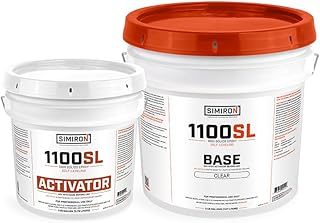
A clear 100% solids formulation fills a different niche: it acts as a sealing topcoat over pigmented epoxy or decorative flake systems. Its standard cure speed gives you working time to level properly, and its chemical-resistant, solvent-free chemistry makes it safe for enclosed spaces where ventilation is limited.
Frequently Asked Questions
Do I need to acid-etch or grind my garage floor before applying epoxy?
Yes. Mechanical grinding or acid etching opens the concrete pores so the epoxy can form a mechanical bond. Skipping this step is the number-one cause of peeling and delamination, regardless of product quality.
How long before I can park on my new epoxy floor?
Most 100% solids epoxies reach light foot traffic in 24 hours and can handle vehicle weight after 48 to 72 hours. Full chemical cure typically takes 5 to 7 days, during which you should avoid driving on the surface or exposing it to harsh cleaners.
Can I apply epoxy over an existing coating?
Only if the existing coating is well-adhered, fully cured, and properly scuff-sanded. Applying new epoxy over a failing layer simply transfers the bond problem upward. When in doubt, strip the old coating completely.
Is a clear topcoat really necessary?
For garages that see daily vehicle traffic, yes. A polyurethane or clear epoxy topcoat adds UV protection, chemical resistance, and a sacrificial wear layer that dramatically extends the life of the pigmented base coat beneath it.
Final Thoughts
For most homeowners, the ArmorPoxy Kit stands out as the best balance of durability, slip safety, and kit completeness. The Gorilla Kit is the top pick if you need maximum coverage on a budget, while the Coloredepoxies option delivers the most visually impressive pigment depth. Any of these three will give your garage floor a finish that genuinely holds up.