Key takeaways
- Pump lift: Check the stated vertical pumping distance and compare it with the route to a sink, standpipe, or window. A long hose is useful only if the pump can lift the water reliably.
- Capacity: Pint ratings describe moisture removal under test conditions, not a guaranteed room size. Wetter spaces, cooler temperatures, poor insulation, and active leaks all reduce real-world performance.
- Access and mobility: Recessed handles, large casters, and manageable weight matter when the unit must be moved around furniture or positioned in a narrow basement corridor.
- Maintenance: Favor washable filters, clear hose connections, accessible pump components, and automatic defrost. These details reduce downtime and help preserve airflow over years of use.
- Noise and controls: A useful dehumidifier should offer a readable humidistat, continuous-drain mode, timer options, and a sound level appropriate to its location. Basement tolerance is different from bedroom tolerance.
What's inside
Excess moisture is more than an inconvenience: it can swell wood furniture, loosen flooring, encourage mold growth, and leave basements and crawl spaces smelling persistently damp. Buyers often focus on pint capacity, then discover that a unit cannot lift water high enough, cannot fit where it is needed, or cycles too loudly for practical everyday use.
This guide evaluates built-in-pump dehumidifiers through an ergonomics-and-durability lens. We look at drainage reach, controls, filter maintenance, portability, operating environments, and how sensibly each machine fits a home rather than relying on headline capacity alone.
As an Amazon Associate we earn from qualifying purchases.



🛒 Best Price Today on Amazon
Prime members get fast, free shipping on everything above, plus member-only deals. New members get a 30-day free trial — cancel anytime.
How to Choose a Dehumidifier With Built In Pump (2026)
- Pump lift: Check the stated vertical pumping distance and compare it with the route to a sink, standpipe, or window. A long hose is useful only if the pump can lift the water reliably.
- Capacity: Pint ratings describe moisture removal under test conditions, not a guaranteed room size. Wetter spaces, cooler temperatures, poor insulation, and active leaks all reduce real-world performance.
- Access and mobility: Recessed handles, large casters, and manageable weight matter when the unit must be moved around furniture or positioned in a narrow basement corridor.
- Maintenance: Favor washable filters, clear hose connections, accessible pump components, and automatic defrost. These details reduce downtime and help preserve airflow over years of use.
- Noise and controls: A useful dehumidifier should offer a readable humidistat, continuous-drain mode, timer options, and a sound level appropriate to its location. Basement tolerance is different from bedroom tolerance.
The Best Dehumidifier With Built In Pump (2026)s Reviewed
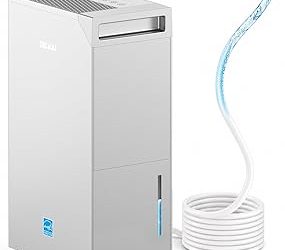
5000 Sq. Ft. 100-Pint Dehumidifier With Pump
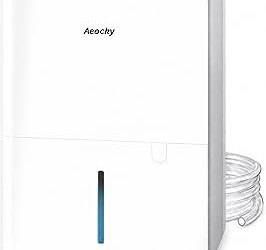
This model is a practical all-rounder for large basements and garages, with smart humidity control and three drainage options. Its built-in pump lifts water up to 16.4 feet, making it a strong choice when gravity drainage is unavailable; the main ergonomic consideration is leaving enough clearance to remove the filter and route the hose without sharp bends.
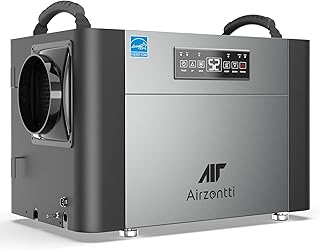
155-Pint Commercial Dehumidifier With Pump
Designed for demanding spaces such as crawl spaces, whole basements, attics, and water-damage work, this Energy Star model emphasizes high extraction capacity and automatic defrost. It makes the most sense where moisture loads are consistently heavy, although its commercial footprint may be excessive for a finished room or modest home office.
BSMTEK 190-Pint Industrial Dehumidifier
The 190-pint BSMTEK is aimed at restoration and very large areas up to 6,000 square feet, pairing a built-in pump with a drain hose. Its value lies in recovery speed and rugged operating capability rather than living-room refinement, so buyers should plan for substantial weight, airflow, and noise when choosing a location.
Waykar 155-Pint Commercial Dehumidifier
Waykar’s 155-pint unit combines a pump, drain hose, washable filter, and a stated coverage area up to 8,000 square feet. The five-year quality coverage is reassuring for a machine expected to work hard, while the washable filter is a particularly useful durability feature in dusty utility rooms and commercial environments.
Moiswell Defender MP70 145-Pint Dehumidifier
The Moiswell Defender MP70 is unusually appealing for tight crawl spaces because it combines high capacity with a comparatively compact design. Auto defrost, a timer, and continuous drainage improve day-to-day usability; measure doorways and service clearances carefully, since compact does not necessarily mean lightweight.
Frequently Asked Questions
Does a built-in pump eliminate the need for manual emptying?
Usually, yes, when the pump is connected correctly and the hose leads to a suitable drain. Most units can also collect water in an internal bucket, which is useful as a backup or when the pump is not needed.
Can these dehumidifiers protect furniture?
They can help control the humidity that contributes to swelling, corrosion, musty odors, and mold, but they cannot repair existing moisture damage. Place the unit where air can circulate around furniture, and investigate leaks or foundation seepage separately.
Is a 100-pint model always better than a 50-pint model?
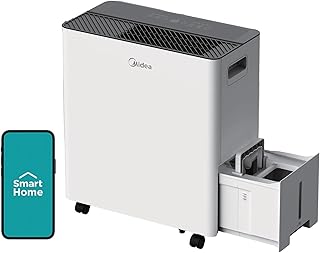
No. A larger unit may remove moisture faster, but it can consume more space and energy than necessary. The renewed Midea 50 Pint Dehumidifier with Pump, rated for up to 4,500 square feet, may be more sensible for a moderately damp home when its condition and warranty are acceptable.
How often should the filter be cleaned?
Inspect it every two to four weeks during heavy use, then wash or vacuum it according to the manufacturer’s instructions. A clogged filter restricts airflow, increases operating strain, and can make a high-capacity machine perform like a much smaller one.
Final Thoughts
For broad household use, the 100-pint model offers a balanced combination of pump reach, control, and manageable sizing. Choose the Waykar when long-term service support and washable-filter maintenance matter most, or the Moiswell Defender MP70 when a cramped crawl space demands a more compact commercial solution.