Key takeaways
- Seat support: Look for layered or resilient cushioning that balances pressure relief with enough resistance to prevent excessive sinking. A supportive seat should let you stand without bracing heavily on the arms.
- Configuration: Confirm which pieces can move independently and whether the chaise, ottoman, or arms can switch positions. True flexibility is more useful than a large sofa that only works in one layout.
- Stability: Inspect the base, module connectors, and floor contact points. A sectional that shifts during normal use can create awkward sitting angles and accelerate wear at the joints.
- Fabric and maintenance: Removable, washable, or spill-resistant covers are valuable for households with children, pets, or frequent guests. Also consider whether the upholstery will show compression, lint, or stains.
- Clearance and access: Measure doorways, stair turns, and the room’s walking paths—not just the wall where the sofa will sit. Deep modular pieces need enough surrounding space to remain comfortable and usable.
What's inside
Customizable sectionals promise flexibility, but not every modular sofa is equally comfortable, durable, or easy to reconfigure. Seat depth, connector stability, cushion recovery, and fabric performance can determine whether a sectional remains supportive after years of rearranging—or gradually becomes a collection of sliding cushions.
This guide evaluates the listed options from an ergonomics-and-durability perspective. The focus is practical: how well each design supports different sitting positions, adapts to changing room layouts, handles everyday wear, and adds useful functions without sacrificing long-term comfort.
As an Amazon Associate we earn from qualifying purchases.


How to Choose a Customizable Sectional Sofa (2026)
- Seat support: Look for layered or resilient cushioning that balances pressure relief with enough resistance to prevent excessive sinking. A supportive seat should let you stand without bracing heavily on the arms.
- Configuration: Confirm which pieces can move independently and whether the chaise, ottoman, or arms can switch positions. True flexibility is more useful than a large sofa that only works in one layout.
- Stability: Inspect the base, module connectors, and floor contact points. A sectional that shifts during normal use can create awkward sitting angles and accelerate wear at the joints.
- Fabric and maintenance: Removable, washable, or spill-resistant covers are valuable for households with children, pets, or frequent guests. Also consider whether the upholstery will show compression, lint, or stains.
- Clearance and access: Measure doorways, stair turns, and the room’s walking paths—not just the wall where the sofa will sit. Deep modular pieces need enough surrounding space to remain comfortable and usable.
The Best Customizable Sectional Sofas (2026) Reviewed
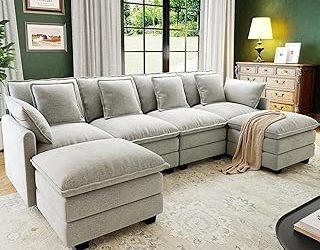
Modular Sectional Sofa with Movable Ottomans
This 95-inch U-shaped sectional is a practical choice for households that want multiple lounging positions without committing to a fixed chaise. Its three-layer seat construction should provide a more controlled sit than overly soft cloud-style designs, while removable armrest pillows and cushions make maintenance and configuration changes easier. The movable ottomans add useful flexibility, although buyers should check the final footprint carefully before placing the sofa in a compact room.
Cloud Modular Sectional Sofa
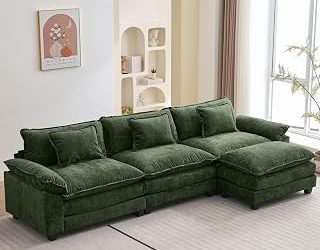
Designed around a deep, boneless profile, this green L-shaped sofa prioritizes relaxed lounging and offers a reversible chaise for layout changes. The no-assembly construction is convenient, and the non-slip feature may help limit gradual module drift on smooth floors. Its soft, low-support design is best for reclining rather than upright work or extended dining-table sitting, so users who need stronger lumbar support should add a firm back cushion.
M1 Customizable Lightweight Sectional Sofa
The M1 stands out for rooms that are rearranged frequently or accessed through challenging stairways, thanks to its lightweight construction and tool-free setup. Spill-resistant fabric is a meaningful durability advantage for everyday use, particularly when quick cleanup matters more than formal upholstery. Its main strength is controlled practicality: it is easier to move and maintain than many oversized modular couches, though shoppers should verify the available seat depth and module count for their preferred layout.
135.5-Inch Velvet Modular Sectional with Storage Ottoman
This expansive six-seat configuration suits large living rooms and entertaining areas, with a storage ottoman adding a useful place for blankets, remotes, or spare cushions. Removable covers improve serviceability, while the velvet upholstery delivers a richer appearance than standard chenille. At 135.5 inches, however, this is a substantial commitment; its generous scale can overwhelm narrow rooms and make future repositioning more demanding.
Modular Sectional Sleeper Sofa with Pull-Out Bed
This 108-inch U-shaped model combines seating, a pull-out bed, storage, reclining backrests, and USB charging, making it a strong candidate for multipurpose rooms. The integrated functions are useful, but they also introduce more moving parts than a straightforward sectional, so buyers should pay close attention to mechanism alignment and clearance around the sleeper extension. Its chenille upholstery and seven-seat format favor family lounging and overnight guests, provided the room can accommodate its full operating footprint.
Frequently Asked Questions
Are modular sectionals genuinely customizable?
Some are, but the degree of flexibility varies. A reversible chaise or movable ottoman offers basic adaptation, while independently movable seats, arms, and corner units allow more meaningful reconfiguration. Check exactly which pieces are separate and whether connectors are included.
Are deep cloud-style sofas ergonomic?
They can be comfortable for reclining, reading, or watching television, but very deep seats may leave shorter users without adequate back support. A firm lumbar pillow or a shallower configuration can improve posture and reduce the tendency to slide forward.
How can I stop modular sofa pieces from separating?
Use the supplied connectors correctly, place the modules on a level surface, and avoid dragging individual pieces while someone is seated on them. Non-slip pads can help on smooth floors, but they should not substitute for a properly designed connection system.
What is the most durable upholstery for daily use?
Durability depends on weave, backing, seam quality, and maintenance—not just the fabric name. Spill-resistant or removable upholstery is especially practical, while darker chenille can conceal minor marks but may show compression in heavily used seating zones.
Final Thoughts
The modular sectional with movable ottomans is the most balanced choice for adaptable everyday seating, while the M1 is especially appealing for easy handling and spill resistance. For large households, the pull-out sleeper sectional adds the greatest utility; choose it only if you have sufficient clearance for both its seating and bed functions.