Key takeaways
- Hang angle over bed length: A 9-foot stand paired with a 9-foot hammock leaves almost no slack, and a drum-tight bed transfers pressure straight to your hips. Look for a stand rated for a range (9–14 ft) so you can dial in roughly a 30-degree suspension angle, which produces the flattest, most spine-neutral lie.
- Spreader bars vs. gathered ends: Hardwood spreader bars keep the fabric open and make entry far easier for anyone with limited mobility, but they raise tip risk. Gathered-end designs cradle better and are more stable. If you want spreaders, insist on anti-tip geometry rather than trusting your balance.
- Steel gauge and joint design: Capacity ratings tell you less than construction does. Prefer thick-wall tube with bolt-through or interlocking joints over spot welds, and check that the finish is a baked powder coat — not a sprayed enamel that chips at the connection points and invites corrosion.
- Entry height and footprint: An 18 to 24 inch seat height lets most adults sit down and stand up without dropping into the fabric. Then measure your actual space: most 9-foot stands need about 10 feet of clear floor plus swing clearance on both sides.
- Weave and fabric behavior: Cotton and cotton-poly blends breathe well and conform to your body, which is what makes them comfortable for long sessions, but they hold moisture. If the hammock lives outdoors, plan on a carrying bag and a habit of bringing it in, or step up to a weather-tolerant synthetic bed.
What's inside
Most hammock-and-stand sets fail in one of two predictable ways: the fabric sags into a taco that pinches your shoulders, or the frame starts flexing and shedding paint by the second summer. Both problems trace back to the same thing — geometry and material specs that buyers rarely see listed clearly. A stand that’s an inch too narrow forces the bed into a deep curve that compresses your lower back. A frame welded from thin-gauge tube with a decorative rather than protective finish will pass a showroom sit test and still rust through at the joints where water pools.
This guide evaluates the current Best Choice Products hammock-with-stand lineup alongside its closest competitors through two lenses: body support and long-term structural integrity. I’ve weighted spreader-bar width, hang angle, entry height, weave construction, steel gauge, and finish quality over color options and marketing capacity claims. Below you’ll find a short buying framework, then hands-on assessments of the strongest options for 2026.
As an Amazon Associate we earn from qualifying purchases.



🛒 Best Price Today on Amazon
Prime members get fast, free shipping on everything above, plus member-only deals. New members get a 30-day free trial — cancel anytime.
How to Choose a/an Choice Products Hammock With Stand (2026)
- Hang angle over bed length: A 9-foot stand paired with a 9-foot hammock leaves almost no slack, and a drum-tight bed transfers pressure straight to your hips. Look for a stand rated for a range (9–14 ft) so you can dial in roughly a 30-degree suspension angle, which produces the flattest, most spine-neutral lie.
- Spreader bars vs. gathered ends: Hardwood spreader bars keep the fabric open and make entry far easier for anyone with limited mobility, but they raise tip risk. Gathered-end designs cradle better and are more stable. If you want spreaders, insist on anti-tip geometry rather than trusting your balance.
- Steel gauge and joint design: Capacity ratings tell you less than construction does. Prefer thick-wall tube with bolt-through or interlocking joints over spot welds, and check that the finish is a baked powder coat — not a sprayed enamel that chips at the connection points and invites corrosion.
- Entry height and footprint: An 18 to 24 inch seat height lets most adults sit down and stand up without dropping into the fabric. Then measure your actual space: most 9-foot stands need about 10 feet of clear floor plus swing clearance on both sides.
- Weave and fabric behavior: Cotton and cotton-poly blends breathe well and conform to your body, which is what makes them comfortable for long sessions, but they hold moisture. If the hammock lives outdoors, plan on a carrying bag and a habit of bringing it in, or step up to a weather-tolerant synthetic bed.
The Best Choice Products Hammock With Stand (2026)s Reviewed
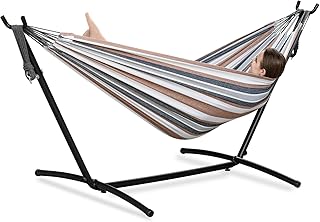
Best Choice Products Double Hammock with Steel Stand (Desert Stripes)
The Brazilian-style cotton bed is the standout here: the tight, dense weave conforms without the mesh-like pressure lines you get from cheaper open knits, and it settles into a genuinely supportive curve. The steel stand is conventional A-frame construction, so keep it on level ground and check the bolt torque at the start of each season.
Double Hammock with Stand, Heavy-Duty Portable (Coffee)
A sensible 450 lb, 9-foot package with a deliberately compact footprint, which makes it one of the easier full sets to fit onto a small patio or into a spare room. Assembly is genuinely simple, though the space-saving frame geometry means the bed hangs shallower — comfortable for lounging, less cocooning for sleeping.
Lazy Daze Portable Hammock with Stand (White)
Lazy Daze has a long track record on frame quality, and this one earns it: the tube feels substantial in hand and the finish holds up to weather better than most in the price bracket. The included pillow does real ergonomic work by lifting your head out of the fabric fold, which is where neck strain usually starts.
Extra Large Double Hammock with Stand (Grey)
The hardwood spreader bar and 475 lb rating make this the pick for wider bodies or two-person use, and the extra-large pillow keeps your cervical spine aligned instead of chin-to-chest. Spreader-bar beds are inherently tippier, so enter from the center and sit rather than flop.
Sunnydaze Heavy-Duty Hammock Stand, 550 lb
Buy this if you already own a hammock you like — the 550 lb rating, rust-resistant steel, and 9-to-14-foot adjustability let you tune sag properly, which no fixed-length set allows. Tool-free setup and included chains and hooks make it the most flexible durability upgrade in this roundup.
Frequently Asked Questions
How much space does a 9-foot hammock stand actually need?
Plan for about 10 feet of length to accommodate the feet and end hardware, plus 3 to 4 feet of width and roughly 2 feet of side clearance so the bed can swing without hitting walls or furniture.
Can I leave the stand outside year-round?
A powder-coated, rust-resistant frame tolerates seasonal exposure, but standing water at the joints is what kills stands. Store it under cover in winter if you can, and bring cotton hammocks indoors after rain to prevent mildew and fiber rot.
Are the stated weight capacities trustworthy?
Treat them as static ratings, not dynamic ones. Vigorous swinging or two people shifting at once creates loads well above combined body weight, so leave meaningful headroom — a 450 lb rating suits two adults up to roughly 300 lb total in normal use.
Which is better for back pain: spreader bar or gathered end?
Gathered-end hammocks generally win, because the diagonal lie they encourage keeps the spine neutral. Spreader-bar models are easier to get into, which matters more if bending and lowering yourself is the harder part.
Final Thoughts
For most buyers, the Best Choice Products Double Hammock with Steel Stand in Desert Stripes delivers the best comfort-per-dollar thanks to that dense Brazilian cotton weave. If frame longevity is your priority, the Sunnydaze 550 lb stand paired with a hammock of your choosing is the smarter long-term investment, and the ANAGOO 2 Person set is worth a look for its adjustable height and anti-tip spreader bars.