Key takeaways
- Seat ergonomics: Look for enough depth to support the thighs without forcing shorter users to lean backward. A medium-firm cushion and supportive front edge generally work better for everyday sitting than an excessively soft “sink-in” seat.
- Frame and suspension: A kiln-dried or solid wood frame, reinforced joints, and properly supported seat deck are more meaningful durability indicators than decorative tufting alone. Pocket springs or well-built webbing can help reduce early cushion fatigue.
- Upholstery choice: Leather is usually easier to wipe clean and develops character, while linen and chenille offer a softer hand but may show wear, texture changes, or spills more readily. Check care instructions before choosing a pale fabric.
- Arm and back design: Rolled arms and a button-tufted back create the Chesterfield silhouette, but they can reduce usable shoulder and arm space. Sit with your elbows supported and confirm the back angle is comfortable for longer sessions.
- Room fit: Measure doorways, stair turns, lift interiors, and the final wall—not just the available floor area. Leave enough circulation space around the sofa so its substantial profile does not obstruct everyday movement.
What's inside
Buying a Chesterfield sofa is less about picking the deepest button tufting and more about balancing posture, material behavior, usable seat depth, and long-term frame stability. A sofa can look substantial in a listing yet feel cramped, saggy, difficult to clean, or too low for comfortable daily use.
This guide evaluates the listed sofas from an ergonomics-and-durability perspective: sitting posture, cushion support, upholstery practicality, footprint, and the demands of real homes. The final three options are modern cloud-style alternatives rather than traditional Chesterfields, but they may suit buyers who prioritize lounging, modularity, or compact living.
As an Amazon Associate we earn from qualifying purchases.




How to Choose a Chesterfield Sofa (2026)
- Seat ergonomics: Look for enough depth to support the thighs without forcing shorter users to lean backward. A medium-firm cushion and supportive front edge generally work better for everyday sitting than an excessively soft “sink-in” seat.
- Frame and suspension: A kiln-dried or solid wood frame, reinforced joints, and properly supported seat deck are more meaningful durability indicators than decorative tufting alone. Pocket springs or well-built webbing can help reduce early cushion fatigue.
- Upholstery choice: Leather is usually easier to wipe clean and develops character, while linen and chenille offer a softer hand but may show wear, texture changes, or spills more readily. Check care instructions before choosing a pale fabric.
- Arm and back design: Rolled arms and a button-tufted back create the Chesterfield silhouette, but they can reduce usable shoulder and arm space. Sit with your elbows supported and confirm the back angle is comfortable for longer sessions.
- Room fit: Measure doorways, stair turns, lift interiors, and the final wall—not just the available floor area. Leave enough circulation space around the sofa so its substantial profile does not obstruct everyday movement.
The Best Chesterfield Sofa (2026)s Reviewed
GarveeHome 81-Inch Leather Chesterfield Sofa
The GarveeHome combines a traditional button-tufted profile with a relatively manageable 81-inch width, making it a practical choice for apartments, offices, and smaller living rooms. Its deep seat favors relaxed lounging, while the cognac-toned leather-style upholstery should be easier to maintain than light fabric; shorter users may benefit from a firm cushion or lumbar pillow if the depth feels excessive.
ERYE 88-Inch Beige Chesterfield Sofa
The ERYE offers the classic visual package—rolled arms, tufting, and nailhead trim—with a little more room for three people than the GarveeHome. Its linen fabric and pet-friendly positioning are appealing for casual households, but beige upholstery demands sensible stain protection and routine vacuuming, especially around the tufted areas where debris can collect.
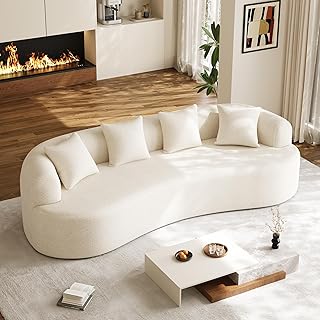
Modern Curved Four-Seater Chenille Sofa
This cream chenille sofa is not a Chesterfield, but it is a compelling alternative for buyers who value broad, low-pressure lounging over upright formality. Its curved, boneless construction and deep seating may feel inviting, although the soft geometry provides less edge support and can make standing harder for some users.
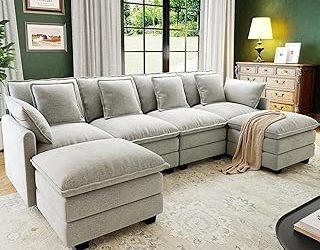
Ihanherry 111.4-Inch Modular Sectional
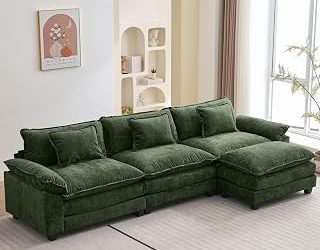
The Ihanherry is best viewed as a spacious modular cloud-style sectional rather than a traditional Chesterfield. Its L-shaped layout and ottoman create flexible lounging zones, while the generous width suits larger rooms; measure carefully, because a sectional of this scale can dominate a narrow space and complicate traffic flow.
Boneless 102.4-Inch Cloud Sectional with Chaise
This black corduroy sectional prioritizes relaxed, chaise-style comfort and a deep seat over structured back support. It may work well for movie rooms or informal family spaces, but the boneless design is less ideal for users who need firm lumbar support, easy sit-to-stand access, or a clearly defined upright posture.
Frequently Asked Questions
What makes a sofa a Chesterfield?
A Chesterfield is typically identified by deep button tufting, rolled arms, a relatively structured back, and upholstery that continues across the arms and back in a cohesive, formal profile. Modern versions may simplify the detailing or use fabric instead of leather.
Is a deep-seat Chesterfield comfortable for everyday use?
It can be, particularly for taller users and relaxed sitting. For smaller occupants, excessive depth may leave the feet unsupported and encourage slouching, so test the sofa with your back against the cushion and both feet flat on the floor.
Which upholstery is easiest to live with?
Leather or leather-style upholstery is generally simpler to wipe clean and less likely to trap loose debris. Fabric can feel warmer and softer, but light colors and textured surfaces require more attentive cleaning and prompt treatment of spills.
How can I extend a sofa’s useful life?
Rotate or reposition removable cushions when the design allows, vacuum seams and tufting regularly, avoid sitting on the arms, and keep the sofa away from strong direct sunlight or heat sources. Follow the manufacturer’s cleaning guidance rather than applying a generic product.
Final Thoughts
For a conventional Chesterfield silhouette, the GarveeHome is the most space-conscious leather-style option, while the ERYE is the stronger choice for buyers who want a fuller traditional look in fabric. If maximum lounging space matters more than Chesterfield detailing, the Ihanherry modular sectional is the most versatile alternative, provided your room and access route can accommodate it.